Shoppers watching the fish’s fat content
If you want fish alongside mash without relying on a coating, an uncoated fillet gives you a straightforward starting point. Check its per-100g nutrition declaration and how the fish is prepared.


For a pie and mash night where reducing fat matters, start with an uncoated white-fish fillet and check its fat figure per 100g. A dusted or breaded fillet offers a crisp coating, but its name does not tell you its fat content. Compare figures on the same preparation basis and follow the cooking directions on the pack.
If you want fish alongside mash without relying on a coating, an uncoated fillet gives you a straightforward starting point. Check its per-100g nutrition declaration and how the fish is prepared.
A dusted or breaded fillet may provide the texture you want. Check the exact pack rather than treating a lighter-sounding coating as a statement about fat content.
If frozen fish features in several dinners, distinguish white fish from oily fish rather than expecting one to stand in for the other. The NHS recommends at least two portions of fish a week, including one portion of oily fish.
Choose the fish format you want for the meal, then compare nutrition and cooking directions for the exact products you are considering.
| Priority | What to check | Your needs |
|---|---|---|
| Fat declaration | Read fat per 100g and whether the figure applies to the fish as sold or after a stated cooking method. Compare figures on the same basis. | I want to judge the fish by its nutrition declaration, not by words such as “lightly dusted”. |
| Coating and cooking | Check whether the fillet is uncoated, dusted, breaded or battered; then read the directions for oil, thawing and cooking. The NHS notes that frying can increase fish’s fat content, especially with batter. | A crisp coating matters to me, but I want to know how the fish is prepared before choosing it for this meal. |
| Fish type | Identify the species on the pack. For this lower-fat decision, compare the exact white-fish products; consider oily fish separately when planning other meals. | I’m choosing fish for tonight’s mash while keeping track of the different fish I serve during the week. |
| Ingredients and handling | Read the current allergen declaration and ingredient list. Follow that pack’s instructions for thawing, thorough cooking and storage. | If I switch from plain to coated fish, I need to check ingredients as well as how to prepare the new pack. |
“Lightly dusted” describes a format, not the figure on the nutrition panel. Marks & Spencer lists 5.9g fat per 100g for its Lightly Dusted Cod and 6.0g per 100g for its Breaded Cod.
Read fat per 100g on the exact pack before deciding whether either coating fits your aim.
ASDA Groceries gives nutrition for its cod loins prepared as directed, but for another cod product it gives a pan-fried figure. Those figures do not describe the same preparation.
Check the stated basis beside each nutrition figure and make a direct comparison only when the bases match.
Batter may suit the texture of a traditional fish supper, but the NHS notes that frying can increase the fat content of fish, particularly when it is cooked in batter.
For a lower-fat fish choice, compare uncoated fillets and their cooking directions before choosing a battered alternative.
Switching products can change both the allergen declaration and the directions for thawing and cooking. The ASDA cod-loin listing, for example, says not to refreeze the fish once defrosted.
Read the current pack, particularly when changing between plain and coated fish.
These ranges contain different fish formats; compare individual products rather than treating a brand name as a nutrition guide.
ASDA Groceries lists both uncoated cod loins and breaded cod fillets.
Marks & Spencer lists frozen cod in lightly dusted and breaded formats.
Young's Seafood lists natural fillets, breaded fish and lightly dusted options across its ranges.
Birds Eye lists breaded and battered cod products.
Sainsbury's lists uncoated cod and other fish fillets alongside coated options.
Tesco Groceries lists own-label and branded battered, breaded and lightly dusted fish.
These frozen fillets are options to consider if you want fish without a breadcrumb or batter coating alongside mash. Check each pack’s fat declaration and preparation directions before comparing them.
 No image available
For an uncoated fish option with mash, check the pack’s fat figure and its preparation basis before comparing it with coated fillets. The title specifies skinless, boneless, individually quick-frozen fillets; follow the pack’s thawing and cooking directions.
 No image available
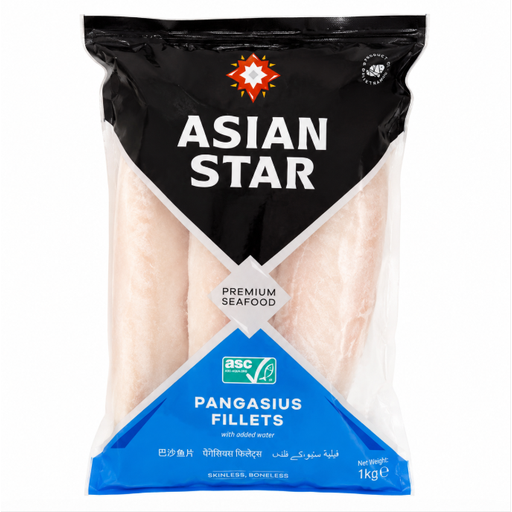
These white pangasius fillets are another option for fish alongside mash without choosing a breadcrumb coating. Check the current pack for the nutrition preparation basis, net fish quantity and cooking directions.
 No image available
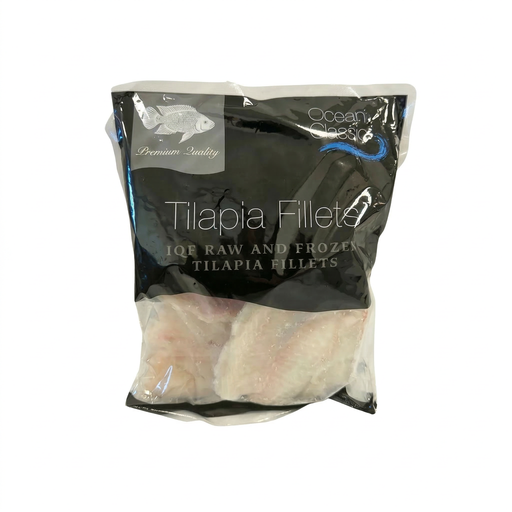
These individually quick-frozen tilapia fillets provide an alternative species for the fish-and-mash plate. Check the pack’s fat figure and preparation basis, and confirm its thawing instructions and whether the fillets contain bones before cooking.
Start with fat per 100g on each product’s nutrition declaration, then check whether the figures describe the same preparation. A value for fish prepared as directed is not directly interchangeable with one for pan-fried or oven-baked fish.
Not necessarily: the name describes the coating. Marks & Spencer lists 5.9g fat per 100g for its Lightly Dusted Cod and 6.0g per 100g for its Breaded Cod; check the current nutrition declaration for the products you are choosing between.
Follow the directions for the exact pack and take account of any oil they call for. The NHS notes that frying can increase fish’s fat content, especially with batter; an uncoated fillet prepared according to directions that allow baking, steaming or grilling is an option to compare.
Read the current pack’s ingredient and allergen declarations as well as its cooking directions. The ASDA breaded cod example declares fish and wheat, while the M&S coated cod examples list wheat flour containing gluten; do not assume a different recipe has the same ingredients.
Follow the instructions on your particular pack. ASDA Groceries says its Exceptional cod loins should not be refrozen once defrosted; that product-specific direction should not be assumed to apply to every frozen fish product.