What to check when buying
Start with whether the fish is wild-caught or farmed, then compare the label on the exact product and the portion format you will use.
| Priority | What to check | Your needs |
|---|
| Wild-fish certification |
Look for the blue MSC label on the chosen wild-caught product. Identify the fish species and check the pack rather than relying on a retailer-wide statement. |
I want an independently assessed sustainability signal for the wild-caught fish I am buying. The Marine Stewardship Council says its label applies to fisheries assessed against its environmental requirements. |
| Farmed-fish assurance |
Confirm that the fish is farmed, then look for an applicable aquaculture assurance label, such as ASC, on that product. MSC is a wild-fishery standard. |
If I choose farmed fish, I want to assess its sourcing through a label relevant to aquaculture, rather than expect an MSC mark. |
| Portion format |
Check the pack weight, number of pieces and serving information. Compare plain fillets with a meal-for-one if you want a prepared dish. |
For one or two people, I would rather choose the number of fillets to cook—or pick one complete meal—than plan around a larger recipe. |
| Preparation and allergens |
Read the exact product’s storage, defrosting and cooking directions. Check its ingredients and allergen information, particularly if it is coated, sauced or mixed with other seafood. |
I need preparation instructions that fit my plans, and I want to check the full ingredient list before choosing a prepared fish product. |
Brand and retailer references
These sourcing statements provide context, not certification for every product in a range; the individual pack remains the check for an MSC- or ASC-labelled purchase.
Birds Eye
A frozen-food brand with wild-caught and farmed fish lines.
- Birds Eye says 100% of the wild fish it sources in the UK is MSC certified and 100% of its UK farmed fish is ASC certified.
- Check the chosen pack for its species, certification mark, ingredients and cooking instructions.
Young’s
A frozen-fish brand with natural fillets and single-meal formats.
- Young’s lists natural fillets intended to cook from frozen and a separate Meals for One range.
- Choose the format for the meal you need, then check the individual product for any certification mark and its preparation directions.
Tesco
An own-label option with a published UK seafood sourcing measure.
- Tesco reported that 85% of its UK wild-caught seafood was MSC certified at the beginning of 2026.
- That figure does not identify which individual frozen-fish products carry the label.
Sainsbury’s
An own-label option whose seafood programme covers wild-caught and farmed products.
- Sainsbury’s says many of its products carry MSC assurance for wild-caught seafood or ASC assurance for farmed seafood.
- Check which, if either, appears on the exact product.
Asda
An own-label option with published wild-fish sourcing criteria.
- Asda states that 94% of wild-caught fish sourced for sale in its stores in 2024 was MSC certified or working towards certification.
- Fish working towards certification is not the same as an MSC-labelled certified product.
M&S
An own-label option whose seafood sourcing standard includes frozen products.
- M&S states that, in 2023/24, 94% of wild-caught fish and shellfish sourced for its products came from GSSI-recognised certified sources or sources engaged in improvement actions.
- That combined measure does not establish MSC certification for every frozen-fish item.
Frozen fish on Joybuy
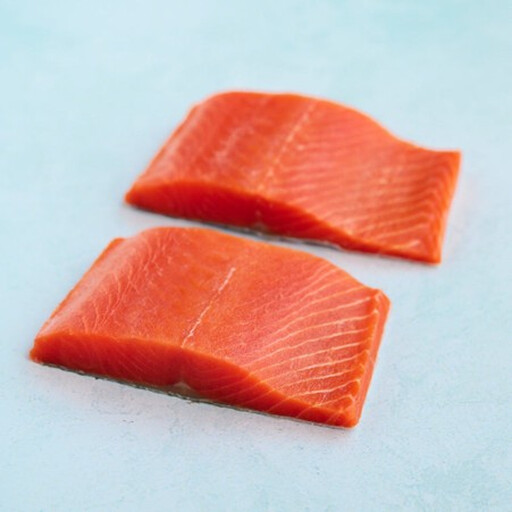
This wild sockeye salmon option is a pack of fillet steaks to consider for smaller meals. If you specifically want MSC-certified wild fish, check the certification mark on the exact pack before buying.
 No image available
The Fish Society Wild Sockeye Salmon Fillet Steaks 220g
Fillet steaks offer a format to consider when planning a smaller fish meal. This is a 220g wild sockeye salmon product; check the pack for its piece count, MSC marking, allergen information and preparation instructions.
View on Joybuy
Frequently asked questions
What does the blue MSC label mean on frozen fish?
On wild-caught seafood, it identifies fish from a fishery independently assessed against the Marine Stewardship Council’s environmental sustainability requirements. Check for the label on the product you are buying rather than treating a general sourcing statement as its equivalent.
Is all frozen fish from a supermarket with a sourcing policy MSC certified?
No. A policy does not certify every pack: Tesco reported that 85% of its UK wild-caught seafood was MSC certified at the beginning of 2026, while Asda’s 2024 figure of 94% included fish working towards certification as well as certified fish. If MSC certification is your requirement, look for the blue label on the exact product.
Should I look for MSC or ASC on frozen fish?
Look for MSC when checking certification for wild-caught fish; for farmed seafood, check for an applicable aquaculture assurance such as ASC. First establish how the fish was produced, then verify the relevant mark on its pack.
Can frozen fish be cooked straight from the freezer?
Follow the directions on the particular pack: some products, including natural fillets listed by Young’s, are intended to cook from frozen, but that instruction does not apply to every frozen-fish product. GOV.UK advises keeping a freezer around −18°C and following label directions for freezing and defrosting.
What should I check on a prepared frozen-fish meal?
Check its serving information, fish species, certification mark, full ingredients, allergen information and cooking directions. GOV.UK identifies fish as an allergen that must be declared when present as an ingredient; coated, sauced and mixed-seafood products warrant a check of the entire ingredient list.


