People planning freezer lunches
An individual pack is useful only if its portion size, cooking directions and preparation time work for your lunch break.


For a single-serve frozen lunch, choose a meal with a clear portion size and compare the nutrition for the amount you intend to eat. A protein claim or calorie figure is only part of the picture: check salt, saturated fat, fibre, ingredients and allergens, as well as whether you can follow the cooking instructions where you will eat.
An individual pack is useful only if its portion size, cooking directions and preparation time work for your lunch break.
Check the protein stated for the portion you will eat, then compare the rest of that meal’s nutrition rather than choosing by a front-of-pack claim alone.
Compare meals on the same serving basis. Traffic-light colours can help you scan salt and saturated fat, but the full panel gives you more detail.
Start with the portion you expect to eat, then compare like with like. The NHS explains that UK nutrition information is given per 100g and may also be shown per portion.
| Priority | What to check | Your needs |
|---|---|---|
| Salt and saturated fat | Compare both figures for the whole pack or intended portion. Where shown, traffic-light colours indicate low, medium or high levels of each nutrient. | I eat this sort of lunch regularly, so I want to see its salt and saturated fat alongside its energy figure. |
| Fibre and vegetables | Check fibre where declared, and read the ingredients. Treat a stated vegetable-portion claim as applying only to that particular meal. | Vegetables and fibre matter to my choice; I do not want to infer their amounts from a dish name. |
| Protein | Compare grams of protein for the portion you will eat. Read energy, salt and saturated fat alongside it. | A protein-focused lunch appeals to me, but I still need the complete meal to fit my other preferences. |
| Portion and energy | Confirm whether the pack is intended for one person. Distinguish figures per 100g from those per pack or prepared portion. | If I will eat the entire tray, the whole-pack figure is more useful to me than a smaller stated serving. |
| Preparation | Check whether the exact meal needs a microwave or oven, its stated cooking time and its instructions for cooking from frozen. | Lunch has to work with the appliance and time I have available. |
| Dietary requirements | Check the exact product’s ingredients, allergen statement and vegetarian or vegan designation where relevant. | A category label alone cannot tell me whether a meal meets my dietary requirements. |
Action on Salt’s May 2025 audit of 1,511 chilled and frozen ready meals from 11 major UK retailers reported that 56% were high in salt, 42% high in saturated fat and 71% low in fibre. These are findings about the meals assessed, not about shoppers’ preferences or every frozen meal.
For the meal you are considering, compare energy, salt, saturated fat, protein and fibre on the same portion basis.
A per-100g figure does not describe the whole lunch unless the portion you eat weighs 100g.
Check the stated serving size and compare whole-pack or intended-portion figures when deciding between meals.
A frozen lunch is less practical if its required appliance or cooking time does not fit your break.
Read the exact packet instructions before buying. GOV.UK advises following the cooking directions and checking that food is steaming hot throughout, including the middle.
A vegetarian or vegan designation does not state the meal’s salt, saturated fat or full ingredient and allergen profile.
Check the current pack’s dietary designation, ingredients, allergen statement and nutrition panel for the individual product.
These retailer ranges can help you find meals to compare; a range name does not establish the portion size or nutrition of every product in it.
Tesco lists frozen ready meals under categories including meals under 500 calories and free-from, vegetarian and vegan options.
Sainsbury's lists frozen ready meals across several styles.
Waitrose lists frozen ready meals, including Kirsty’s Frozen Vegetable Lasagne 325g.
M&S Food’s frozen ready-meal range has vegetarian and vegan filters.
Iceland lists frozen ready meals, including its MyProtein range.
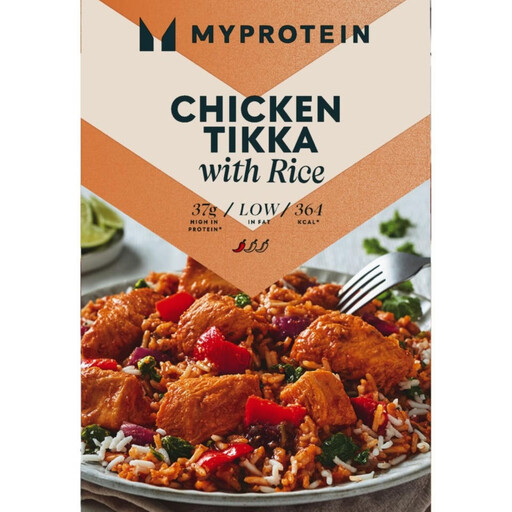
This chicken tikka pack is an option to assess for a frozen lunch. Confirm that its serving count, nutrition and cooking instructions suit how you plan to use it.
 No image available
If you plan to eat this 350g pack for lunch, check its stated serving count and compare nutrition for the portion you will eat. Confirm the cooking instructions and allergens on the current pack.
No. Compare protein for the portion you intend to eat alongside energy, salt, saturated fat and fibre. Check the ingredients and allergens if they matter to your choice.
Use each colour for the nutrient it describes: GOV.UK explains that green means low, amber medium and red high. Then check the full nutrition panel and portion size so you compare meals on the same basis.
No. Check whether the calorie figure covers the whole pack or a smaller serving, then compare salt, saturated fat, fibre and the ingredients against your preferences.
Follow the instructions for that product and the appliance you are using. GOV.UK advises checking that food is steaming hot throughout, including the middle.
Read the current pack’s ingredients and allergen statement for the exact meal. A retailer category or dietary filter does not replace that product-level check.