Students with short gaps between lectures
A frozen lunch needs to fit the microwave you can use, including its heating and standing time. Check those instructions before counting on it for a particular break.


Choose a frozen meal only when the calories for the portion you will eat are below 500 kcal and its cooking instructions fit your campus microwave and lunch break. Tesco Groceries has a frozen ready-meals category called Under 500cal Meals, but the individual pack still needs checking. M&S describes Count On Us as calorie controlled; that range name alone does not establish that every dish is frozen or below 500 kcal.
A frozen lunch needs to fit the microwave you can use, including its heating and standing time. Check those instructions before counting on it for a particular break.
The useful figure is for the portion you will eat. A per-100g value or a calorie-controlled range name does not, by itself, establish that the full pack is below 500 kcal.
Check the ingredients and allergen declaration on the current pack of the exact meal, rather than relying on an earlier purchase or a range description.
A category can narrow the search, but the pack determines whether a particular meal meets the calorie limit and works for a lecture day.
Consider it: Tesco Groceries places this category within frozen ready meals, making it a starting point for the calorie search.
Check: Confirm the exact pack’s portion, allergens and cooking instructions rather than relying on the category title.
Consider it: M&S describes these dishes as calorie controlled.
Check: Establish whether the particular dish is frozen and below 500 kcal for the portion you will eat.
Consider it: Iceland product pages include meals with microwave-from-frozen instructions.
Check: Read the exact meal’s calorie declaration and heating directions; a frozen format does not establish the calorie limit.
| Priority | What to check | Your needs |
|---|---|---|
| Calories for your portion | Find kcal per serving or per pack, then check how many servings the pack contains. Compare the amount you will eat with the under-500-kcal limit; a per-100g figure alone is not enough. The Food Standards Agency’s nutrition labelling guidance covers nutrition information on prepacked food. | I want the lunch I actually eat, not just a labelled fraction of it, to be below 500 kcal. |
| Cooking between lectures | Check that the pack permits cooking from frozen in a microwave. Match its stated wattage, heating stages, stirring and standing time to the equipment and time available. | A meal is practical for my break only if I can complete its full cooking directions before the next lecture. |
| Storage and allergens | Read the current pack’s storage, ingredient and allergen information. Follow its instructions if the meal has thawed; the Food Standards Agency advises following the label’s freezing and defrosting directions. | If I carry lunch to campus or avoid an ingredient, I need a way to follow the pack’s storage directions and check that exact meal. |
| Range and nutrition details | Check the individual meal’s frozen storage state and serving size, even within a calorie-controlled range. Compare the rest of its nutrition panel and ingredients where those details matter to your choice. | I would rather judge a specific dish than assume every item under the same range name meets my lunch requirements. |
The portion you eat may weigh more than 100g, and a pack may contain more than one labelled serving.
Use the per-pack figure when the whole pack is one serving. Otherwise, work from the labelled serving count and the amount you intend to eat.
M&S calls its Count On Us range calorie controlled, but that description does not establish the storage state or calories of every individual dish.
Check the exact product’s storage instructions and kcal for the portion before choosing it as a frozen, under-500-kcal lunch.
Microwave directions can include stirring and standing as well as heating, so the stated heating stage may not be the whole time needed.
Read every stage on the pack and check the required wattage against the campus microwave and your break.
A previous pack or online description is not a substitute for the ingredients and allergen declaration on the meal you have now.
Read the current physical pack before cooking or eating, particularly if an ingredient affects your choice.
Tesco Groceries lists an Under 500cal Meals category within frozen ready meals.
M&S describes Count On Us as a calorie-controlled range with meal-sized dishes.
Iceland product pages show frozen ready meals with microwave-from-frozen directions.
This frozen dumpling option can be assessed for a lecture lunch. Check its pack calories for the portion you will eat and its full microwave directions before deciding whether it meets your requirements.
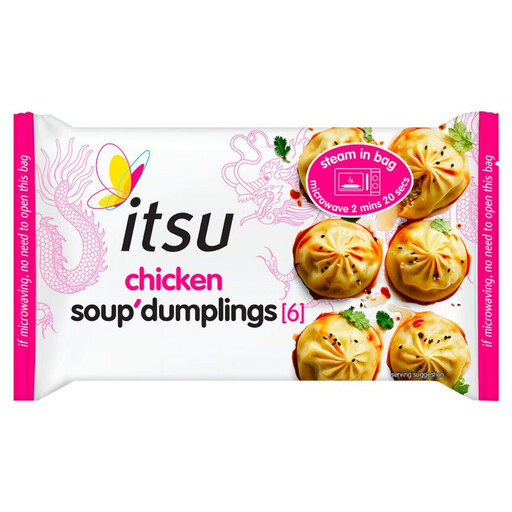 Image unavailable
For a lecture lunch, check that the pack’s calories for the portion you will eat are below 500 kcal and that its microwave-from-frozen directions fit your break. Confirm the required wattage, full cooking time and current allergen information on the pack.
Compare the labelled kcal for the portion you intend to eat with 500 kcal. If the whole pack is one serving, use its per-pack figure; if it contains several servings, account for how much of the pack you will eat rather than relying on kcal per 100g or a range name.
Yes, if the exact pack permits microwave cooking from frozen and you can follow all its directions with the available wattage and time. Include any required stirring and standing stages, and check that the food is piping hot throughout before eating.
Follow the pack’s storage and thawing instructions during the journey and before cooking. The Food Standards Agency advises keeping a freezer around -18°C and following label directions for freezing and defrosting; do not assume a thawed meal can be refrozen.
Read the ingredients and allergen declaration on the current pack of the exact meal before eating it. Do not rely on a previous purchase or a general range description.
No. It establishes only whether the portion meets that calorie limit. Check the exact meal’s ingredients, nutrition panel, storage requirements and cooking directions for the other factors that matter to your choice.