People cooking for one
If you keep dinners in the freezer, compare kcal for the portion you will eat with the pack’s stated serving size. The NHS notes that a manufacturer’s portion may differ from yours.


For a one- or two-person household, compare calories for the amount you would eat, then check fat, saturates, sugars and salt rather than relying on a meal’s range name. Tesco Groceries has a frozen “Under 500cal Meals” category, but the exact pack still matters; M&S’s health-positioned ready-meal range is not necessarily frozen. If appetite is poor or weight is falling unintentionally, a calorie ceiling may be the wrong starting point: East Suffolk and North Essex NHS Foundation Trust advises attention to adequate energy and protein in that situation.
If you keep dinners in the freezer, compare kcal for the portion you will eat with the pack’s stated serving size. The NHS notes that a manufacturer’s portion may differ from yours.
Individual meals and meals intended for two offer different ways to plan dinner. Check the number of servings before comparing per-portion figures with the amount each person will eat.
A lower-calorie choice is not automatically appropriate when eating enough is difficult. East Suffolk and North Essex NHS Foundation Trust highlights the importance of adequate energy and protein in this situation; ask a clinician about nutritional needs rather than assuming calorie restriction is suitable.
Confirm that the meal is frozen and check its serving count before comparing nutrition for the portion you intend to eat.
| Priority | What to check | Your needs |
|---|---|---|
| Whole-meal calories | Find kcal per serving or pack and the stated number of servings. Use the per-100g figure to compare meals of different sizes, not as the total for dinner. | I want to know the calories in the amount I will actually eat, whether that is one pack or part of one. The NHS cautions that the manufacturer’s portion may differ from mine. |
| Other nutrition | Compare fat, saturates, sugars and salt on the exact pack. Where shown, traffic-light labels indicate whether amounts are high, medium or low. | A lower calorie figure alone does not tell me how two meals compare on salt or saturated fat. Food Standards Agency guidance recommends using traffic-light labels to compare products. |
| Portion format | Check pack weight, serving count and whether the meal is frozen rather than chilled. A retailer range name does not settle those details for every item. | For dinner alone, I may want one portion; for two, I need to know whether a larger pack provides two stated servings. |
| Appetite and intake | Consider whether restricting calories fits your circumstances, particularly if appetite is poor or weight is falling unintentionally. Discuss nutritional needs with a clinician when appropriate. | If I am struggling to eat enough, a calorie ceiling may work against that need. East Suffolk and North Essex NHS Foundation Trust emphasises adequate energy and protein for people at risk of malnutrition. |
| Preparation and allergens | Read the exact pack’s freezer, defrosting and cooking directions. Check its ingredients and allergen information, even if you have bought a similar meal before. | I need a meal I can store and prepare according to its instructions, with ingredients suitable for everyone eating it. |
Meals within a range can differ in calories and other labelled nutrients. A range name cannot tell you what is in the exact pack.
Compare kcal for your portion alongside fat, saturates, sugars and salt. Use the traffic-light information where it appears.
A per-100g figure covers only 100g, not necessarily the pack or the portion you plan to eat.
Check the pack weight and serving count, then compare kcal for the amount you would serve. The NHS notes that stated portions may differ from the amount people eat.
When intake is already inadequate, restricting calories may make it harder to meet energy and protein needs. East Suffolk and North Essex NHS Foundation Trust highlights this concern for people at risk of malnutrition.
If appetite is poor or weight loss is unintentional, seek appropriate clinical advice rather than choosing meals by a calorie limit alone.
Defrosting and cooking instructions vary by product, and similar-looking meals can have different ingredients or allergens.
Follow the current pack’s storage and cooking instructions and read its allergen label. GOV.UK food-hygiene guidance says food should be fully defrosted before cooking unless the manufacturer instructs you to cook it from frozen.
These ranges offer different places to start browsing; their names do not establish the nutrition or storage requirements of an individual meal.
Tesco Groceries has an “Under 500cal Meals” category within frozen ready meals.
M&S describes low-calorie options within a ready-meal range that includes Count on Us, High Protein and Nutrient Dense lines.
Waitrose & Partners lists frozen ready meals in several familiar dinner formats.
Iceland Foods describes its exclusive Slimming World frozen range as including ready meals and lunch bowls.
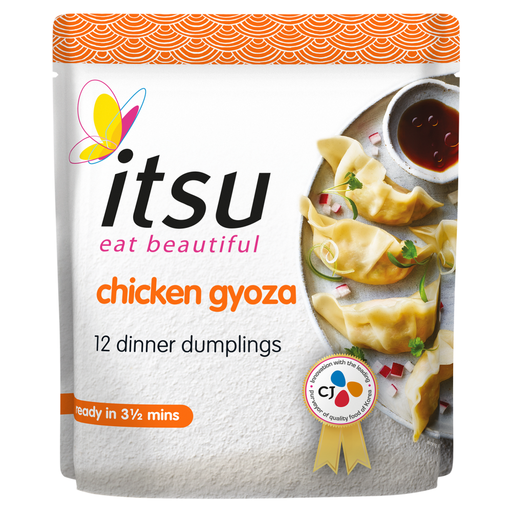
This frozen dumpling pack can be considered as a dinner main. Check how many dumplings you would serve before comparing it with a complete frozen ready meal.
 No image available
For a dinner of dumplings, decide how many of the 12 pieces in the 240g pack you would eat and check the pack’s kcal for that amount. Do not assume the pack is one serving or that the dumplings meet a particular calorie limit. They contain wheat and soya; check the current pack’s allergen information.
No. Compare kcal for the portion you would eat, then check fat, saturates, sugars and salt on the exact pack. Food Standards Agency guidance says traffic-light labels, where provided, help compare these labelled nutrients.
Start with kcal for the amount you plan to serve and check how many servings the pack states. Per-100g figures help compare products on the same weight basis, but the NHS notes that a manufacturer’s portion size may differ from yours.
Not automatically. East Suffolk and North Essex NHS Foundation Trust notes that poor appetite can make it difficult to meet nutritional needs and emphasises adequate energy and protein for people at risk of malnutrition. If weight loss is unintentional or you have been given a medical diet, seek advice from an appropriate clinician.
No. Follow the directions on the exact pack. GOV.UK food-hygiene guidance says food must be fully defrosted before cooking unless the manufacturer’s instructions say to cook it from frozen.
Read the ingredients and allergen information on the exact pre-packed meal before buying or preparing it. UK government food-labelling guidance identifies ingredients, including allergens, among the information required for pre-packed food.