Shoppers keeping a meal below 500 kcal
If you plan to eat the whole frozen meal, the pack’s total calories matter more than its per-100g figure. If the pack contains multiple servings, compare the stated serving with the amount you will eat.


Choose a frozen meal by checking that the whole pack, or the portion you will eat, contains fewer than 500 kcal. Then compare total fat and saturated fat per 100g and per serving: a meal below your calorie limit is not automatically lower in fat.
If you plan to eat the whole frozen meal, the pack’s total calories matter more than its per-100g figure. If the pack contains multiple servings, compare the stated serving with the amount you will eat.
Calories alone do not tell you the total-fat or saturated-fat content. Compare the nutrition panels of similar meals, particularly when considering dishes with creamy sauces, cheese or pastry.
A frozen ready meal can reduce preparation, but the exact pack still needs to suit your appliance and any ingredient or allergen requirements. Read its current label and cooking instructions before use.
Start with calories for the amount you will eat, then use the per-100g nutrition figures to compare similar meals. The NHS recommends checking labels when comparing fat and saturated fat.
| Priority | What to check | Your needs |
|---|---|---|
| Meal calories | Find kcal for the whole pack or stated serving. Check whether that serving matches the amount you intend to eat. | I want the meal I actually eat to contain fewer than 500 kcal, rather than relying on a per-100g figure. |
| Fat and saturates | Compare total fat and saturated fat per 100g between similar meals. Also check the figures for your portion. | A calorie limit is not my only consideration; I want to see how much fat and saturated fat the meal contains. |
| Other label details | Read the salt figure, ingredients and allergen declaration for the exact product. Check the current pack if these details affect your choice. | Ingredients or allergens may rule out a meal even when its calories fit my plan. |
| Frozen preparation | Check whether the pack gives instructions for your appliance, including the cooking and standing steps. | I need a frozen meal I can prepare with the equipment and time available. |
Calories and fat are separate nutrition values. A meal can meet the calorie limit without meeting the fat criterion you are using.
Check total fat and saturated fat on the nutrition panel as well as kcal for the portion you will eat.
Pack totals describe different amounts of food when pack sizes differ, making a like-for-like fat comparison harder.
Compare similar meals per 100g first, then return to the figures for the pack or portion you intend to eat.
A retailer’s calorie-controlled or lower-fat range description does not establish the values for every individual frozen meal.
Use ranges to find candidates, then check the exact product’s calories, fat, saturates and ingredients.
A changed recipe or label can matter when you need to avoid an allergen or follow a specific dietary restriction.
Read the current physical pack before cooking or eating, including its allergen declaration and frozen cooking instructions.
These retailer ranges can help you find meals to inspect; their range descriptions do not establish the nutrition of every product.
Iceland has a frozen ready-meals category and describes a MyProtein frozen range.
M&S has a frozen ready-meals category and separately describes its Count On Us dishes as calorie controlled.
Waitrose lists frozen ready meals and has a separate healthy-options browsing route.
These Myprotein chicken meals are options to screen against your under-500-kcal aim and fat criteria. Check the current pack’s nutrition figures, ingredients and cooking instructions before deciding.
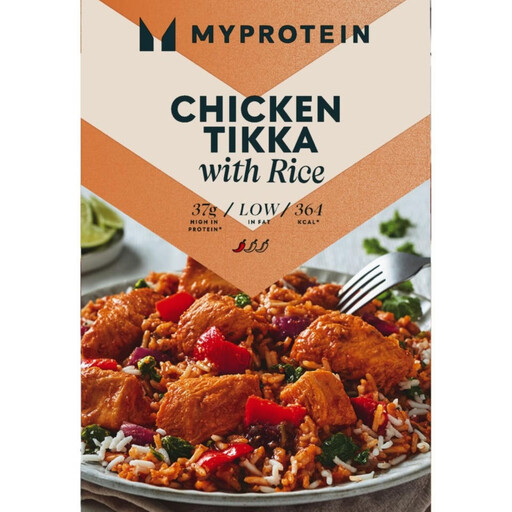 Image unavailable
For a chicken tikka meal, check the current pack’s total kcal alongside fat and saturates per 100g. Check its milk and barley allergen information, and follow the frozen cooking instructions.
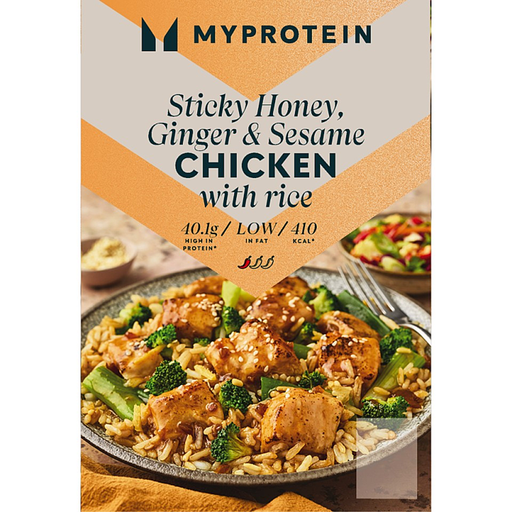 Image unavailable
For a chicken-and-rice meal, compare the current pack’s calories for the amount you will eat and its fat and saturates per 100g. Check the wheat, sesame, soya and barley allergen information, and follow the frozen cooking instructions.
No. Calories and fat are different nutrition values. Check kcal for the pack or portion you will eat, then read total fat and saturated fat on the same meal’s label.
Use both for different purposes. Compare similar meals per 100g to assess their fat and saturated-fat content, then use the pack or actual-serving figure to check whether your meal stays below 500 kcal.
Check the current physical pack when allergens matter. Iceland advises shoppers that ingredient, nutrition and allergy information can change, so an online listing should not replace the label on the meal you receive.
That depends on the particular meal and the fat criterion you are following. Compare its total fat and saturates with similar products, check the amount you will eat, and follow any individual dietary instructions you have been given.