Families planning low-prep evenings
A frozen meal can fill a gap on a busy evening. Before counting on one dish for everyone, compare its declared portions with the number of people eating and check whether you plan to serve anything alongside it.


Choose one larger frozen ready meal when its declared portions, cooking directions and allergen information suit everyone eating; pack weight alone cannot establish that it will feed your household. Smaller meals give people a choice of dishes or portion sizes, while home-cooked portions give you control over ingredients and serving sizes but require time to cook, cool and freeze.
A frozen meal can fill a gap on a busy evening. Before counting on one dish for everyone, compare its declared portions with the number of people eating and check whether you plan to serve anything alongside it.
Individual and two-person formats let household members choose different dishes or portion sizes. Check each pack separately for ingredients, allergens and cooking instructions rather than assuming the meals can all be prepared together.
Freezing home-cooked portions can help when the meal plan changes, with a ready meal available for another day. The homemade portions need their own cooling, freezing and defrosting plan; they do not necessarily follow a ready meal’s cook-from-frozen directions.
Start with the number of diners and whether they can share a dish, then check how each option fits the time, equipment and freezer space available.
Choose it when: Everyone can eat the same dish and the pack declares enough portions for the planned meal.
Trade-off: A main dish may still need sides, and its weight does not tell you how many people it serves.
Choose them when: People need different dishes or portion sizes rather than one shared tray.
Trade-off: Separate packs may have different cooking times and compete for oven or microwave space.
Choose them when: You want to decide the ingredients and divide the cooked meal into your own portions.
Trade-off: Cooking, cooling and portioning take time, containers and freezer space.
| Priority | What to check | Your needs |
|---|---|---|
| Portions | Read the declared servings on the exact pack. Compare net weights only between similar dishes, and decide whether the planned meal needs sides. | I want to know whether one pack covers everyone eating, rather than relying on a family label or a larger weight. |
| Cooking | Check the pack’s appliance directions, cooking time and whether it calls for defrosting or cooking from frozen. If preparing several packs, check that they fit your equipment. | On a busy evening, I need the meals to work with the oven or microwave and the time available. |
| Ingredients | Check the current pack’s ingredients, allergens and any dietary designation for each dish. Sainsbury’s advises that product ingredients can change and that shoppers should check packaging. | Different people at our table may need different dishes; I cannot rely on an old product description for an allergy or intolerance. |
| Freezer planning | Follow each ready meal’s storage and defrosting directions. For homemade food, divide the cooked batch into smaller portions before freezing; GOV.UK advises a freezer temperature around -18°C. | I want portions ready for another day without confusing homemade storage steps with a manufacturer’s ready-meal instructions. |
Tesco, Waitrose & Partners and M&S list frozen meals in different weights and formats. Weight alone does not establish the serving count, so a planned shared meal may need another dish or sides.
Check the exact pack’s declared portions against the number of diners, then use weight to compare similar dishes.
The required preparation route affects when dinner can be ready. GOV.UK guidance says to fully defrost food before cooking unless the manufacturer instructs you to cook it from frozen.
Read the meal’s cooking and storage directions before putting it into the weekly plan, and allow for defrosting where instructed.
Ingredients can change. Sainsbury’s advises checking product packaging before purchase or consumption where allergens matter.
Check the current pack for every dish being served, even if you have bought it before.
A cooked batch needs to be cooled and divided before freezing; a packaged meal has its own storage and cooking directions.
For homemade batches, divide cooked food into smaller portions before freezing and keep the freezer around -18°C, as advised by GOV.UK. Follow the manufacturer’s directions for packaged meals.
These retailer listings illustrate different frozen-meal formats; the serving information and instructions on the individual product remain the deciding details.
Tesco lists frozen family meals separately from its fresh family ready meals, so the two categories should not be treated as the same range.
Waitrose & Partners lists frozen meals in smaller and two-person formats, which may help a household combine different dishes.
M&S lists several larger frozen dishes as well as vegetarian and vegan options.
Iceland Foods has a dedicated family-ready-meals category within its frozen ready-meals range.
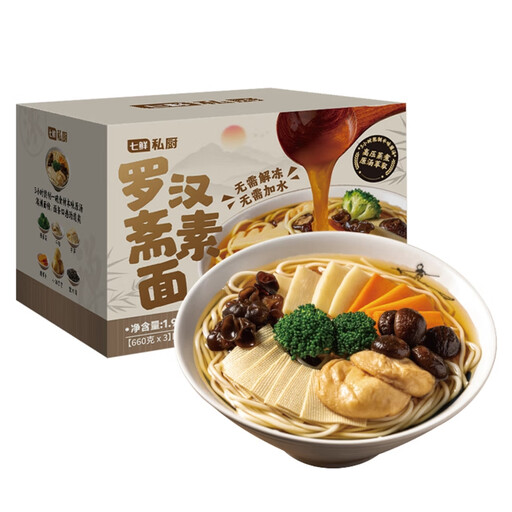
This vegetarian noodle multipack is an option for planning separate frozen meals. Check the portions declared for each pack before using it as a family supper.
 No image available
Three separate 660 g packs may fit a plan for meals on different days. Check the declared servings per pack, cooking directions and current ingredient and allergen information before relying on them for your household.
Not necessarily: use the exact pack’s declared servings to judge whether it covers the people eating. Tesco, Waitrose & Partners and M&S list different weights and formats, but neither weight nor a family-category label establishes a serving count.
No. GOV.UK guidance says food should be fully defrosted before cooking unless the manufacturer instructs you to cook it from frozen. Follow the directions on the exact pack when planning preparation time.
Divide cooked food into smaller portions before freezing and keep the freezer around -18°C, in line with GOV.UK guidance. Cool the food promptly and plan how you will defrost and cook it later; do not apply a packaged ready meal’s directions to a homemade batch.
GOV.UK home food-safety guidance advises eating leftovers within two days or freezing them if that will not be possible. Cool and refrigerate them promptly rather than leaving them out until the next meal.
Check the current packaging for the ingredients and allergen information of every dish. Sainsbury’s notes that products and ingredients can change, so an older listing or a category filter should not replace a pack check.