What should you check before buying?
Start with the nutrition for a comparable amount of food, then check the full portion and whether the meal can be stored, cooked and served as its pack directs.
| Priority | What to check | Your needs |
|---|
| Fat and saturates |
Compare both figures per 100g and check the amount in the portion served. NHS food-label guidance classifies 3g of total fat or less per 100g as low fat. |
I want to compare meals on the same basis, rather than judge them by a reduced-fat or calorie-controlled label. |
| Salt per meal |
Read salt per 100g and per pack. ASDA Groceries lists 1.4g salt for its 350g Good & Counted pasta pack; its listing gives 0.43g per 100g. |
A whole meal is what I plan to serve, so the pack figure matters as well as the smaller per-100g figure. |
| Storage and cooking |
Check frozen-storage directions, the cooking method and the equipment required. Follow any instruction not to reheat after cooling; the Food Standards Agency also identifies frozen storage and temperature monitoring as considerations for food operations. |
I need a serving plan that works with the storage and cooking facilities at the event, not one that relies on reheating against pack instructions. |
| Allergens |
Read the current physical pack for ingredients and allergens. Check any labelling requirements that apply if you package food for direct sale. |
When serving other people, I need to know what is in each particular meal and how its allergen information will be available. |
| Public sales |
Before selling, ask the relevant local authority whether your activity requires food-business registration and what arrangements apply at the event. |
If I plan to sell hot food rather than share it privately, I need to settle those requirements before buying stock. |
Which ranges are worth checking?
These range references can help you find meals to inspect; the name of a range does not establish the nutrition or suitability of every product in it.
ASDA Good & Counted
ASDA lists Good & Counted meals within its frozen ready-meal selection, including a 350g Chicken, Tomato & Basil Pasta.
- ASDA Groceries lists 1.1g fat per 100g for that pasta, making its nutrition panel a useful starting point for comparison.
- The pasta’s figures and allergen information describe that product, not every meal bearing the Good & Counted name.
The Gym Kitchen
The Gym Kitchen Chicken & Chorizo Paella is a frozen 400g meal listed by ASDA Groceries.
- Its listing provides both per-100g and per-pack nutrition, including 1.7g fat per 100g and 30.1g protein per pack.
- The listing gives 1.62g salt per pack and identifies fish and barley; check the pack against the people you will serve.
Sainsbury's
Sainsbury's frozen Diet & Freefrom selection lists meals including Calorie Counted Chicken Tikka Masala with Rice and Be Good to Yourself Cottage Pie.
- The range provides further individual meals to consider for the event.
- Compare each meal’s own fat, saturates, salt, allergens and cooking directions before selecting it.
Iceland Slimming World
Iceland lists an exclusive frozen Slimming World range of ready meals and lunch bowls.
- The frozen range offers individual meals to check when considering different flavours.
- Iceland says ingredients, nutrition and allergy advice can change, so use the current physical pack rather than the range name to assess a meal.
M&S Count On Us
M&S describes Count On Us as a calorie-controlled ready-meal range.
- The range offers meals to inspect if you are considering calorie-controlled options.
- For this event, confirm that the particular meal is frozen and check its fat, salt, allergens and cooking directions; calorie control alone does not answer those questions.
Joybuy meal option
A 350g chicken tikka meal to assess for car boot sale refreshments; check its physical pack before planning frozen storage or cooking at the event.
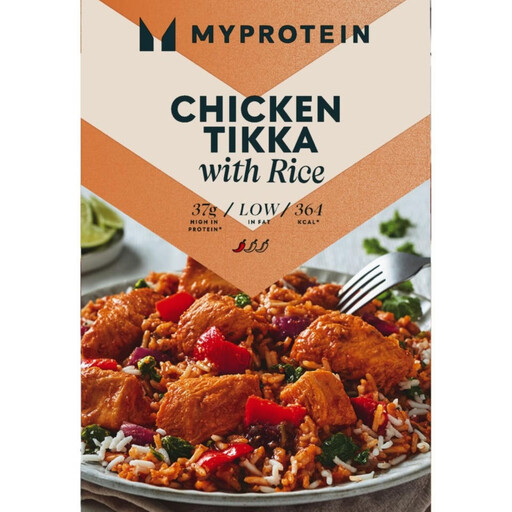 Image unavailable
Myprotein Chicken Tikka 350g
For car boot sale service, check the pack’s nutrition and allergens, then confirm its storage and cooking directions suit your equipment. Follow the directions on the physical pack when preparing it.
Joybuy
Frequently asked questions
Does “reduced fat” mean a frozen meal is low in fat?
Not necessarily. Check the individual meal’s nutrition panel: NHS food-label guidance describes 3g of total fat or less per 100g as low fat. A calorie-controlled name does not tell you whether a particular meal meets that figure.
Can I cook frozen meals at home and reheat them at the sale?
Only if the particular meal’s instructions permit your plan. The researched ASDA Good & Counted pasta and The Gym Kitchen paella say not to reheat once cooled, so check packs before arranging storage, cooking equipment and serving times.
Do I need to register to sell hot meals at a car boot sale?
Check whether your activity is a food business before trading. Hastings Borough Council describes a market stall selling food or drink to the public as a food business, and the Food Standards Agency says food businesses should register at least 28 days before trading. Ask the relevant local authority how these requirements apply to your activity and location.
What allergen information should I check?
Read the current physical pack for each meal. The researched ASDA pasta identifies wheat, while The Gym Kitchen paella identifies fish and barley. If you package food for direct sale, check which Food Standards Agency allergen-labelling requirements apply to your event and service method.
Are Iceland Slimming World meals automatically lower in fat?
The range name does not establish the fat content of an individual meal. Compare the meal’s nutrition panel, and read its physical pack: Iceland notes that ingredients, nutrition and allergy information can change.


