What should you check?
Start with the portion and the person’s eating requirements, then check whether the meal can be prepared as instructed in the home.
| Priority | What to check | Your needs |
|---|
| Portion and storage |
Check the stated servings and pack size, then the storage instructions. A pack labelled for one does not establish whether that portion meets an individual’s needs. |
I’m planning one meal at a time and need a portion the recipient can manage without assuming every single pack is suitable. |
| Ingredients and choice |
Read the ingredients and allergen information for the exact meal. Cuisine or dietary-category filters do not replace a check of the product pack. |
The meals need to fit the recipient’s confirmed restrictions and include dishes they are willing to eat. |
| Whole-pack nutrition |
Compare energy, protein, salt, saturated fat and fibre on the same serving basis. Match any individual nutrition plan rather than judging a meal by one figure. |
If ready meals are eaten regularly, I want to know what the whole meal provides; recent weight loss makes the person’s care plan particularly important. |
| Preparation and texture |
Check the required appliance, stirring, standing and final heating instructions. Follow any prescribed swallowing or texture advice separately. |
Whoever serves the meal must be able to prepare it as directed, and the recipient must be able to eat its texture safely. |
Frozen-meal brand references
These retailer ranges offer different meal formats; suitability still depends on the individual product and recipient.
M&S
The M&S frozen ready-meal listing includes fish dishes and a plant-based nut roast.
- Listed fish meals include 270g and 400g packs.
- The listing also includes larger products, so check the serving information for each item.
Waitrose
The Waitrose frozen listing includes 400g chilli con carne and chicken tikka masala meals, alongside other formats.
- Its listed choices include a 300g cauliflower and lentil dhal.
- Check each product’s servings and ingredients rather than assuming the same format across the range.
Tesco
Tesco groups frozen ready meals by types including fish, traditional dishes and vegetarian, vegan or free-from options.
- Category filters can help narrow the meal type to consider.
- A category does not confirm an individual meal’s allergens, nutrition or texture.
Sainsbury's
Sainsbury’s lists several 400g frozen meals for one across its own-label lines.
- Listed dishes include spaghetti bolognese, macaroni cheese and cottage pie.
- Sainsbury’s advises checking the received pack for nutrition and allergen warnings because product information can change.
Asda
Asda organises its frozen ready meals into categories including traditional, Italian, Indian and other Asian dishes.
- Its individual product pages give whole-pack nutrition and allergen details for the cited 400g meals.
- The two cited meals have different allergens and nutrition figures; check the exact product rather than applying either label to the range.
Iceland
Iceland lists frozen ready meals as an option for a meal during the week.
- Its frozen ready-meal category provides a place to browse individual dishes.
- Check the selected product’s serving information, allergens and cooking instructions.
Joybuy product option
This chicken tikka option is relevant when planning an individual frozen meal; confirm its serving guidance and preparation requirements before relying on it as one person’s meal.
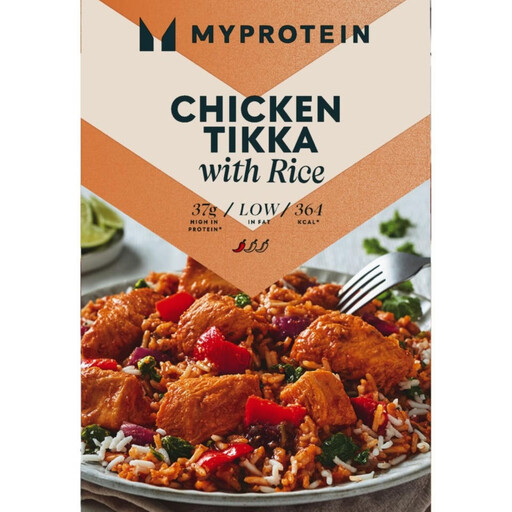 Image unavailable
Myprotein Chicken Tikka 350g
Consider the 350g pack if its serving guidance fits the recipient’s appetite. Check the pack’s allergens, whole-meal nutrition and complete heating instructions, and follow any prescribed texture advice.
View on Joybuy
Questions about choosing and serving
Can someone with dysphagia eat an ordinary frozen ready meal?
Do not assume an ordinary meal meets a prescribed texture. Follow the person’s speech and language therapist or dietitian’s instructions; University Hospitals Birmingham NHS Foundation Trust specifies that Level 4 purée, for example, must be smooth, moist and free of lumps and loose fluid.
What does ‘serves 1’ tell me?
It describes the stated serving format, not whether the meal suits this recipient. Check the whole-pack nutrition, allergens, portion, heating method and any individual texture requirements.
Should I choose a lower-calorie meal for someone who has lost weight?
Do not choose by calories alone when there has been unplanned weight loss. Berkshire Healthcare NHS Foundation Trust describes individual assessment and care planning for people at risk of malnutrition; use the person’s existing care advice or seek appropriate clinical guidance.
Is an online allergen list enough to serve the meal?
Use online details to narrow your choices, then check the pack received before serving. Sainsbury’s advises customers to check packaging for nutrition and allergen warnings because product information can change.
How should I reheat a frozen meal for someone else?
Follow that meal’s pack instructions, including its specified appliance, stirring, standing and final heating checks. Establish who can carry out those steps before making the meal part of a regular routine.


