What should you check?
Start with a portion that fits the household, then read the individual meal’s label and check how it will be stored and cooked.
| Priority |
What to check |
Your needs |
| Portion format |
Check whether the pack states a meal for one or two, its weight and its serving basis. Compare the stated portion with the number of people eating. |
I’m shopping for one or two people and want a portion I can use without relying on a family-size pack. |
| Nutrition information |
Use the same basis when comparing meals: per 100g or per stated portion. The NHS identifies fat, saturates, carbohydrate, sugars, protein and salt as information on food labels. |
I want to compare the protein and salt figures on the meals I’m considering, rather than judge them by a premium label. |
| Ingredients and allergens |
Read the exact product’s ingredients and allergen information. Check the physical pack when the choice depends on a specific dietary requirement. |
For a food allergy or another dietary restriction, I need to know what is in this particular meal. |
| Cooking and storage |
Check the meal’s freezer-storage requirements and its own microwave, oven or defrosting directions. Confirm you have the equipment specified on the pack. |
I need a meal I can store and prepare using the space and equipment available at home. |
| Shopping routine |
Confirm the portion formats offered by the retailer and the current local delivery, collection or in-store options you intend to use. |
I want to choose meals myself through a shopping route that works for my routine. |
Retailer ranges to consider
These UK retailers provide different ways to browse frozen ready meals; check each individual pack before making a dietary or portion decision.
M&S
M&S Food presents a frozen ready-meal range that includes pies, seafood dishes and plant-based choices.
- Its named range offers a focused place to browse these meal types.
- M&S describes its ingredients as quality ingredients; that retailer description does not establish the nutrition or suitability of an individual meal.
Waitrose
Waitrose lists frozen ready meals including named 400g dishes and meals for two.
- Named pack sizes can help when comparing single meals with meals for two.
- A meal’s listing in the range does not establish that it belongs to a premium line or meets a particular dietary requirement.
Tesco
Tesco’s frozen ready-meal aisle includes different meal formats and Tesco Finest products.
- The aisle allows shoppers to browse options including fish pies, vegetarian dishes and meals for two.
- Tesco Finest identifies a range, not the portion or nutrition of every product within it.
Sainsbury's
Sainsbury's lists Taste the Difference frozen meals for one, including named 400g dishes.
- The stated single-meal format makes it straightforward to begin a portion comparison.
- Check the chosen meal’s ingredients, nutrition and cooking directions rather than relying on its range name.
Asda
Asda has a dedicated frozen premium-ready-meals category.
- The category offers a direct route to browse meals positioned as premium.
- Use the individual product page and pack to check its portion, ingredients and preparation instructions.
Iceland
Iceland has a dedicated luxury frozen ready-meal category.
- Its category groups meals under a named luxury range for browsing.
- The range name does not establish an individual meal’s serving size, ingredients or nutrition; check the pack and your freezer space.
A frozen-meal option on Joybuy
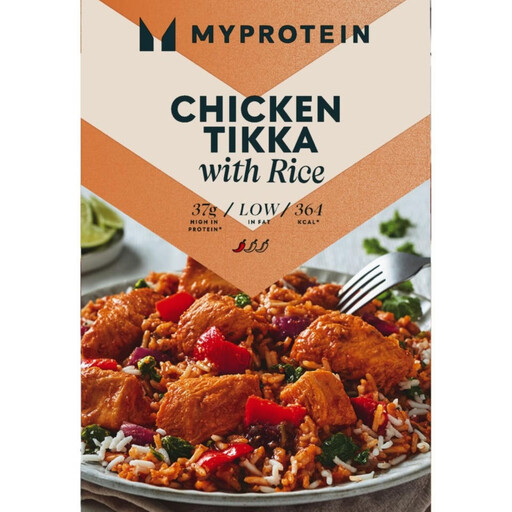
This 350g chicken tikka pack is an option to consider when comparing frozen-meal portions; check the individual pack for the serving basis and dietary details.
 No image available
Myprotein Chicken Tikka 350g
The stated 350g pack weight provides a starting point for comparing portions. Check the pack’s serving basis, ingredients, allergens, nutrition information and cooking directions against your requirements.
View on Joybuy
Questions about choosing frozen meals
Does “premium” tell me what is in a frozen meal?
No. It identifies how a retailer positions a range, not the ingredients or nutrition of each meal. Read the individual pack’s ingredients and nutrition panel, using the same per-100g or stated-portion basis when comparing options.
What should an older shopper check on the pack?
Start with the stated portion, ingredients, allergens, protein and salt figures, and storage and cooking instructions. If the meal needs to fit a prescribed diet or a swallowing requirement, seek individual advice rather than choosing by the range name.
Should I choose a meal for one or a meal for two?
Choose a format that matches the number of people eating, then check the pack weight and stated serving. Waitrose lists named 400g frozen meals, while Sainsbury's lists 400g Taste the Difference meals for one; check how many packs your freezer can accommodate before ordering several.
Can every frozen ready meal be cooked the same way?
No. Check whether the specific pack calls for microwave or oven cooking, and whether it gives defrosting instructions. Follow that meal’s storage and cooking directions rather than applying a method from another product.


