Shoppers planning around busy holiday days
Frozen meals can fit an irregular routine. If you expect to eat the whole tray, compare its full-pack calories rather than judging it by a range name or a per-100g figure alone.


For a convenient summer-holiday meal, compare calories for the amount you will actually eat before choosing a frozen ready meal. Tesco’s Under 500cal aisle and M&S Count on Us offer calorie-led starting points, but check each dish’s serving size, salt, saturated fat and allergens. A frozen snack or small plate may suit a different eating occasion without replacing a complete ready meal.
Frozen meals can fit an irregular routine. If you expect to eat the whole tray, compare its full-pack calories rather than judging it by a range name or a per-100g figure alone.
A high-protein label answers a different question from how many calories are in your meal. Compare the exact dish’s energy, salt and saturated fat for the portion you intend to eat.
Use a product listing to narrow your choices, then read the current pack’s ingredients and allergen declaration before eating. Iceland Foods warns that online product information can change.
Start with the portion you will eat, then compare the rest of the nutrition panel and the practical requirements for storing and cooking the meal.
| Priority | What to check | Your needs |
|---|---|---|
| Calories and portion | Check kcal for the prepared pack or stated serving, the number of servings and kcal per 100g. The NHS explains that labels give energy per 100g and sometimes per portion. | I plan to eat the whole tray, so its full-pack figure matters to me. If I am comparing differently sized packs, I also want the per-100g figures. |
| Other nutrition values | Compare salt and saturated fat on the same portion basis; use per-100g values to compare products of different sizes. Check front-of-pack traffic-light information where it appears. | A lower calorie figure is not my only consideration, particularly if I expect to use frozen meals regularly during the holidays. |
| Storage and preparation | Check freezer storage directions, the appliance and cooking method required, and the current pack’s ingredients and allergen declaration. | At holiday accommodation, I need a meal I can store and cook with the facilities available. If I avoid an ingredient, I need to check the pack before eating. |
Sainsbury’s describes its Chicken Tikka Masala & Pilau Rice as using low-fat yoghurt, yet its prepared pack is listed at 518 kcal and 1.83 g salt. One ingredient does not describe the whole meal’s nutrition.
Use recipe wording to shortlist dishes, then compare energy, salt and saturated fat for the amount you will eat.
Per-100g values help compare recipes, but they do not tell you how many calories you will eat if pack sizes or portions differ.
Check the pack or serving figure alongside kcal per 100g, and confirm how many servings the tray contains.
A calorie-controlled or high-protein range helps narrow the choice, but individual dishes can have different salt, saturated-fat and allergen information.
Compare the current label for each meal rather than applying a range description to every product in it.
Ingredients can change, and a listed product may not be available when you shop. Iceland Foods advises reading the actual pack because published nutrition and allergy information can change.
Check availability before making a trip, then read the physical pack’s ingredients, allergens, storage directions and cooking instructions before use.
These ranges offer different ways to start looking; the individual product label determines whether a meal fits your intended portion and other requirements.
Tesco Groceries has a frozen Under 500cal Meals aisle that includes Calorie Controlled and High Protein options.
M&S describes its Count on Us dishes as calorie controlled and lists Count on Us, High Protein and Nutrient Dense as separate ready-meal ranges.
A Waitrose & Partners listing for Birds Eye Get Real Protein Thai Red Chicken Curry states 368 kcal and 35 g protein per microwaved serving.
Sainsbury’s lists nutrition for its Chicken Tikka Masala & Pilau Rice by prepared pack as well as per 100g.
Iceland Foods lists a MyProtein frozen ready-meal range with cooking information on individual product pages.
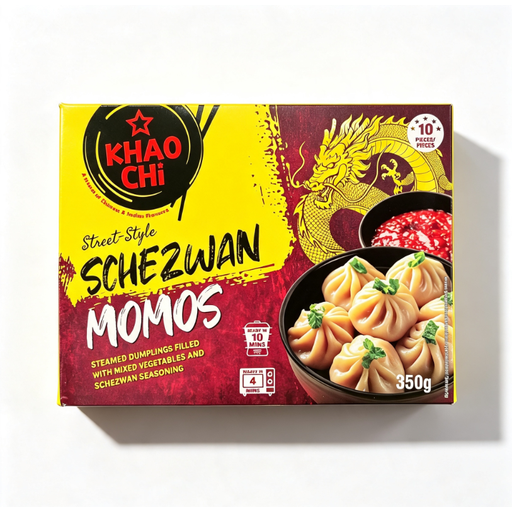
These Joybuy choices are a frozen rice ball and frozen momos for a snack or small plate during holiday days, rather than complete ready-meal trays. Check the portion you intend to eat before comparing either with a full meal.
 No image available
This frozen rice ball is a snack or light-meal option, not a complete ready-meal tray. Check the current pack’s calories for the amount you will eat, its ingredients and allergen advice.
 No image available
These frozen momos are an option for a small plate when suitable steaming equipment is available. Check the pack’s cooking method, the portion you plan to eat and its allergen advice; do not assume the 350g pack is one serving.
Start with calories for the amount you will eat: the full prepared pack if you plan to finish it, or the stated serving if that matches your portion. The NHS explains that per-100g information helps when comparing products; also check how many servings the pack contains.
No: compare protein and calories as separate values on the exact meal. For example, Waitrose & Partners lists 35 g protein and 368 kcal per microwaved serving for Birds Eye Get Real Protein Thai Red Chicken Curry; neither figure can be inferred from the range description alone.
Compare salt and saturated fat for the portion you will eat, and use per-100g figures to compare differently sized products. Front-of-pack traffic-light information, where present, provides another way to inspect those values.
Use it to shortlist products, but read the current physical pack’s ingredients and allergen declaration before eating. Iceland Foods warns that published ingredients and allergy information can change.
Confirm that you can store the meal as directed and have the appliance needed to follow its pack instructions. Check the cooking method for the exact product rather than assuming every frozen meal can be prepared in a microwave.