People planning regular freezer meals
If you are organising individual meals for yourself or someone else, check that the portions fit the routine and that the person can store and heat them safely.


Frozen supermarket meals can suit a self-managed routine when the person has freezer space, can handle the portions and can follow the cooking instructions safely. Compare the usable portion, nutrition and allergen labels, and preparation method for each meal. If reliable meal delivery or help with preparation is needed, check what a local meals-on-wheels service provides rather than assuming a supermarket meal meets those needs.
If you are organising individual meals for yourself or someone else, check that the portions fit the routine and that the person can store and heat them safely.
Clearly labelled frozen portions may help with planning, but the cooking method must match the equipment and assistance available to the person eating them.
Compare the nutrition information and check the exact meal’s ingredients and allergen declaration. Suitability cannot be assumed from the type of dish or its place in a retailer range.
Start with whether the person can use the meal independently; then compare portions and labels across the dishes that remain suitable.
Consider when: The person can store meals and follow the required cooking instructions using the equipment at home.
Bear in mind: Buying a meal does not arrange delivery or help with preparation.
Consider when: Reliable meal delivery is needed or preparing a supermarket meal independently is difficult.
Check locally: Meals on Wheels UK says services may deliver hot, chilled or frozen meals; arrangements vary by provider.
| Priority | What to check | Your needs |
|---|---|---|
| Usable portions | Check pack weight, the stated number of servings and whether nutrition figures refer to 100g, a serving or the whole pack. | I need portions that work for the person eating them, rather than assuming every pack labelled as a meal serves one person. |
| Preparation | Read the exact cooking and defrosting instructions; confirm the required appliance and whether the person can use it safely. GOV.UK says food must be fully defrosted before cooking unless the manufacturer instructs you to cook it from frozen. | Can the meal be stored, handled and heated with the equipment and help available at home? |
| Nutrition labels | Compare the nutrients relevant to the person’s requirements. The NHS explains that food labels can help when comparing fat, salt and added sugars; Oxford University Hospitals NHS Foundation Trust notes that salt may be shown per 100g rather than for the entire portion. | I want to compare what the person will actually eat, not just figures based on 100g. |
| Ingredients and allergens | Read the exact product’s current ingredients and allergen declaration, including any precautionary allergen statement. Do not treat a retailer filter as a substitute for the label. | If an allergy or dietary requirement applies, the particular meal and variant need checking before purchase. |
| Meal support | Check what a local provider delivers and whether its arrangements meet any need for regular delivery or help with preparation. | If shopping or preparing food independently is unreliable, I need to establish what support is available beyond the meal itself. |
Pack sizes and serving instructions matter when planning meals for another person. A pack labelled as a ready meal does not, by itself, establish the portion they need.
Check the weight, stated servings and nutrition information for the amount likely to be eaten.
A meal may require an appliance or defrosting step that the person cannot manage. GOV.UK says to defrost food fully before cooking unless the manufacturer instructs you to cook it from frozen.
Read the selected pack’s instructions before stocking the freezer, and check that the equipment and necessary help are available.
The food alone does not arrange delivery or preparation assistance. Meals on Wheels UK says providers may deliver hot, chilled or frozen meals, depending on the service.
If regular delivery or help is important, ask local providers what they offer before relying solely on a supermarket freezer routine.
These are examples of retailer ranges, not a comparison of every meal within them; check the exact product’s portion, label and cooking instructions.
Tesco lists frozen ready meals, including a 400g Hearty Food Co. chicken curry with rice.
Sainsbury's lists frozen ready meals, including a 400g Taste the Difference cottage pie for one.
Iceland Foods has a dedicated frozen ready-meal range, including a value-focused selection.
M&S describes its frozen ready meals as comfort-style dishes intended for convenient preparation.
Waitrose has a frozen ready-meal range.
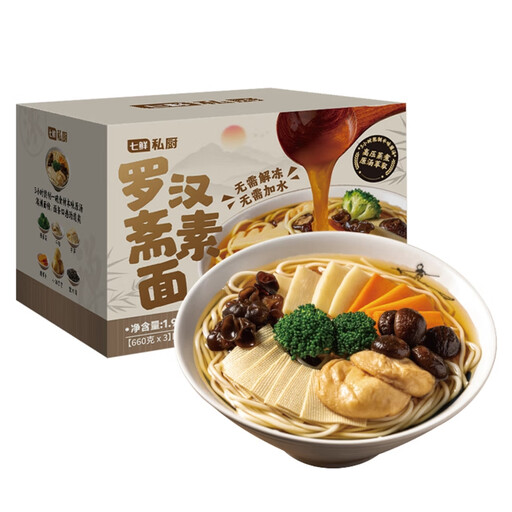
The product shown here is a multi-pack vegetarian noodle meal for a freezer routine, rather than a selection of individual ready-meal portions. Check how its packs would be prepared and served at home.
 No image available
For a freezer-meal routine, plan how the three 660g packs would be portioned and confirm that the person can safely manage the stated boiling method. Check the current label for ingredients and allergens, including sesame, wheat and soy.
They can form part of a self-managed freezer routine, but they do not automatically replace meal delivery or preparation help. Meals on Wheels UK says services may deliver hot, chilled or frozen meals; check what a local provider offers if independent shopping or preparation is difficult.
Only follow a cook-from-frozen method when the manufacturer instructs you to do so. GOV.UK says food must otherwise be fully defrosted before cooking; read the exact pack instructions.
Check whether the label gives values per 100g, per serving or for the whole pack, then compare the amount the person is likely to eat. The NHS identifies labels as a way to compare fat, salt and added sugars, while Oxford University Hospitals NHS Foundation Trust notes that a per-100g salt figure may differ from the amount in the entire portion.
Check the exact product’s current ingredients and allergen declaration before choosing it. A precautionary allergen statement indicates a possible unintended presence; it is not a free-from assurance.
Check the retailer’s local-store or delivery availability shortly before ordering. Sainsbury's says its store-stock information is indicative and can change quickly.