For a night-shift break, compare frozen meals by total fat, saturated fat and salt per 100 g, then check what the portion you will eat contains. Barking, Havering and Redbridge University Hospitals NHS Trust suggests a light meal or smaller snack during a break may suit night work better than one large meal; a calorie-controlled range can narrow your choices, but its name does not establish that an individual meal is frozen or lower in fat.
Who this helps
Night-shift workers planning a hot break
If a full meal feels too much during a night shift, start with a portion that suits the break. Barking, Havering and Redbridge University Hospitals NHS Trust suggests a light meal or smaller snack rather than one large meal during a night-time break.
Shoppers comparing fat across freezer meals
A calorie-controlled range name does not tell you the meal’s fat, saturated fat or salt content. The NHS food-label guidance gives separate per-100 g benchmarks for each, while the portion figures show what the stated serving contains.
Shoppers choosing from supermarket freezers
Tesco, Waitrose, M&S and Iceland list frozen ready meals, but their categories include different meal formats. Check the exact pack for its serving size, storage instructions and nutrition information before deciding whether it suits one break.
What to check before choosing
Start with the portion you expect to eat, compare the nutrition figures on that basis, then check whether the meal can be stored and prepared for your shift.
| Priority |
What to check |
Your needs |
| Break-time portion |
Check the pack weight, stated serving size and figures for the amount you plan to eat. A meal for two is not automatically a single serving. Barking, Havering and Redbridge University Hospitals NHS Trust suggests smaller snacks or a light meal during night-time breaks rather than one large meal. |
I want an amount that suits this break, without relying on a serving size smaller than the portion I will actually eat. |
| Fat, saturates and salt |
Compare the three figures per 100 g, then check the stated portion. The NHS defines low levels per 100 g as no more than 3 g total fat, 1.5 g saturates and 0.3 g salt; these are separate measures, not a single test. |
I want to judge the whole nutrition label, not just a calorie-controlled or reduced-fat claim. In a 2024 Northern Ireland survey of 611 adults, conducted from 16 September to 23 November, approximately 49% said they actively used traffic-light labelling when shopping for food, according to the Food Standards Agency and Ipsos Northern Ireland. That figure describes general food shopping, not frozen-meal choices. |
| Freezer and preparation fit |
Confirm that the exact item is frozen, check its cooking instructions and note whether the pack contains one or several portions. A calorie-controlled range may include products that are not frozen. |
For a planned shift, I need a portion I can keep in the freezer and prepare using the facilities available during my break. |
Common buying mistakes
-
Assuming calorie-controlled means lower-fat and frozen
M&S describes its Count On Us dishes as calorie controlled, but its frozen ready-meal range is listed separately. A range name alone does not establish an individual meal’s storage type, fat, saturates or salt.
Use the range to narrow your search, then check the exact pack’s storage instructions and nutrition panel.
-
Comparing total fat alone
A lower total-fat figure does not settle how the meal compares for saturated fat or salt. The NHS provides separate label benchmarks for all three.
Compare equivalent meals per 100 g, then check the figures for the portion you intend to eat.
-
Choosing a large meal for a short night-time break
Barking, Havering and Redbridge University Hospitals NHS Trust advises that eating too much can make someone drowsy and suggests a smaller snack or light meal during breaks, especially at night.
Check the stated serving before buying. If you plan to divide a larger pack, follow its storage and reheating instructions.
-
Treating a frozen-meal category as a nutrition filter
Retailer categories contain different recipes and pack sizes; being listed as a frozen ready meal does not establish that a product meets a lower-fat goal.
Use the category to find a suitable format, then read the individual product’s nutrition, ingredients, allergen and cooking information.
Retailer ranges to consider
These ranges offer starting points for finding frozen meals; the nutrition and serving-size decision belongs to the individual product.
Tesco
Tesco lists frozen ready meals across several meal types, including family, free-from, vegetarian and vegan options.
- Its frozen ready-meal category includes an Under 500cal section.
- That section does not establish the fat, saturates or salt content of an individual meal; check its label and serving size.
Waitrose
Waitrose lists individual frozen meals, including 400 g cottage pie and vegetable lasagne, alongside an 800 g risotto for two.
- The listed pack formats give you a way to distinguish individual meals from meals for two.
- Pack weight does not establish the meal’s fat content or the portion you will eat; compare the exact label.
M&S
M&S lists frozen ready meals and, separately, its Count On Us range, which M&S describes as calorie controlled.
- The Count On Us description may help narrow a search by calories.
- It does not establish that a particular Count On Us dish is frozen or lower in fat, saturates or salt. Check the exact pack.
Iceland
Iceland has a dedicated frozen ready-meals category and describes frozen food as a focus of its business.
- Its frozen category is a starting point when planning meals to keep in the freezer.
- The category does not determine which individual meals meet a lower-fat goal; check their nutrition panels.
A Joybuy option for a smaller break
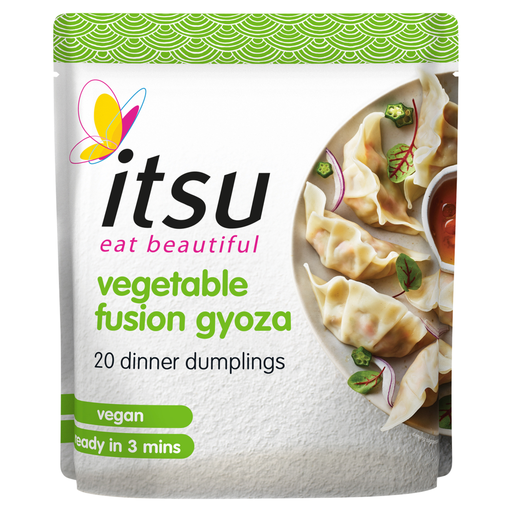
This frozen gyoza option has a stated serving to consider for a night-shift break. It should not be treated as a confirmed low-fat meal: compare its label with your other options before choosing.
 No image available
Itsu Vegetable Fusion Gyoza, 20 dumplings, 270 g
For a shorter break, consider the stated serving of eight gyoza rather than assuming the 270 g pack is one portion. The listed fat figure is 3.5 g per 100 g, above the NHS low-fat benchmark of 3 g or less per 100 g; the listed salt figure of 1.1 g per 100 g is also above the NHS low-salt benchmark of 0.3 g or less. Check the current pack for allergens and cooking instructions before planning to prepare it at work.
View on Joybuy
Questions about frozen meals and night shifts
Does “reduced fat” mean a frozen meal is low in fat?
No. Check the meal’s total fat per 100 g: the NHS defines low fat as 3 g or less per 100 g. Check saturates and salt separately, then look at the figures for the portion you will eat.
Which nutrition figures should I compare first?
Compare total fat, saturated fat and salt per 100 g to assess differently sized meals on the same basis. Then check the stated portion figures, particularly if you expect to eat the whole tray.
Can a frozen meal work for a night-shift break?
A frozen meal can be an option if its portion and preparation instructions suit your break. Barking, Havering and Redbridge University Hospitals NHS Trust suggests a smaller snack or light meal may work better than one large meal during a break, especially at night.
Is a calorie-controlled range enough to choose from?
No. It can help narrow the options, but it does not establish that an individual meal is frozen or lower in fat, saturates or salt. Check the exact product’s storage instructions, nutrition panel and serving size.


