Who is this choice for?
The point at which you intend to eat matters more than a meal's single-serve label.
Travellers eating on the train
If you cannot cook before boarding, a frozen meal that requires heating will not be ready to eat during the journey. National Rail welcomes passengers bringing their own food, but that permission does not establish cooking facilities on your service.
Travellers cooking after arrival
A frozen portion can suit a trip to accommodation or another destination with a suitable appliance. Check the pack's preparation and storage instructions, and plan how you will maintain its required temperature throughout the journey.
Travellers checking dietary requirements
Choose by the exact product label, not the freezer-aisle description. Check ingredients, allergens, the serving statement and preparation instructions before leaving, particularly if you will have limited alternatives during the trip.
What should you check before buying?
Start with where you will prepare and eat the food, then check its storage requirements and the information on the individual pack.
Cook before departure
Choose when: You can prepare the meal as directed before leaving and expect to eat it promptly.
Trade-off: You still need a secure container and a realistic plan for carrying the prepared food at a suitable temperature.
Cook after arrival
Choose when: The meal is for your destination, where you have confirmed access to the appliance its instructions require.
Trade-off: You must maintain the required storage temperature in transit, and the meal will not feed you onboard.
Take ready-to-eat food
Choose when: You need to eat on the train and cannot arrange suitable cooking before departure.
Trade-off: A chilled alternative may still need temperature control; check the chosen food's storage and allergen information.
| Priority |
What to check |
Your needs |
| Preparation |
Read the exact pack's cooking method and check that the required appliance is available before boarding or at your destination. Do not treat a one-person portion as ready to eat. |
I need food I can eat during the journey, not just carry to my destination. |
| Temperature |
Follow the pack's storage directions from collection until preparation or eating. GOV.UK guidance for food businesses calls for chilled and frozen food to be kept at the right temperature during transport and storage. |
For a longer trip, I need a workable way to carry food that requires cold storage or to eat a cooked meal promptly. |
| Portion |
Check the serving statement and pack weight rather than relying on the frozen-meal category. If comparing nutrition for a whole meal, check values for the amount you will eat. |
A pack labelled for one makes the serving size clearer; weight alone does not tell me how many it serves. |
| Ingredients |
Check the current pack's ingredients and allergen statement for the exact variety. Check preparation directions as well if a dietary requirement affects how you will serve it. |
Before I travel, I want to know whether this particular meal meets my dietary requirements. |
| Carrying |
Check whether the meal needs an insulated carrier or another suitable food container, and whether it can be carried securely after preparation. |
I need a meal I can transport without relying on its cooking tray to serve as a travel container. |
Which frozen ranges are worth checking?
These retailer ranges provide starting points for checking serving sizes and preparation instructions; the range name alone cannot establish whether an individual meal suits your journey.
Tesco
Tesco Groceries lists frozen ready meals, including a 550g Thai Red Curry Banquet Meal For One.
- The product's “for one” wording gives a serving-size starting point.
- Its microwave-from-frozen instructions require preparation; check the exact product's directions before travel.
Sainsbury's
Sainsbury's lists a 400g frozen Cottage Pie Ready Meal For 1.
- The listing explicitly identifies this example as a one-person meal.
- Check the cooking and storage instructions for the meal you select; a category can also contain other portion formats.
Waitrose
Waitrose & Partners lists frozen ready meals, including a 400g Chilli Con Carne & Rice.
- The stated pack weight helps when comparing individual products.
- Check the serving statement and preparation directions rather than assuming the weight makes it suitable for eating onboard.
Asda
Asda's frozen ready-meal range is organised into categories including traditional, Italian, Indian, and Chinese and Asian meals.
- The category divisions offer a way to narrow a search by meal type.
- Check the individual pack for its serving size, ingredients, allergens and cooking method.
Iceland
Iceland has a dedicated frozen-ready-meals range.
- The dedicated category provides a starting point for comparing frozen options.
- Check each meal's portion, storage and preparation instructions for your travel plan.
M&S Food
Marks & Spencer lists frozen meals in different sizes, including a 270g Fisherman's Pie and larger pies.
- The listed weights make it possible to distinguish smaller packs from larger products.
- Check the serving statement: the frozen range is not exclusively single-serve.
Joybuy options to cook after arrival
These frozen dumpling and soup packs are options to consider if you can prepare food after the journey. Check whether each pack serves one, along with its cooking and storage instructions, before choosing it for your trip.
 No image available
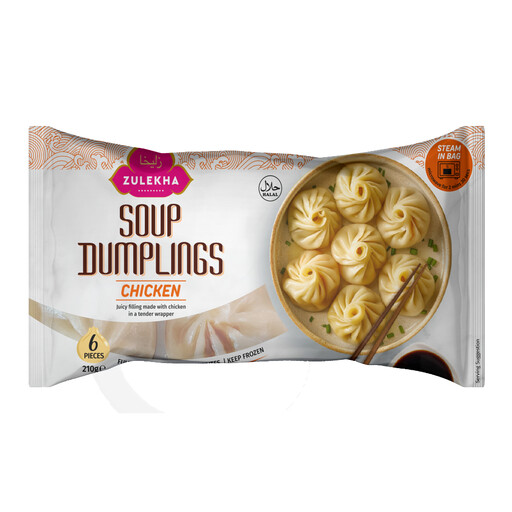
Zulekha Chicken Soup Dumplings 210g
Consider these for a destination where you can prepare them; the listing describes microwave, steaming and pan-cooking methods. Check whether the 210g pack serves one, follow its storage and cooking instructions, and read the current allergen label.
View on Joybuy
 No image available
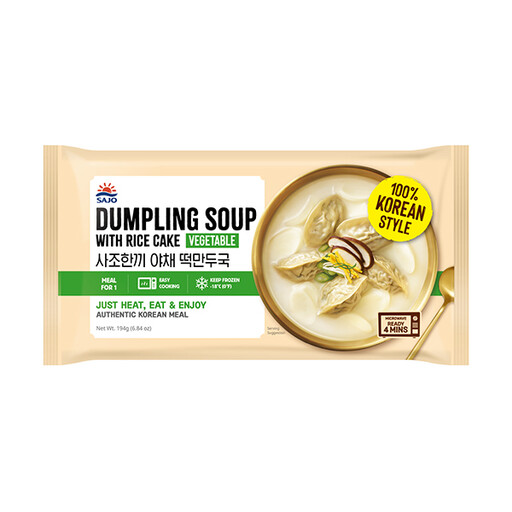
Sajo Vegetable Rice Cake Dumpling Soup 194g
Consider this soup if you can boil it after arrival, as described in the listing; it is not a ready-to-eat train meal. Check whether the 194g pack serves one, follow its storage instructions and read the current allergen label.
View on Joybuy
Questions about taking food on the train
Can I bring my own frozen meal onto a train?
Yes. National Rail says passengers are welcome to bring their own food. You still need to follow the meal's storage and cooking instructions; being allowed to bring it does not provide a way to cook it onboard.
Can I rely on a microwave or onboard catering?
Do not rely on an onboard microwave unless your operator confirms that passengers can use one on your service. National Rail says catering varies by train company, so check your particular journey if food service matters to your plan.
How should I carry a meal I will cook after arrival?
Follow its pack storage instructions and plan suitable temperature control for the whole trip. GOV.UK food-business guidance says chilled and frozen food must be kept at the right temperature during transport and storage; an insulated food-safe carrier and cold packs may be relevant when refrigeration is required.
Can I cook a frozen meal before leaving and eat it on the train?
That route needs enough time to cook the meal as directed, a secure way to carry it and a suitable plan for the interval before eating. If you cannot manage those conditions, choose food intended to be eaten without cooking rather than assuming a heated meal will remain suitable throughout the journey.
What should I check if I have a food allergy?
Read the ingredients and allergen information on the exact current pack before buying. If you are considering onboard food instead, National Rail says operators can provide ingredient-allergen information but cannot generally guarantee that an item is free from an allergen.


