What should you check before choosing?
Decide where you will eat, then check whether you can store and prepare each meal as its own pack directs.
Eat before leaving or after arrival
Choose this when: You have suitable freezer storage and a confirmed way to cook both meals.
Bear in mind: Cooking methods and times vary, so a meal that works in your kitchen may not suit the appliance at your destination.
Eat during the journey
Choose another format when: You cannot keep a frozen meal at its required temperature and cook it before eating.
Bear in mind: A cool bag can help keep packed food cool, as Norfolk and Norwich University Hospitals NHS Foundation Trust advises, but it does not cook a frozen meal or replace its storage instructions.
| Priority |
What to check |
Your needs |
| Storage and transport |
Read each pack’s storage directions. If carrying the meal, plan how to maintain its required temperature until cooking; GOV.UK’s guidance for food businesses stresses temperature control during transport. |
I need to know whether the meal will stay under the storage conditions its pack requires throughout my journey. |
| Cooking facilities |
Check the cooking method, appliance settings, time and any instructions about reheating. The cited Asda frozen meals instruct shoppers to cook from frozen and check that food is piping hot before serving. |
If I am eating after arrival, the meal must work with the appliance I will actually have there. |
| Ingredients and nutrition |
Compare the exact packs’ ingredients, allergen declarations and nutrition per serving or per pack. A vegetarian, vegan or other dietary label does not replace those checks. |
My second meal should fit my dietary requirements, not merely have a different flavour. |
| Pack format |
Check the number of packs, weight and stated servings. Confirm that both meals fit your freezer and the occasions when you plan to cook them. |
Two separate single-serve meals suit my plan better than a multipack if I only need one portion at a time. |
Frozen-meal ranges to consider
These retailers show different types of frozen ready meal; use the individual product details to decide whether a meal fits your travel-day arrangements.
M&S
M&S lists frozen meals including fish dishes and a Plant Kitchen nut roast, offering different choices for meals cooked at either end of a journey.
- Its listed examples include Fisherman’s Pie and Haddock Mornay.
- Check the chosen pack’s cooking method and your Foodhall’s availability.
Waitrose
Waitrose lists frozen 400g meals including cottage pie, vegetable lasagne and macaroni cheese.
- The listed meals provide different main-course options in the same stated pack weight.
- Confirm allergens, servings and preparation on each individual product.
Tesco
Tesco’s frozen ready-meal listing includes macaroni cheese, cottage pie and chicken tikka masala with rice.
- The listed examples offer different dishes for a two-meal freezer backup.
- Check the exact product’s cooking instructions and local availability before relying on it for a travel day.
Sainsbury’s
Sainsbury’s lists frozen single-person meals, including a 400g cottage pie and a 400g spaghetti bolognese.
- Both listed examples identify a meal for one.
- Check that the exact item you select is frozen and read its dietary and cooking information.
Asda
Asda lists frozen ready-meal categories and product pages with preparation and ingredient details.
- The cited chicken and rice meals state cooking-from-frozen instructions.
- Their listed allergens differ, so do not apply one meal’s label to another.
Iceland
Iceland has a dedicated frozen ready-meal category for shoppers considering freezer meals.
- Its category provides a starting point for browsing frozen meals.
- Open an individual product listing to check its cooking method, ingredients and portion format.
Joybuy product options
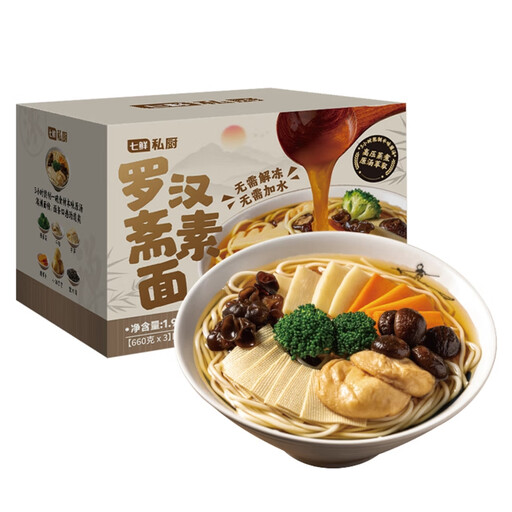
This frozen noodle multipack is an option to consider for eating before departure or after arrival if you have freezer storage and suitable cooking facilities. Check its portions against a plan for two separate meals.
 No image available
7FRESH Private Chef Luohan Zhai Vegetarian Noodles, 660g × 3
For a meal before departure or after arrival, check that you can follow the pack’s boiling-from-frozen directions. The listed multipack contains three 660g packs, totalling 1.98kg; confirm how many servings you intend to make from each pack. Check the current allergen declaration, particularly if wheat, soy or sesame matter to you.
View on Joybuy
Questions about travel-day meals
Can I eat a frozen ready meal on the train?
Only plan to do so if you can maintain the meal’s required storage temperature and cook it according to its pack before eating. Do not assume onboard heating is available; if you cannot meet those conditions, choose another food format for the journey.
Which two frozen meals should I keep for a travel day?
If you will eat before leaving or after arriving, choose two different meals whose storage and cooking instructions you can follow. A familiar single-serve main and a second meal that fits your dietary preferences give you distinct options; check each pack’s stated servings rather than assuming its weight equals one portion.
Can I assume a frozen meal can be microwaved?
No: check the exact product’s instructions and the appliance you will use. For example, Asda’s listing for The Gym Kitchen Chicken & Chorizo Paella gives different cooking times for 700W and 900W microwaves and says to cook it from frozen.
What should I check for allergies or dietary restrictions?
Read the current pack’s ingredients, allergen declaration and relevant dietary labelling for each meal. The cited Asda protein chicken meal lists barley and its JUST ESSENTIALS chicken curry lists milk; those details describe the named products, not every meal in either range.
Does a cool bag make a frozen meal suitable for travel?
A cool bag and ice pack can help keep packed food cool, as Norfolk and Norwich University Hospitals NHS Foundation Trust advises, but they do not replace a frozen meal’s storage instructions or provide a way to cook it. Check how you will maintain the required temperature and where you will prepare the meal before taking it with you.


