Travellers planning food for hand luggage
GOV.UK says frozen food cannot usually be carried in hand luggage at UK airports. If the meal is meant for the journey through security, its frozen format matters before its nutrition label does.


For food to carry through security at a UK airport, choose a non-frozen option: GOV.UK says frozen food cannot usually be carried in hand luggage. A frozen ready meal is more relevant if you can cook it before leaving, or have confirmed suitable transport, storage and cooking facilities after arrival. To choose for a lower-fat preference, compare the individual meal’s fat figures and claim wording rather than relying on a calorie-focused or health-oriented range name.
GOV.UK says frozen food cannot usually be carried in hand luggage at UK airports. If the meal is meant for the journey through security, its frozen format matters before its nutrition label does.
A frozen meal may fit a plan that includes cooking before setting off, or confirmed transport, storage and cooking facilities at the destination. Check the individual meal’s fat information rather than assuming its range name answers a lower-fat preference.
Tesco, M&S, Waitrose and Iceland present frozen and health-oriented ready meals in different ways. Check whether the particular meal is frozen, how it is prepared and what its own nutrition panel says.
Decide when and where you would eat the meal before comparing labels. A frozen meal cooked before travel presents a different choice from food intended for hand luggage.
| Priority | What to check | Your needs |
|---|---|---|
| Security route | GOV.UK says frozen food cannot usually be carried in hand luggage at UK airports. For other food, check the departure airport and airline rules before travel. | If I need food to take through security, I should choose a non-frozen option rather than plan around a frozen ready meal. |
| Fat information | Compare fat and saturated fat per 100 g and per serving. Business Companion’s UK permitted-claims guidance lists no more than 3 g fat per 100 g for a ‘low fat’ claim on solid food; check what any ‘reduced fat’ claim compares the meal with. | I’m choosing for fat content, so a calorie figure or a high-protein range name does not answer my question about the individual meal. |
| Calorie labels | Read the meal’s own energy and fat figures rather than treating a category filter as its nutrition panel. Tesco’s ‘Under 500cal Meals’ filter is a way to browse, not a fat measurement. | A calorie-focused range may help me find candidates, but I still want to compare the fat values on the packs. |
| Meal format and preparation | Confirm that the exact product is frozen, then check its storage and cooking instructions. For a meal after arrival, confirm how it will be transported and whether suitable storage and cooking facilities are available. | I can consider a frozen meal before leaving if I can prepare it then; after arrival, it only fits if the practical arrangements work. |
GOV.UK says frozen food cannot usually be carried in hand luggage at UK airports, so it does not suit an ordinary cabin-food plan.
If you want a frozen meal, plan to cook it before departure or consider it after arrival only when transport, storage and cooking are arranged.
Calories and fat measure different things. Business Companion’s UK guidance gives separate criteria for ‘low energy’ and ‘low fat’ claims on solid foods.
Compare the exact meal’s fat and saturated-fat figures per 100 g and per serving, and read any ‘reduced fat’ claim in its stated context.
M&S presents healthy ready meals separately from frozen ready meals, while Waitrose places its healthy ready meals under fresh and chilled products. A range name alone does not establish a meal’s storage format.
Check the specific pack or product page for storage and preparation instructions before including it in your travel plan.
Iceland describes its MyProtein line in lower-fat terms, but a statement about a range does not give the fat value or claim wording for a particular meal.
Use the range to find meals to examine, then compare each product’s own nutrition panel, ingredients and preparation instructions.
These retailer ranges can help narrow a search, but the individual product determines whether a meal is frozen and what its fat figures are.
Tesco’s frozen ready-meals category includes an ‘Under 500cal Meals’ filter.
M&S presents Count on Us, High Protein and Nutrient Dense ranges among its health-oriented ready meals, and has a separate frozen-ready-meals range.
Waitrose lists frozen ready meals separately from its fresh and chilled healthy ready meals.
Iceland has a frozen-ready-meals range and describes its MyProtein meals using high-protein and lower-fat positioning.
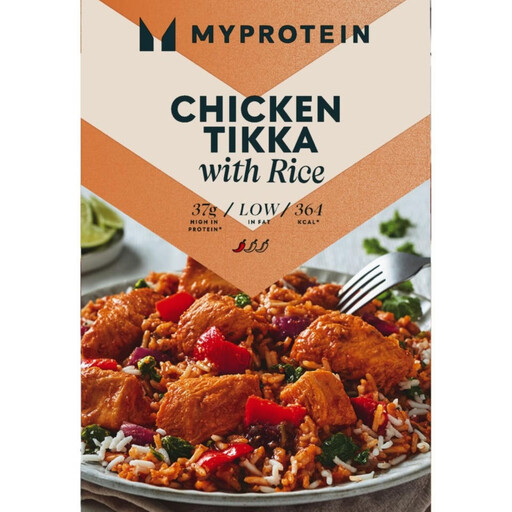
This frozen ready meal is an option to consider for cooking before leaving for the airport, not for carrying frozen through UK airport security. Check its pack information against your fat preference and preparation plans.
 No image available
Consider this 350g frozen meal for eating before departure if you can prepare it then. Compare the pack’s fat figures per 100 g and per serving, and follow its storage and cooking instructions; do not plan to carry it frozen in hand luggage through UK airport security.
Usually not. GOV.UK says frozen items, including frozen food, cannot usually be carried in hand luggage. If you believe an exception applies to your circumstances, check the applicable requirements before travelling.
No. Business Companion’s UK permitted-claims guidance gives separate figures for solid foods: no more than 40 calories per 100 g for ‘low energy’ and no more than 3 g fat per 100 g for ‘low fat’. Read the individual meal’s fat figure rather than inferring it from a calorie label.
No. Retailers can present health-oriented and frozen ranges separately, and a range name does not give every dish the same fat value. Check the exact meal’s storage format, nutrition panel and any comparative ‘reduced fat’ wording.
Check the rules for your departure airport, airline and any transit or destination country. The UK Civil Aviation Authority advises passengers to check with the airport and airline; choosing a non-frozen food does not by itself settle every restriction that may apply to it.