Shoppers stocking individual meals
If each tray is intended as one meal, check its whole-pack calories before filling the freezer. NHS food-label guidance distinguishes figures per 100g from those sometimes given per portion.


For a bulk buy, shortlist frozen meals only when the calories in the whole pack—or the portion you will actually eat—are below 500 kcal; a per-100g figure alone is not the meal total. Then compare salt, saturated fat, protein and fibre, and check allergens, freezer storage and cooking instructions before buying several of the same meal.
If each tray is intended as one meal, check its whole-pack calories before filling the freezer. NHS food-label guidance distinguishes figures per 100g from those sometimes given per portion.
If declared protein matters to your choice, compare it for the amount you will eat. Asda Groceries lists protein per microwaved pack for individual frozen meals, so those figures can be considered alongside their pack calories.
When several people may eat the same bulk purchase, check each meal’s allergen declaration, salt and saturated fat, as well as whether its cooking instructions suit the appliances available.
Screen each meal against the calorie ceiling first, then compare the labels and preparation requirements of the meals that remain.
| Priority | What to check | Your needs |
|---|---|---|
| Whole-meal calories | Find kcal for the whole pack or calculate it for the portion you will eat. Check the pack weight and number of servings rather than treating kcal per 100g as the meal total. | I want the amount I actually eat to stay below 500 kcal, even when a pack contains more than one serving. |
| Salt and saturated fat | Compare figures on the same basis, such as per pack with per pack. Check traffic-light labelling where shown; a calorie figure does not describe these other nutrients. | A meal below my calorie ceiling might still differ from another in salt or saturated fat, so I want to compare both before buying several. |
| Protein and fibre | Compare declared amounts for the portion you plan to eat. Check ingredients or stated vegetable content separately rather than inferring them from protein figures. | If protein, fibre or vegetables matter to my selection, I want the figures and ingredients for the particular meal I am buying. |
| Allergens and preparation | Read the current allergen declaration, freezer-storage directions and cook-from-frozen instructions. Check the specified microwave settings or oven method. | Before stocking up, I need to know that everyone who will eat the meal can use it and that we have a suitable way to prepare it. |
Being below 500 kcal does not establish a meal’s salt or saturated-fat content. In its May 2025 assessment of 1,511 chilled and frozen ready meals from 11 major UK retailers, Action on Salt & Sugar reported that 56% of the products assessed were high in salt and 42% high in saturated fat.
After checking whole-meal calories, compare salt, saturated fat and fibre for the portions you would eat.
A pack weighing more than 100g can contain more calories than the per-100g figure shown on its label.
Use the whole-pack figure when available. Otherwise, use the pack weight and the portion you intend to eat to calculate its calories from the per-100g figure.
An allergen or an unsuitable cooking method can make a bulk purchase difficult for the household to use.
Check the allergen declaration and preparation instructions before buying multiples; trying one pack first can also help you decide whether to stock it.
Ingredients and nutrition information can change with a product update. Iceland Foods advises shoppers to read the actual product label before use.
Check the label on the packs you receive, particularly when an allergen declaration matters to your household.
These retailer ranges are starting points for finding frozen meals, not a list of meals confirmed to meet the calorie ceiling; check the nutrition label of each product.
Tesco Groceries has a frozen-ready-meal aisle labelled “Under 500cal Meals”, including Calorie Controlled products.
Asda Groceries lists frozen ready meals and provides per-pack nutrition on individual product pages.
Iceland Foods has a frozen-ready-meals range with product-level storage and cooking information.
Waitrose & Partners lists frozen ready meals in several formats, including individual meals and meals for two.
M&S Food lists frozen dishes including pies, fish dishes and a Plant Kitchen nut roast.
Sainsbury's lists ready meals for one and points shoppers towards meals for stocking the freezer.
This frozen dumpling pack is a dinner option to assess against the under-500-kcal goal, rather than a complete ready-meal shortlist. Check how much of the pack you would eat before buying multiples.
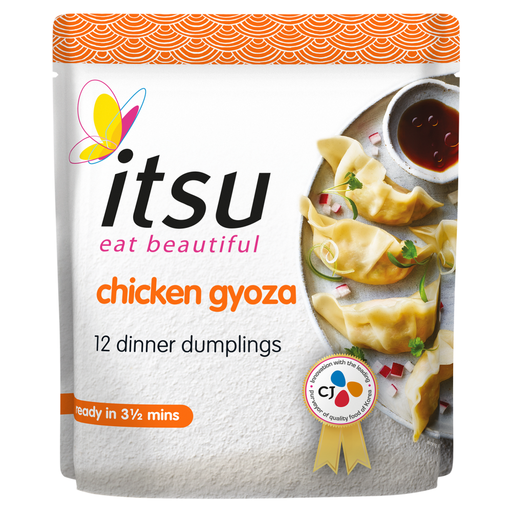 Image unavailable
For a frozen dumpling dinner, use the current pack label to check the calories in the number you intend to eat before buying several packs. The pack contains 12 dumplings and weighs 240g; check its allergen declaration and preparation instructions for your household.
Check kcal for the whole pack if you will eat all of it, or calculate kcal for your actual portion. NHS food-label guidance says energy is given per 100g and may also be shown per portion, so a per-100g number must not be mistaken for the whole meal.
No: compare those nutrients separately on the labels of the meals you are considering. Action on Salt & Sugar reported in May 2025 that, among 1,511 chilled and frozen ready meals assessed from 11 major UK retailers, 56% were high in salt and 42% high in saturated fat; those product-survey figures do not describe every individual meal.
Use it to shortlist meals, but read the current pack label before use, especially for allergens and nutrition. Iceland Foods advises that product information can change and recommends checking the actual label.
Confirm the number of servings, allergen declaration, freezer-storage directions and cooking method for each meal. Check that its microwave settings or oven instructions suit the equipment you will use.