People tracking meal calories
If you plan to eat the whole pack, compare its total kcal with your plan. NHS guidance cautions that the portion used on a label may not match the amount you eat.


Choose a frozen meal intended for one person, then compare the kcal for the amount you will actually eat, not just the figure per 100g. NHS guidance notes that a manufacturer’s portion may differ from yours. A calorie-filtered range can narrow the choice, but check the full nutrition label, ingredients and cooking directions, and consider how the meal fits the rest of your day.
If you plan to eat the whole pack, compare its total kcal with your plan. NHS guidance cautions that the portion used on a label may not match the amount you eat.
A one-person frozen meal can simplify portion planning. Check its ingredients and nutrition alongside calories, and consider whether you want vegetables with the meal.
If allergens or vegetarian or vegan ingredients matter to you, use shopping filters as a starting point and read the current pack’s ingredients, allergen information and cooking directions.
Start with the amount you will eat, then compare the meal’s label and preparation requirements rather than relying on a range name or pack size.
| Priority | What to check | Your needs |
|---|---|---|
| Portion and kcal | Check how many servings the pack contains and whether kcal are given per 100g, per serving or for the pack. Compare the figure for the amount you intend to eat; the NHS notes that a manufacturer’s portion may differ from yours. | I want to count the meal I will actually eat, rather than assume that a “for one” pack meets my calorie plan. |
| Nutrition label | Compare energy alongside the stated fat, saturates, sugars and salt figures. Where traffic-light labelling appears, read its colours and reference-intake information alongside the full nutrition panel. | I want to look beyond the kcal figure. In a Food Standards Agency and Ipsos Northern Ireland survey of 611 respondents interviewed from 16 September to 23 November 2024, 49% said they actively used traffic-light labelling when shopping for food. |
| Meal ingredients | Read the ingredient list to see what the meal contains, including any protein source or vegetables relevant to your preferences. A “high-protein” or calorie-controlled range name does not describe the whole meal. | Vegetables or a particular protein source may matter to me, but I still want to judge the exact meal rather than its range label. |
| Preparation | Check the frozen-storage directions and whether the pack gives instructions for the appliance you will use. Follow any product-specific cooking and standing steps. | On a busy day, I need a meal I can prepare using the equipment and time available to me. |
| Allergens | Read the current pack’s ingredients and allergen statement, even if you have bought the meal before. Iceland notes that published ingredient, nutrition and allergy information can change. | When an ingredient or allergen matters, an online filter or an earlier purchase is not enough for me to check this pack. |
A one-person format helps with portion planning, but it does not state the meal’s total kcal. The NHS notes that label figures may be per 100g or per manufacturer portion.
If you will eat the whole pack, use its whole-pack kcal figure where provided; otherwise check the stated serving size and number of servings.
Calorie-controlled and protein-focused ranges can help narrow a search, but individual meals still need to be judged against your calorie plan, dietary requirements and full nutrition label.
Compare the exact meal’s portion basis, ingredients and stated salt and saturated-fat figures before deciding.
Ingredients, allergen information and preparation directions can change. Iceland advises shoppers to read the actual product label.
Check the pack’s allergen statement, storage directions and cooking instructions before preparing the meal.
These examples show different ways to start a search; the label on the particular meal determines its portion and nutrition details.
Tesco Groceries lists a frozen Under 500cal Meals category that includes Tesco Calorie Controlled and Tesco High Protein products.
Sainsbury’s lists frozen Ready Meal For 1 products, including a 400g cottage pie.
Waitrose & Partners lists 400g frozen beef lasagne, cottage pie and vegetable lasagne.
Iceland Foods lists individual 400g frozen meals, including lasagne and liver and bacon with mash.
M&S describes vegetarian and vegan choices in its frozen ready-meal range, including dishes with pulses, nuts or vegetables.
This 350g frozen chicken-and-rice meal is an option to assess by its current pack label. Confirm its serving count before treating the whole pack as one person’s portion.
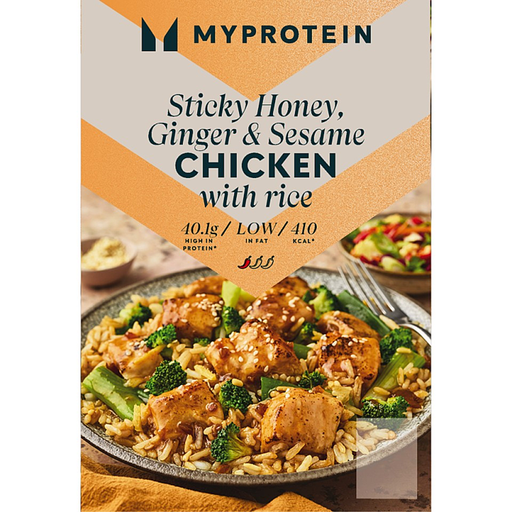 No image available
For a one-person meal plan, check the current pack’s serving count before using its whole-pack nutrition figures as your portion.
The title specifies a 350g pack. Follow its frozen cooking directions, and check the current allergen statement for wheat, sesame, soya and barley. The product information also flags a low-potassium-diet restriction.
No. A one-person pack can make portions easier to plan, but you still need its kcal figure for the amount you will eat. NHS guidance notes that calories may be listed per 100g or per portion, and the manufacturer’s portion may differ from yours.
Use the range as a starting filter, not the final decision. Check the exact meal’s portion basis, full nutrition label and ingredients, then consider how it fits your day.
The UK front-of-pack scheme combines colour coding with percentage reference intakes. Where a meal displays it, use it to compare the labelled nutrition information alongside energy and the full nutrition panel.
Yes. Read the current physical pack before eating it. Iceland Foods notes that ingredients and allergy information published for its products can change.
No. Follow the directions for the exact meal and your appliance, including any standing time. Iceland’s 400g lasagne listing, for example, specifies a standing step after microwave cooking.