
24/7 Customer Support

Free returns

Same-day & Next-day Delivery

Quality Guaranteed

Unlock Your Welcome Offers: FREE Delivery | Up to 80% OFF | Free 30-day JoyPlus trial
Download the APP
For anyone who loves the authentic, slightly bitter and deeply aromatic flavour of Indian cuisine, methi (or fenugreek) is an indispensable herb. Yet, sourcing fresh methi leaves in the UK can be a challenge. They aren't always available, require thorough washing and chopping and have a short shelf life. This is where frozen methi leaves come in, offering convenience without compromising on taste.
However, not all frozen products are created equal. Many home cooks find themselves disappointed with bags of icy mush, flavourless leaves or unusable stems. To help you get the quality you expect for your curries, dhals and parathas, we've identified the common pitfalls to avoid when you buy methi leaves in the UK.
To ensure you're getting a high-quality product that delivers on flavour and convenience, focus on these three core parameters.
The method used to freeze the leaves is critical. The ideal standard is Individually Quick Frozen (IQF). This process freezes each leaf or small cluster separately before they are packaged.
Always check the ingredient list on the packaging. For authentic flavour, the list should be short and simple, ideally containing just one item: "Fenugreek Leaves" or "Methi Leaves".
The main appeal of frozen methi is saving time on preparation. A good product will be advertised as chopped methi and should deliver on that promise.
Based on these practical criteria, we've matched a product to different home-cooking profiles.
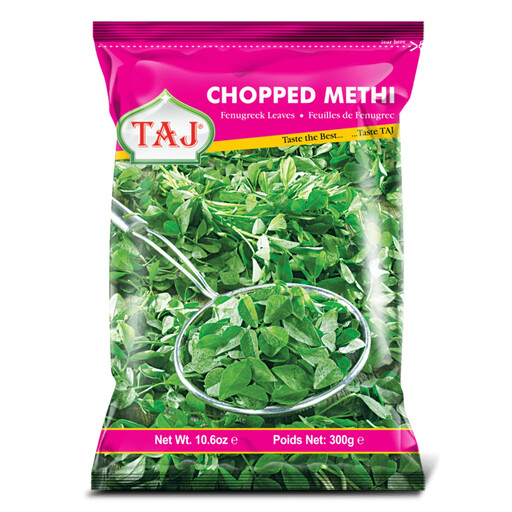
Why This Fits Their Persona: This user needs to get a flavourful, healthy meal on the table quickly after a long day. These pre-chopped leaves eliminate all prep time—no washing, sorting or chopping required. They can be added straight from the freezer into a pan for a quick Aloo Methi or stirred into a simmering dhal.
It directly counters the stem-to-leaf deception. As a product from Taj frozen foods, it is processed to be finely chopped, ensuring a consistent, pleasant texture without the waste of tough stems.
100% Fenugreek Leaves: No added salt or preservatives.
Ready to Use: Saves significant preparation time.
Why This Fits Their Persona: This cook values the genuine taste of home-cooked Indian food but lacks access to a reliable supply of fresh methi. The freezing process locks in the distinct, aromatic flavour and nutrients of leaves harvested at their peak, providing an authentic taste that is far superior to dried alternatives.
It avoids the purity problem. The ingredient list is simply "Fenugreek Leaves," ensuring no unwanted salt or additives will interfere with the authentic, slightly bitter notes that are characteristic of methi.
Flavour Preservation: Freezing locks in the fresh, aromatic flavour.
Nutrient-Rich: Retains more nutrients compared to dried methi.
Why This Fits Their Persona: This user cooks large batches of curries, soups or fillings for the week ahead. The 300g pack size is economical and practical. Because the leaves are free-flowing, it's easy to portion out what's needed for a large pot and securely reseal the rest for future meal prep sessions.
This product avoids the freezer burn trap. The loose-frozen nature means you don't have to thaw the whole block, which prevents the formation of ice crystals and mushiness on unused portions, preserving quality for the next batch.
Easy Portioning: Free-flowing leaves are simple to measure.
Good Value: The 300g pack size is suitable for multiple large meals.
We have compiled a complete, real-time list of products that fully satisfy these strict selection criteria and UK safety regulations.
No, it is generally not necessary and often not recommended. For most recipes like curries, stir-fries or dhals, you can add the frozen methi leaves directly to the pan or pot. They will thaw quickly from the heat of the other ingredients. Adding them frozen helps retain their shape and prevents them from becoming overly watery.
Simply use them as you would fresh, chopped methi. For a simple stir-fry like Aloo Methi, you would typically fry your spices and potatoes first, then add the frozen methi leaves towards the end of the cooking process, stirring until they are heated through and have released their aroma. For curries, add them in the last 5-10 minutes of simmering.
Methi is the Hindi name for the plant, while Fenugreek is its English name; they refer to the same thing. Frozen fenugreek leaves are simply the fresh leaves that have been frozen. Kasuri Methi, on the other hand, refers to dried fenugreek leaves. While also flavourful, dried leaves have a different, more potent and slightly hay-like aroma and are typically crumbled into dishes as a finishing herb, whereas fresh or frozen leaves are used as a leafy vegetable within the dish itself.