Portion-aware weekly shoppers
If frozen pizza is part of your regular shop, the pack size and stated servings help you plan how much will go into one meal.


Choose a frozen pizza by the calories in the amount you plan to eat, then compare per-100g figures on the same preparation basis. A thin base or smaller pack does not settle the question: check the stated serving size, saturated fat and salt, and read the current pack before buying.
If frozen pizza is part of your regular shop, the pack size and stated servings help you plan how much will go into one meal.
You want to compare familiar pizzas without assuming that “thin”, “stonebaked” or “free from” tells you their calorie content. The intended portion and per-100g figures answer different questions.
Vegetarian or gluten-free requirements may narrow the choice. Check the exact pack’s ingredients and allergens as well as its nutrition, storage and cooking instructions.
Start with the portion you expect to serve. Use the per-100g panel to compare pizzas by weight, then check the other figures for that planned portion.
| Priority | What to check | Your needs |
|---|---|---|
| Comparable labels | Read kcal per 100g and note whether each figure is for the pizza as sold or prepared. Use traffic-light colours to identify the nutrients shown, not as a substitute for the numbers. | I want to compare pizzas of different sizes without relying on the crust description. In Ipsos interviews for the Food Standards Agency between September and November 2024, 49% of 611 Northern Ireland adults said they actively used traffic-light labels when shopping for food generally; that figure is not specific to pizza. |
| Meal portion | Check whether the kcal figure covers half a pizza, a third or one individual pizza. Match it to the amount you intend to eat and check the number of servings in the pack. | A whole individual pizza is easier for me to portion than a shareable one, or I can plan to serve half and keep the rest. Those choices need different calorie calculations. |
| Saturates and salt | Compare saturated fat and salt for the same intended portion as the calorie figure. Where present, traffic-light colours show how those nutrients are classified on the label. | Calories are my starting point, but I also want to see the saturates and salt in the portion I will serve. |
| Dietary suitability | Read the current ingredients and allergen statement for the exact variant. Compare its nutrition separately; a gluten-free label does not state its calorie content. | If someone needs a gluten-free or vegetarian option, I need a suitable pack rather than an assumption based on the product name. |
| Freezer planning | Check the pack’s storage directions, preparation method and cooking instructions before adding it to the weekly shop. | I need a pizza I can store and prepare as directed on the pack when it is time to serve it. |
Tesco Groceries lists Chicago Town Deep Dish Pepperoni as one 155g pizza per serving, while the cited Goodfella’s and Dr. Oetker pizzas each state two servings per pack. A per-serving calorie figure therefore describes a different amount of pizza in each case.
Work out the kcal for the amount you plan to eat. When comparing per-100g values, also check that the labels use the same preparation basis.
Base style and dietary labelling describe different features from calorie content. For example, ASDA Groceries lists its Free From Margherita at 333 kcal per one-third pizza; that serving size matters when planning a meal.
Check the exact pizza’s kcal for your portion and per 100g. Choose a gluten-free product for the dietary requirement, then compare its nutrition on its own terms.
The cited pizzas also differ in their stated saturated-fat and salt figures per portion. The Food Standards Agency explains that traffic-light labels show fat, saturates, sugars and salt alongside energy.
Once you know the portion you will serve, read its saturates and salt figures as well as its calories.
These examples show how serving formats and label figures vary; the figures apply to the named products, not every pizza from a brand or retailer.
A thin-base example for shoppers planning a half-pizza portion.
The cited Ristorante Mozzarella is another pizza with a stated half-pizza serving.
An individual-pizza format may suit shoppers who prefer a defined whole-pizza serving.
The cited own-brand Stonebaked Margherita is a smaller, 252g pizza with nutrition stated per half.
The cited own-brand examples include a stonebaked pizza and a gluten-free variant with different stated portions.
Check the storage category when considering an own-brand pizza for a freezer-based weekly shop.
These options include thin-base pizzas and a Tiger Crust pizza for a weekly shop. Compare the current pack labels for the portion you plan to serve; the product selection alone does not establish which meal has fewer calories.
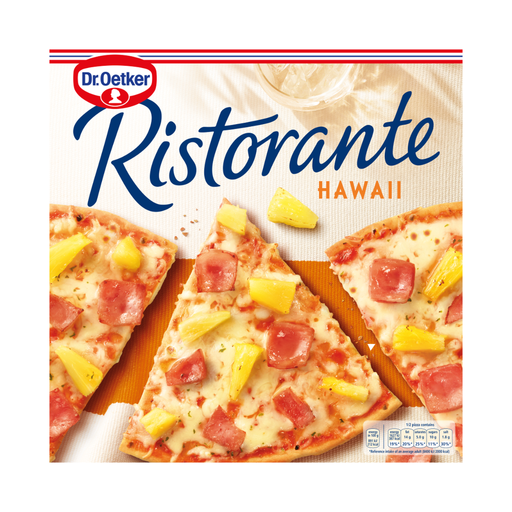 No image available
If you plan to serve half a pizza, check the current pack’s kcal for that portion and its stated servings. The pizza weighs 355g; also read its saturates, salt and allergen information before buying.
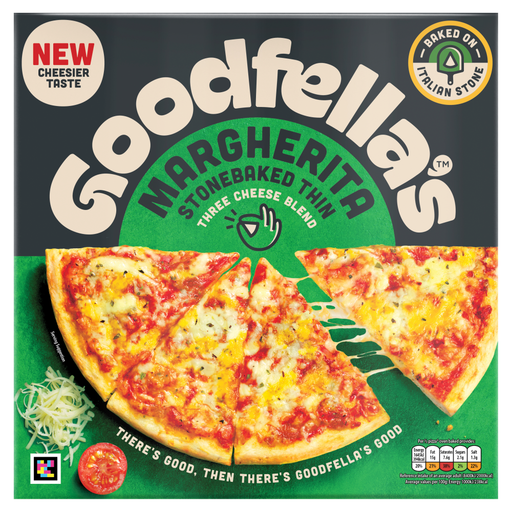 No image available
This thin-base option suits a planned half-pizza serving if that portion fits your meal. Tesco Groceries lists 394 kcal per oven-baked half pizza for the cited 334g product, with two servings per pack; check the current pack for its nutrition and allergens.
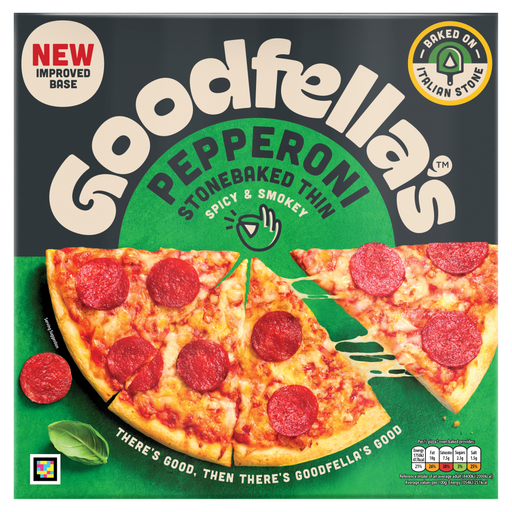 No image available
Choose the pepperoni variant if that is the topping you want, but do not treat its thin base as a calorie comparison. For this 332g pizza, check the current label’s per-100g and planned-portion figures, serving guidance, saturates and salt.
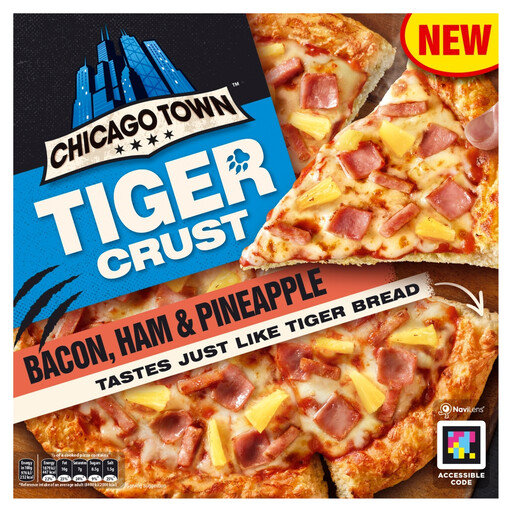 No image available
This 380g Bacon Ham & Pineapple pizza is a different format from the thin-base options. Check its current serving guidance and nutrition for the portion you will eat, then follow the pack’s storage and cooking directions.
Start with the kcal for the amount you expect to eat, then compare per-100g figures on the same preparation basis. The cited product labels use portions ranging from a third or half of a pizza to one whole individual pizza, so a per-serving number alone is not a like-for-like comparison.
No: a thin base describes the pizza’s format, not its calorie figure. For example, Tesco Groceries lists the cited Goodfella’s thin Margherita at 394 kcal per oven-baked half pizza, while Sainsbury’s lists the cited Dr. Oetker Ristorante Mozzarella at 432 kcal per half. Check the exact product and portion rather than relying on the base description.
Yes, if those figures matter to your choice: read them for the same portion you are using to compare calories. The Food Standards Agency explains that traffic-light labels show fat, saturates, sugars and salt alongside energy; the colours describe the labelled amounts rather than changing the serving size.
Gluten-free status does not establish a lower calorie figure. ASDA Groceries lists its Free From Margherita at 263 kcal per 100g and 333 kcal per one-third pizza. Check dietary suitability and calorie content separately on the current pack.
Read the exact pack’s storage and cooking directions, including whether it says to cook from frozen and what to do if the product thaws. Check the current ingredients and allergen statement too, particularly when choosing for a dietary requirement.