Solo dinner shoppers
If one pizza is your dinner, compare the calories for the whole pack rather than relying on a per-100g or half-pizza figure.


Choose frozen pizza by the calories in the amount you expect to eat, whether that is half the pizza or the whole pack; a thin or stonebaked base does not answer that question on its own. Compare saturated fat and salt on the same portion basis, then check the current pack for allergens and cooking instructions.
If one pizza is your dinner, compare the calories for the whole pack rather than relying on a per-100g or half-pizza figure.
A stated half-pizza serving is useful when you intend to eat half. Check how the remaining pizza should be stored and prepared.
Check the exact pizza’s ingredients, allergens and any gluten- or lactose-free claim. A free-from label does not tell you how many calories your portion contains.
Decide how much pizza you expect to eat before comparing labels; then check the other details that matter for that meal.
| Priority | What to check | Your needs |
|---|---|---|
| Calories for your portion | Compare kcal per 100g, the stated serving size and servings per pack. Work out the whole-pizza total if you expect to eat it all. | If I usually finish a pizza for dinner, I need the full-pack figure; a half-pizza serving alone will not describe my meal. |
| Saturated fat and salt | Compare both per 100g and for the amount you will eat. NHS food-label guidance describes more than 5g saturated fat or 1.5g salt per 100g as high. | I want to compare more than calories, particularly when two pizzas have similar energy figures for my portion. |
| Ingredients and allergens | Read the current pack’s ingredients and highlighted allergens. Check any gluten- or lactose-free claim on the exact variety. | Wheat, milk, gluten or lactose may affect which pizza I can choose, regardless of its calorie figure. |
| Storage and cooking | Check the pack’s frozen-storage, defrosting and refreezing directions. Follow its oven settings and cooking instructions rather than those of another pizza. | I need a plan for cooking this pizza and handling any portion left over. |
Those descriptions identify a style, not the energy in your dinner. The sampled ASDA and Sainsbury’s product labels report calories for different pack sizes and stated portions.
Compare kcal per 100g first, then calculate the calories for the amount you intend to eat.
Calorie figures do not describe saturated fat or salt. ASDA lists 6.8g saturated fat per 100g for its sampled Four Cheese Stonebaked Pizza; NHS food-label guidance describes more than 5g per 100g as high.
Read energy, saturated fat and salt on the same per-100g and intended-portion basis.
A serving figure describes only that serving. NHS guidance notes that a manufacturer’s portion can differ from the amount you eat.
Decide whether you are planning half or the whole pizza, and use the corresponding calorie total.
Ingredients and nutrition information can change. Allergen and storage directions also matter when choosing and preparing the exact pizza in your freezer.
Check the current pack’s ingredients, allergen information, storage directions and cooking method.
Ranges offer different pizza styles, but compare the label of the particular variety and portion you are considering.
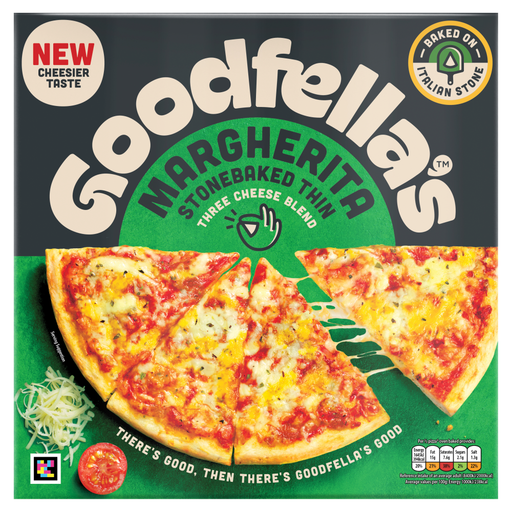
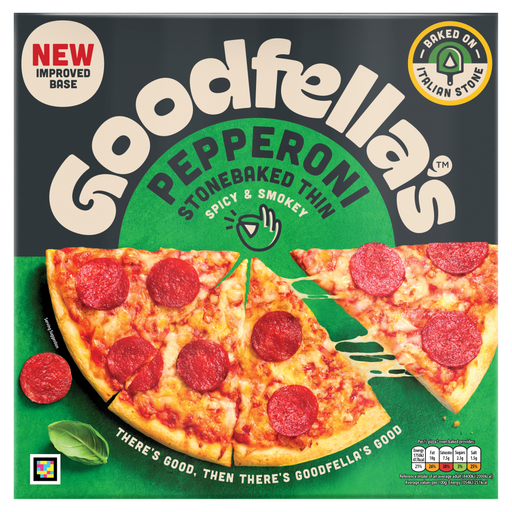
Goodfella’s lists Stonebaked Thin and Takeaway frozen-pizza ranges.
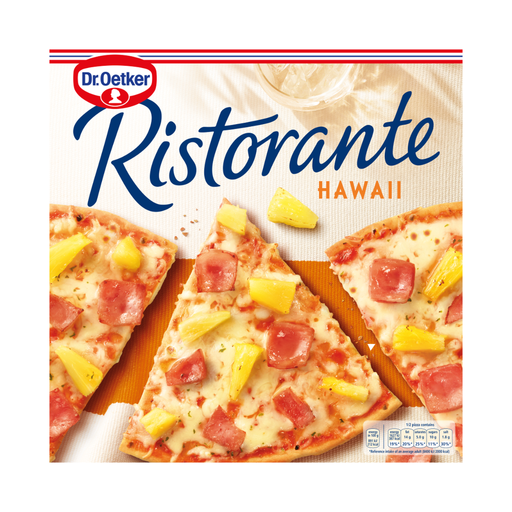
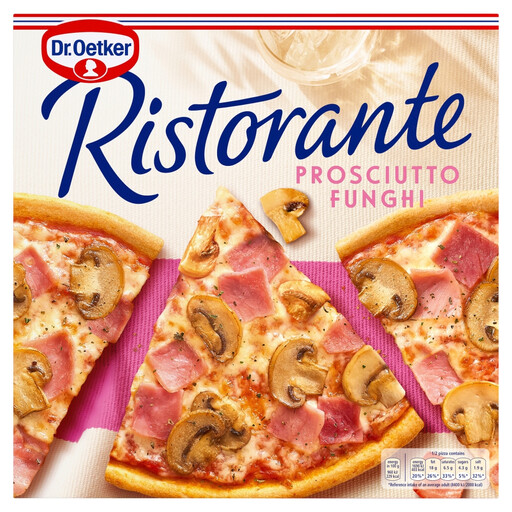
Ristorante includes thin-and-crispy pizzas and a separately labelled gluten- and lactose-free range.
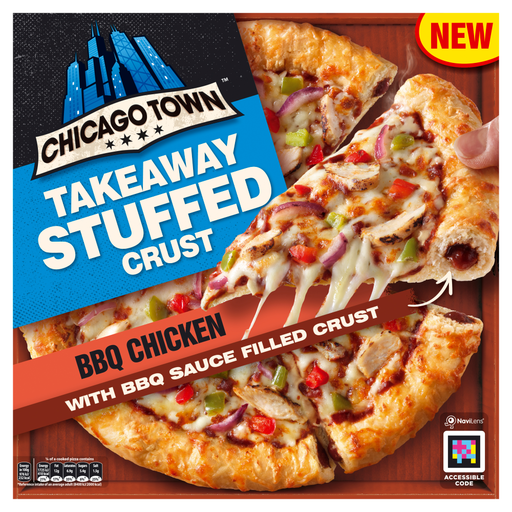
Chicago Town offers Deep Dish, stuffed-crust and Takeaway-style frozen pizzas.
Tesco has a frozen thin-crust pizza category.
Sainsbury’s sells own-label frozen pizzas, including a Taste the Difference wood-fired mozzarella and cherry tomato variety.
Asda lists both Just Essentials and stonebaked own-label frozen pizzas.
These frozen pizzas include thin-base and stuffed-crust varieties. Use each pack’s current label to compare the portion you intend to eat; the styles do not establish a calorie order.
 No image available
For a planned half-pizza dinner, compare the calories, saturated fat and salt for half on the current pack. If you expect to eat the whole pizza, use the full-pack amount instead.
 No image available
The stonebaked thin base describes the pizza’s style, not its calorie total. Check the current pack for the energy in a half-pizza serving or the whole pizza, whichever matches your dinner, and follow its cooking directions.
 No image available
If you want a stuffed-crust dinner, decide how much of this pizza you would serve before comparing its calories with a smaller pack. Check the current label’s serving basis, allergens and cooking instructions.
 No image available
For a half-pizza meal, use the current pack’s half-pizza nutrition rather than assuming a thin base means fewer calories. Compare saturated fat and salt for the same amount, and check the allergen label.
 No image available
If you usually eat the full pizza, use the pack weight and its current nutrition label to work out the calories for that amount. For a smaller dinner, check the stated serving size rather than assuming it matches your portion.
Use both for different purposes: kcal per 100g helps compare pizzas of different sizes, while the calories for your intended portion describe the dinner you plan to eat. NHS food-label guidance notes that a manufacturer’s stated portion may differ from yours.
Compare saturated fat and salt for the same amount of pizza. NHS food-label guidance describes more than 5g saturated fat or 1.5g salt per 100g as high; a front-of-pack traffic-light label may help you locate these figures quickly.
Use a listing to compare options, then read the current pack before buying and cooking. Asda advises that reformulation can change ingredients, nutrition information, dietary information and allergy advice.
Follow the instruction on that pizza’s pack. Goodfella’s directs shoppers not to refreeze its sampled Stonebaked Thin Mushroom with Spinach & Garlic Pizza after defrosting, so do not assume every pizza has the same storage directions.