Large households planning pizza night
If several people will share the pizzas, decide how many slices or halves each person is likely to eat before working out how many packs to buy.


For a large family shop, compare frozen pizzas by kcal per 100g, then work out the calories in the portion each person will actually eat; a thin base or smaller pack does not settle that question. In Ocado’s listings for three specific products, Dr. Oetker Ristorante Mozzarella has 432 kcal per labelled half pizza, Quattro Formaggi has 437 kcal and Goodfella’s Deep Pan Cheesy has 516 kcal. Check salt, saturated fat, allergens and the pack’s cooking instructions alongside calories.
If several people will share the pizzas, decide how many slices or halves each person is likely to eat before working out how many packs to buy.
Use the nutrition panel for the exact pizza rather than treating “thin crust” or “vegetarian” as a calorie figure. The NHS explains that nutrition information is given per 100g and sometimes per portion.
When wheat, milk or another allergen matters to someone eating the meal, check the declaration on the current pack for each pizza you choose.
Start with comparable nutrition figures, then plan the portions and pack quantities for your household. Finish by checking the exact product’s allergen and preparation information.
| Priority | What to check | Your needs |
|---|---|---|
| Calories per portion | Compare kcal per 100g across products. Check kcal for the labelled slice or half pizza, then adjust for the amount you intend to serve. | I want to know what each person’s share contributes, not mistake a per-100g figure for the calories in their meal. |
| Family portions | Check the pizza’s weight, stated portion size and servings per pack. Work out how many packs cover the portions you plan. | If several of us are eating, I need enough pizza without assuming that one pack—or the suggested serving—matches our meal plan. |
| Salt and saturated fat | Read both values on the nutrition panel and compare them on the same per-100g or per-portion basis. Use front-of-pack traffic-light information where present, then check the figures for your portion. | Calories are one part of my comparison; I also want to see the salt and saturated fat in the amount being served. |
| Allergens and preparation | Read the current pack’s allergen declaration and storage directions. Follow the cooking instructions for that exact pizza. | Everyone eating it needs a suitable option, and I need to know how to store and cook the packs I buy. |
A labelled half pizza can contain considerably more than the per-100g figure. For example, Ocado lists Goodfella’s Deep Pan Cheesy at 245 kcal per 100g but 516 kcal per half pizza.
Use per-100g figures to compare pizzas, then use the portion figure—or calculate your intended share—to plan the meal.
Those descriptions tell you about the pizza’s style or ingredients, not the calories in the portion you will eat.
Compare the kcal figures for the exact variants and portion sizes. Check salt and saturated fat on the same basis.
A larger pack may be convenient to share, but its labelled serving may not match what each person will take.
Decide how many people the pizza needs to feed and how much to serve each person before choosing pack quantities.
Allergen declarations and preparation directions matter alongside the nutrition figures, particularly when several people will eat the same pizza.
Check the current pack for the exact variant’s allergens, storage requirements and cooking instructions.
These examples show why it helps to compare individual pizzas rather than make a calorie judgement from a brand or crust style.
The Mozzarella and Quattro Formaggi frozen pizzas in Ocado’s listings are 335g and 340g respectively, with each pack described as two servings.
The reviewed Deep Pan Cheesy pizza is a 421g pack labelled as two servings in Ocado’s listing.
Chicago Town’s product pages describe a 431g thin sausage and pepperoni pizza and a 480g tomato stuffed-crust cheese pizza.
These frozen pizzas include different pack sizes and labelled portions for planning a family meal. Compare each pizza’s kcal per 100g with the amount you expect to serve; the products below are not a calorie ranking.
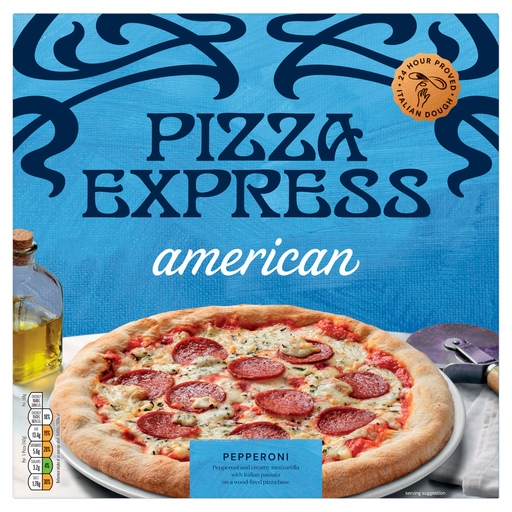 Image unavailable
For a meal planned around half-pizza portions, Joybuy lists 367 kcal per half pizza and two servings in the 320g pack. The nutrition information also includes salt and saturated fat; check the current pack for allergens, including wheat and milk, and for cooking directions.
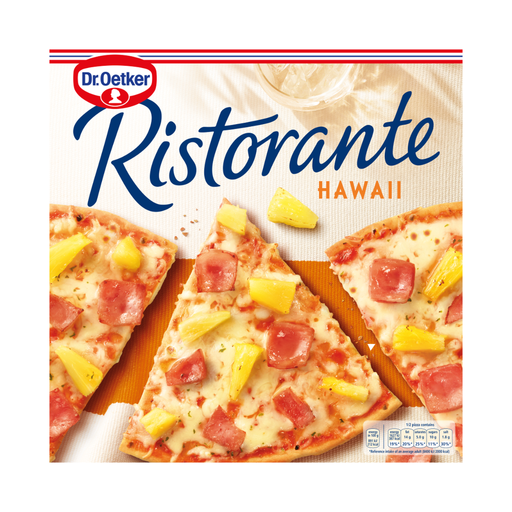 Image unavailable
If half a pizza matches a planned portion, Joybuy lists 387 kcal for that amount and 212 kcal per 100g. The pizza has a thin, crispy base, but use the nutrition figures rather than the crust description for comparison. Check the current pack’s serving and allergen information before planning quantities.
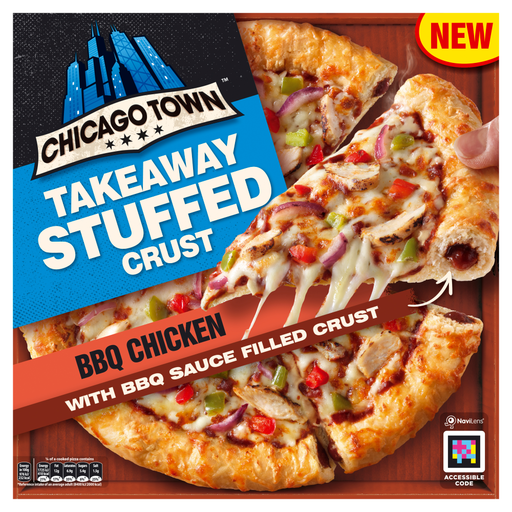 Image unavailable
This 668g pizza can be divided into planned shares: Joybuy lists 410 kcal per quarter pizza and 232 kcal per 100g. Check the current pack’s portion information when comparing it with half-pizza servings, as well as its allergen declaration, which lists wheat, milk and barley.
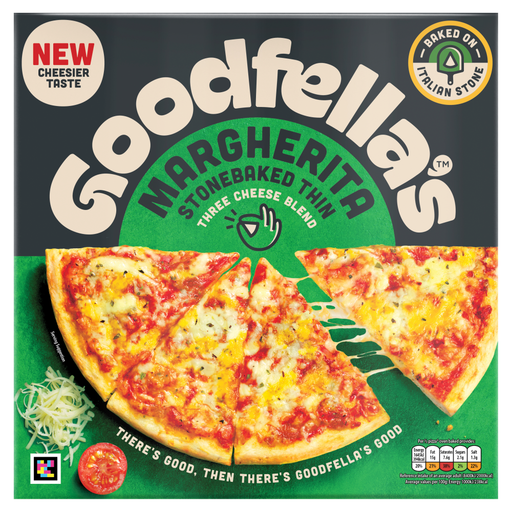 Image unavailable
For half-pizza meal planning, Joybuy lists 394 kcal for a 167g half pizza and 238 kcal per 100g. The nutrition panel also gives salt and saturated fat; check the current pack’s allergen information, including gluten and milk, before serving.
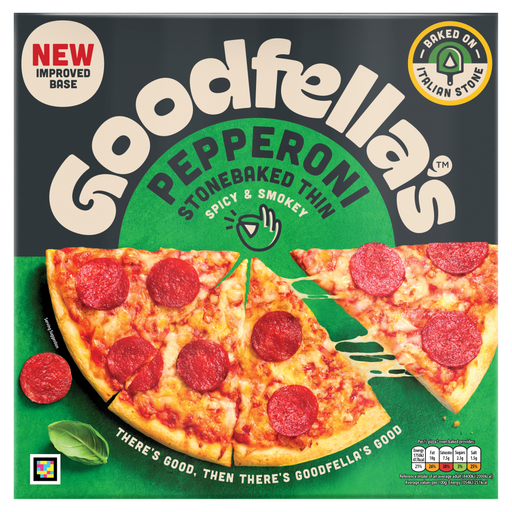 Image unavailable
Joybuy lists 417 kcal per half pizza and 251 kcal per 100g for this 332g thin pizza. Use the half-pizza figure only if it matches the portion you intend to serve, and check the current pack for serving information and allergens, including milk and wheat.
Use both: kcal per 100g helps you compare pizzas of different sizes, while the calories in your intended serving help you plan the meal. The NHS notes that nutrition information is given per 100g and sometimes per portion; a labelled serving may not match the amount each person eats.
Not necessarily. Compare the nutrition panel for the exact pizza and portion rather than using crust style as a substitute for a calorie figure. In Ocado’s listings for three specific pizzas, the two Dr. Oetker Ristorante examples have 432 and 437 kcal per half pizza, while Goodfella’s Deep Pan Cheesy has 516 kcal per half pizza.
Decide the portions you intend to serve, then use the pack size and portion information to work out how many pizzas to buy. If you plan to serve sides such as salad or vegetables, account for those separately rather than assuming the pack’s suggested serving describes the whole meal.
Check salt and saturated fat on a consistent per-100g or per-portion basis, then read the current pack’s allergen, storage and cooking information. Front-of-pack traffic-light labelling, where present, can help you compare products at a glance, but use the nutrition panel for the portion you intend to serve.