Canteen buyers planning a lower-fat lunch offer
Compare declared nutrition for the pizza and the portion you intend to serve, rather than choosing by crust style or wording on the front of the pack.


For a workplace canteen, compare frozen pizzas using fat and saturates per 100g, then check what the planned lunch portion provides; a thin crust or vegan label does not answer the lower-fat question. Shortlist products only when their current allergen information and cooking instructions can be used within the canteen’s storage, equipment and service arrangements.
Compare declared nutrition for the pizza and the portion you intend to serve, rather than choosing by crust style or wording on the front of the pack.
Check whether frozen storage, oven settings and batch cooking fit the kitchen’s capacity. A shorter cooking time is a separate consideration from fat content.
Keep ingredient and allergen information tied to each current recipe. Food Standards Agency guidance for UK caterers calls for accurate allergen information and effective allergen management during preparation.
Set the intended serving size, compare current nutrition declarations on the same basis, then check whether each pizza can be prepared and described accurately at service.
| Priority | What to check | Your needs |
|---|---|---|
| Comparable nutrition | Compare fat and saturates per 100g across the exact products. Read calories and salt on the same basis; do not use crust style or dietary-range names as substitutes for the figures. | I want to compare pizzas of different sizes without assuming that thin crust or vegan toppings mean less fat. |
| Served portion | Set a half-pizza, individual-pizza or measured-slice portion and check its declared nutrition. Goodfella’s states that a half-pizza serving of Stonebaked Thin Cheese & Ham contains 12g fat and 4.9g saturates. | The figures for the lunch I serve matter as well as the per-100g comparison. |
| Allergen information | Check the exact product’s current ingredients and allergen declaration. Keep a recipe-level record that staff can use before a diner chooses a meal. | I need to answer an allergen question about the pizza actually being served, not a similar flavour or an older pack. |
| Kitchen fit | Check frozen-storage instructions, oven settings, cooking time and the number of pizzas the kitchen can prepare together. Apply the site’s food-temperature controls. | Lunch service needs to accommodate the full batch, not just the cooking time printed for one product. |
Those descriptions identify a format or range, not how one pizza’s declared fat and saturates compare with another’s.
Use the current nutrition declaration for each shortlisted product, comparing per 100g before checking the intended portion.
Pack weights differ, while the canteen may serve half a pizza, an individual pizza or slices. The nutrition for the meal depends on that serving.
Decide the serving format and record its fat, saturates, calories and salt alongside the per-100g figures.
Food Standards Agency guidance requires accurate allergen information for food served by caterers. A brand name or similar pizza is not an exact-recipe declaration.
Keep current packaging or supplier specifications for each product and update the canteen’s allergen record when its recipe, pack or supplier changes.
Products can need different oven settings and cooking times. Chicago Town, for example, gives a 13–16-minute fan-oven time at 200°C for its Meat Supreme Sub; that instruction does not apply to other pizzas.
Check the chosen product’s current instructions against the actual oven, batch size and site food-safety procedures before adding it to the lunch rota.
These product lines provide different points to check; a brand or range name does not establish which pizza has less fat.
Its Stonebaked Thin Cheese & Ham product gives a specific example of nutrition figures that can be used in a label comparison.
Its formats offer different portion and preparation questions for a canteen to consider.
Tesco Groceries lists Ristorante Vegan Pepperoni Salame and Vegan Margherita Pomodori frozen pizzas as dietary-range options.
Its frozen vegetarian and vegan listings can help identify products for a dietary-range shortlist.
These frozen-pizza options can be assessed against a canteen’s planned portion, current nutrition labels and cooking arrangements. Their inclusion does not establish a reduced-fat claim.
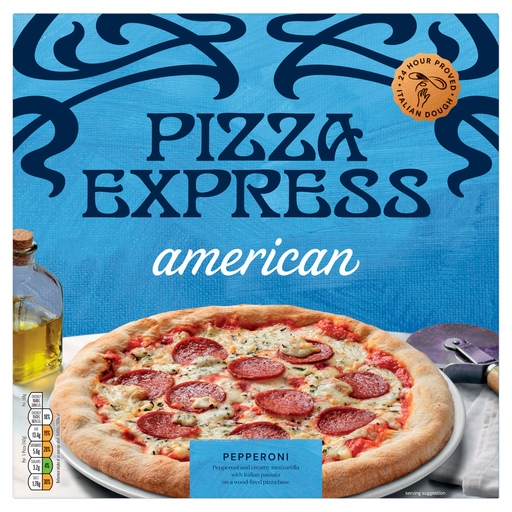 No image available
For a canteen comparison, check the current nutrition declaration against the portion you plan to serve. Confirm the pack’s cooking method and timing before scheduling lunch batches.
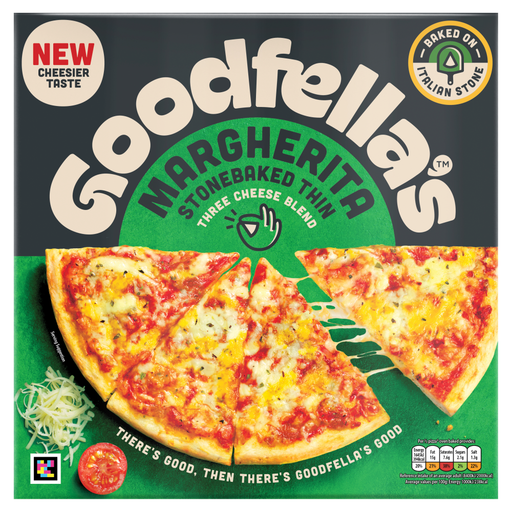 No image available
The thin-base format is not, by itself, a fat comparison. Check this Margherita recipe’s current fat, saturates and allergen declaration, then confirm its cooking instructions for the canteen oven.
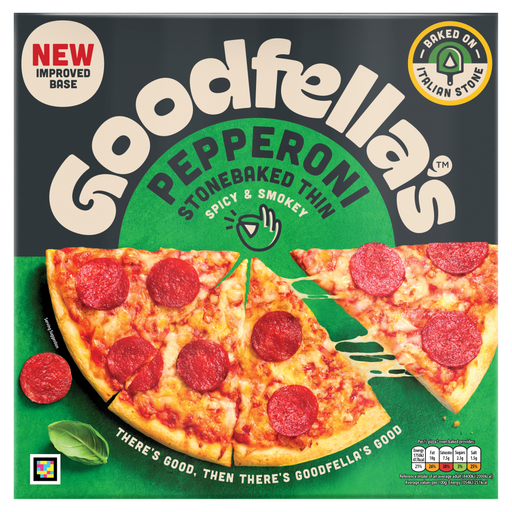 No image available
Compare this Pepperoni recipe’s own nutrition and allergens rather than transferring figures from another Stonebaked Thin pizza. Check the current oven temperature and cooking time before planning batches.
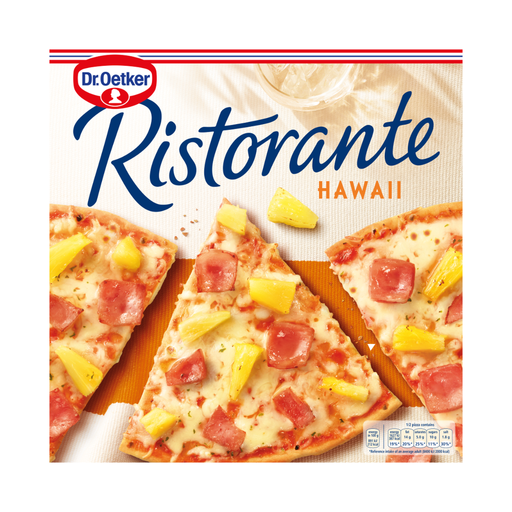 No image available
For a like-for-like comparison, check fat and saturates per 100g on the current pack as well as the figures for the portion served. Confirm its oven instructions against the lunch-service schedule.
No. Thin crust describes the format, not its fat content relative to another pizza. Compare the exact recipes per 100g and for the serving you intend to offer. Goodfella’s Stonebaked Thin Cheese & Ham, for example, declares 6.9g fat per 100g and 12g for its stated half-pizza serving; those figures do not describe other thin-crust products.
Use the current ingredient and allergen declaration for each exact recipe and make accurate information available before diners choose. Food Standards Agency guidance for UK caterers calls for allergen information for food served and effective allergen management during preparation. Update the canteen’s records when a recipe, pack or supplier changes.
Check the chosen product’s frozen-storage and cooking instructions against freezer space, oven capacity, batch size and the site’s temperature-control procedures. Cooking times vary by product, so trial the intended batch rather than applying another pizza’s instructions.