Canteen managers planning portions
Set a repeatable serving size, then compare the calories, salt and saturated fat in that serving. Keep the current product information available for menu planning and allergen communication.


For a workplace canteen lunch, compare frozen pizzas by the calories, salt and saturated fat in the portion you will actually serve, rather than judging by a thin crust or a per-100g figure alone. Sainsbury’s labels list 387 kcal for half a Dr. Oetker Ristorante Hawaii pizza, 423 kcal for half its Taste the Difference Mozzarella & Marinated Cherry Tomato pizza, and 432 kcal for half a Dr. Oetker Ristorante Mozzarella pizza; each pizza is labelled as two servings. Check the current pack’s nutrition, allergens and cooking instructions before adding any of them to a canteen menu.
Set a repeatable serving size, then compare the calories, salt and saturated fat in that serving. Keep the current product information available for menu planning and allergen communication.
A labelled half-pizza portion offers a clearer basis for comparing lunches than treating a pizza labelled as two servings as one meal. The rest of the plate matters too, so consider any side alongside the pizza portion.
Vegetarian, vegan and gluten-free variants serve different requirements; the style of pizza alone cannot establish suitability. Check the exact product and ask the canteen for its current allergen information.
Start with the portion the canteen intends to plate. Then assess its nutrition, dietary suitability and fit with the kitchen’s service process.
| Priority | What to check | Your needs |
|---|---|---|
| Served portion | Check servings per pizza and kcal for the portion plated. Use per-100g figures as a separate comparison, not as the calorie count for lunch. | I want to know what a half pizza or slice contributes to my lunch, rather than compare packs that may be served in different amounts. Sainsbury’s labels identify two servings in each of the three half-pizza examples discussed here. |
| Salt and saturates | Compare both values for the same served portion as the calorie figure. Sainsbury’s labels for the three examples show 1.58–1.8 g salt and 5–6.9 g saturates per half pizza. | A lower kcal figure alone is not enough for my choice: I also want to compare the salt and saturated fat on the plate. |
| Dietary suitability | Check the exact variant’s ingredients, dietary description and current allergen information. Account for the canteen’s handling and service process. | If I need a vegetarian, vegan or gluten-free option, I need information about the pizza actually served, not an assumption based on its name or crust. |
| Kitchen process | Read the pack’s cooking method and instructions. Under GOV.UK guidance, food must be fully defrosted before cooking unless the manufacturer says to cook it from frozen; check equipment and service capacity too. | I need a lunch the canteen can prepare according to its instructions and serve through its usual food-safety process. |
A per-100g figure does not describe a larger plated portion. The three pizzas with half-pizza figures cited here are each labelled as two servings, so serving the whole pizza changes the calorie comparison.
Decide the serving size first and compare kcal, salt and saturates for that amount. Use the same portion standard when planning the menu.
These descriptions identify a style or dietary option, not a calorie value. Sainsbury’s labels give 423 kcal and 432 kcal per half pizza for the two mozzarella examples discussed here.
Shortlist by the style customers need, then compare the current nutrition panel for each exact product and intended serving.
Recipes and suppliers can change. The Food Standards Agency says retail and catering food businesses must provide allergen information and follow applicable labelling rules.
Keep allergen information tied to the product being served, and make sure service staff can access it when customers ask.
A frozen pizza may not fit the canteen’s equipment or the time available at lunch service. Its cooking instructions also determine whether it should be defrosted first.
Check the current pack, available equipment and expected throughput before putting the pizza into the canteen’s food-safety and service plan.
These brand and retailer examples show different pizza formats and dietary variants; the nutrition decision still belongs to the exact product and serving size.
Its listed range includes thin-and-crispy pizzas alongside separately identified vegan and gluten-free variants.
Its Taste the Difference Mozzarella & Marinated Cherry Tomato Wood Fired Pizza is a vegetarian tomato-and-mozzarella example.
Retailer listings identify stonebaked thin, deep-pan and gluten-free pizzas in the range.
Listings include large takeaway-style pizzas with stuffed crusts and pepperoni toppings.
Tesco’s free-from pizza listings include named Goodfella’s and Dr. Oetker gluten-free variants.
These options include two thin-base pizzas and a stuffed-crust pizza. Compare the portion you intend to serve; the product styles alone do not settle which lunch meets a canteen’s calorie criteria.
 No image available
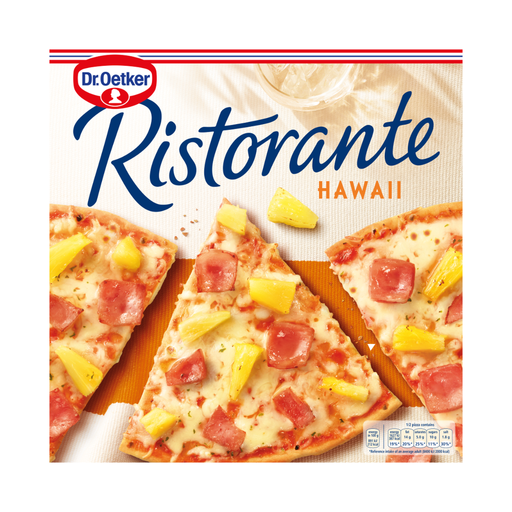
For a half-pizza canteen serving, Sainsbury’s label lists 387 kcal, 5 g saturates and 1.8 g salt. This is a thin-and-crispy pizza; check the current pack’s allergens and cooking instructions before service.
 No image available
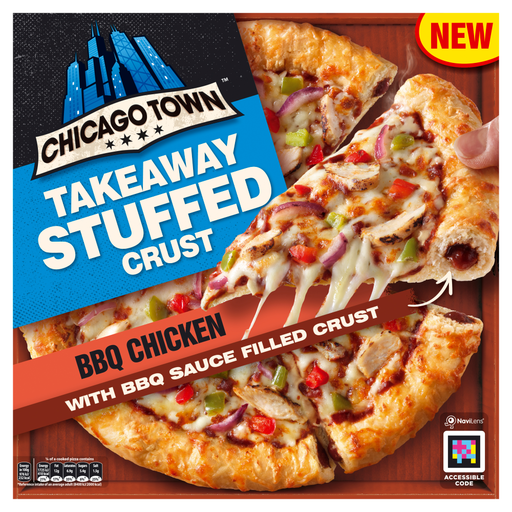
The BBQ sauce-filled stuffed crust makes portion size particularly important for this canteen choice. Compare the current pack’s kcal, salt and saturates for the amount you intend to serve, and follow its cooking and allergen information.
 No image available
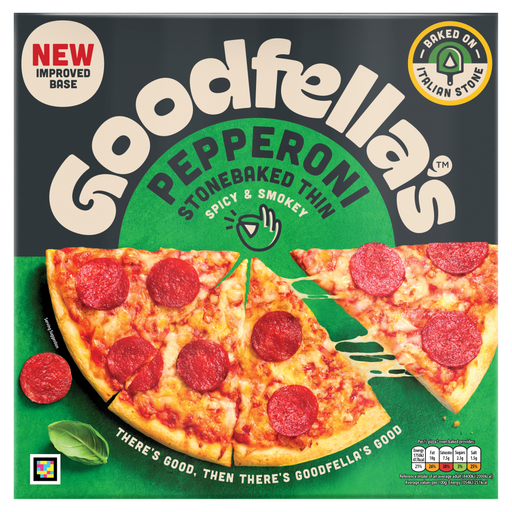
This pepperoni pizza has a stonebaked thin base. If the canteen plans to serve half a pizza, compare the current pack’s nutrition for that portion, including salt and saturates, rather than assuming the thin base determines its calorie content.
Compare kcal for the portion the canteen will serve, then check salt and saturates for that same amount. A per-100g figure is useful for comparing energy density but does not tell you the calories in a plated lunch; the three Sainsbury’s-labelled examples discussed here each declare two servings per pizza.
No: crust style alone cannot establish the calories in a serving. Check the exact pizza’s current nutrition panel and planned portion, including its toppings, salt and saturated fat.
Only when the manufacturer’s instructions permit cooking that product from frozen. GOV.UK guidance says food must otherwise be fully defrosted before cooking; follow the pack instructions and the canteen’s food-safety procedures.
The Food Standards Agency says retail and catering food businesses must provide allergen information and follow applicable labelling rules. Keep information for the exact pizza being served accessible to staff and customers, including when products or suppliers change.
No. Those descriptions address different dietary requirements, not the calories in a serving. Check the exact product’s current nutrition, ingredients and allergen information, together with how the canteen will handle and serve it.