Families planning a weekday lunch
If you are dividing a pizza between several people, check its stated servings and cooking instructions as well as its nutrition panel. A whole pizza is not necessarily one lunch portion.


For a family lunch, compare frozen pizzas by calories, saturated fat and salt per 100g, then check the amount each person will actually eat. A thin base or vegetable topping does not settle the choice on its own: cheese, other toppings and portion size also matter.
If you are dividing a pizza between several people, check its stated servings and cooking instructions as well as its nutrition panel. A whole pizza is not necessarily one lunch portion.
Calories, saturated fat and salt can differ between pizzas. Comparing per-100g figures gives you a consistent starting point before you look at the portion you intend to serve.
Look for a vegetarian declaration on the specific product, then check its ingredients, allergens and nutrition. A vegetable topping or cheese-based name does not replace those checks.
Start with the nutrition panel on a common per-100g basis, then work out what the planned serving means for your household.
| Priority | What to check | Your needs |
|---|---|---|
| Nutrition | Compare calories, saturated fat and salt per 100g. NHS food-label guidance classifies more than 5g saturated fat or more than 1.5g salt per 100g as high. | I want to compare pizzas on the same basis, rather than judging them by crust style or topping name. |
| Portions | Check the pizza weight, stated number of servings and nutrition for the amount you plan to serve. Labels may define a serving as one small pizza or part of a larger one. | If we are sharing lunch, I need to know how much pizza each person will have—not just how many pizzas are in the pack. |
| Toppings | Read the ingredient list and any vegetarian declaration on the specific pack. Compare its nutrition panel even when the topping includes vegetables. | A vegetarian choice, or a pizza with vegetables, may suit our preferences; I still want to check what else is on it. |
| Allergens | Read the current pack’s ingredient list and precautionary allergen statements. Check the exact variant rather than another pizza from the same range. | When someone at the table needs to avoid an ingredient, I need the allergen information for the pizza we will serve. |
| Preparation | Check the pack’s storage directions, permitted cooking methods and instructions for cooking thoroughly. Do not assume every pizza can be microwaved or air-fried. | For a quick lunch, the cooking method needs to work with the equipment and time we have. |
Crust and topping descriptions do not show how much saturated fat or salt is in the pizza, or how large the serving will be.
Compare the nutrition panels per 100g, then check the figures for the portion you intend to serve.
A serving described as half a large pizza is not directly comparable with one individual pizza.
Use the per-100g figures for the initial comparison and plan how the pizza will be divided before cooking.
Cheese-heavy products can have substantial saturated fat. Tesco Groceries lists 6.1g per 100g for its Four Cheese Stonebaked Pizza, above the NHS high threshold of 5g per 100g.
If saturated fat matters to your comparison, check the specific pizza’s panel rather than judging it by whether the base is thin or deep-pan.
Allergen and cooking information needs to match the exact pizza being served.
Read the physical pack for ingredients, allergen statements, storage and cooking instructions before preparing it.
These ranges offer different formats, but the nutrition and serving details need checking for each individual pizza.
Its frozen range includes Stonebaked Thin, Takeaway and Deep Pan pizzas.
The Ristorante range includes thin-and-crispy pizzas such as the vegetarian Funghi variant.
The range includes Deep Dish, Stuffed Crust and Takeaway formats, including individual pizzas and larger pizzas.
Tesco own-label frozen pizzas include deep-pan, stonebaked cheese and larger sharing formats.
Asda own-label frozen pizzas include deep-pan, stonebaked and stuffed-crust formats.
These pizzas offer larger sharing and smaller portion-planning options for a family lunch. For the Pizza Express Margherita, check the pack’s storage and cooking directions before planning to use it as a frozen meal.
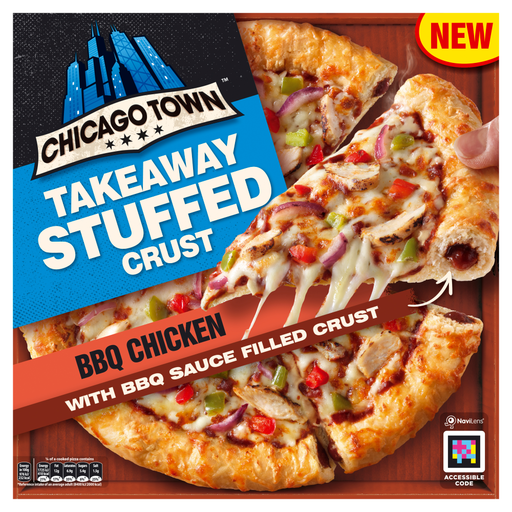 No image available
The larger pizza may suit a lunch you plan to divide. Check how the intended portions compare with the pack’s nutrition information, and follow its allergen and cooking instructions.
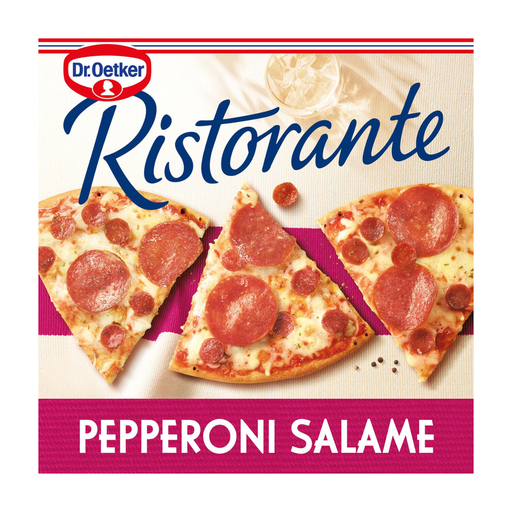 No image available
If sharing one pizza for lunch, check that its serving guidance matches the portions you intend to serve. Read the current pack for allergens and cooking directions.
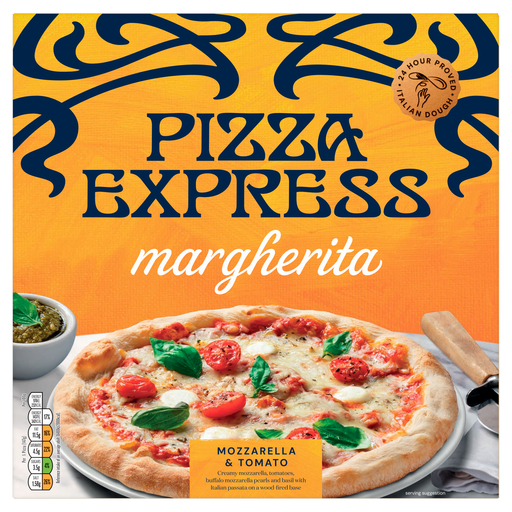 No image available
The pizza can be considered for a meal divided between two people. Its listing describes refrigeration with home freezing as well as cooking from frozen, so check the physical pack for the applicable storage and cooking directions.
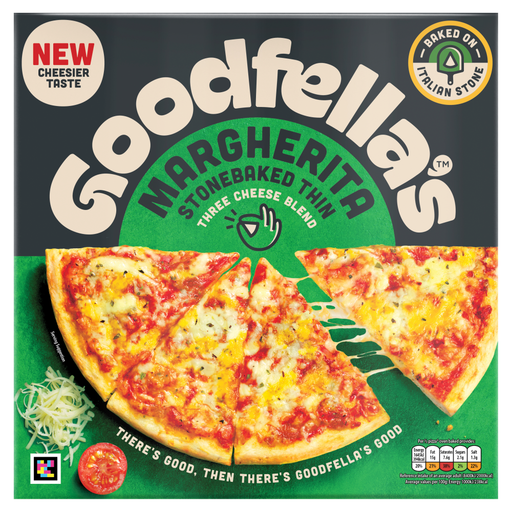 No image available
The stonebaked thin format is one option for a shared lunch, but the base alone does not establish its nutrition profile. Compare the planned portion with the pack’s calories, saturated fat and salt figures, and follow its cooking instructions.
 No image available
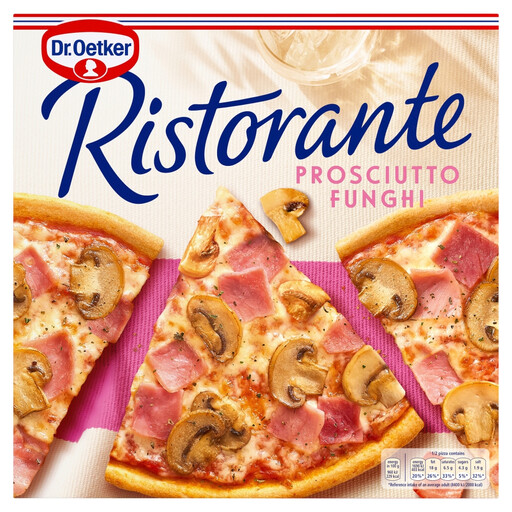
For a ham-and-mushroom pizza shared at lunch, decide how it will be divided and check the nutrition for that amount. Read the pack for serving, allergen and cooking information.
Compare calories, saturated fat and salt per 100g first, then check the nutrition for the portion you will serve. NHS food-label guidance defines more than 5g saturated fat or more than 1.5g salt per 100g as high; a pack’s stated serving may differ from the amount your family eats.
Not necessarily. Cheese, other toppings and portion size still matter. Tesco Groceries lists 0.97g salt per 100g for Dr. Oetker Ristorante Funghi, but the amount served needs checking separately from that per-100g figure.
No. ASDA Groceries describes one pizza in the Chicago Town Deep Dish BBQ Chicken two-pack as a serving, while Tesco Groceries says the Dr. Oetker Ristorante Funghi pizza serves two. Check the serving definition on your chosen pack and divide the pizza according to the lunch you have planned.
Check the ingredient list and precautionary statements on the physical pack of the exact pizza you will serve. UK government allergen guidance explains how required allergens are emphasised in the ingredients list of pre-packed food; do not rely on another variant’s details.
No. Cooking methods vary by product, so use only those given on the specific pack and follow its instructions for cooking thoroughly. Do not apply the directions from a different pizza in the same range.