People who want a defined portion
An individual pizza gives you one stated serving to assess. A half-pizza lunch can work too, provided you decide on that portion before cooking and check what the pack says it contains.


For a frozen-pizza lunch for one, start with the amount you intend to eat: an individual pizza or a planned half-pizza portion gives you a clear basis for comparing labels. Check kcal, saturated fat and salt for that amount, as well as per 100g; a thin crust or vegetable topping does not settle the nutrition question on its own. The Eatwell Guide considers dietary balance across a day or week, rather than judging it from one lunch.
The useful portion depends on whether you want one complete individual pizza or are happy to plan what to do with the other half of a larger one.
An individual pizza gives you one stated serving to assess. A half-pizza lunch can work too, provided you decide on that portion before cooking and check what the pack says it contains.
If nutrition is part of your decision, compare the kcal, saturated fat and salt in the amount you will eat. NHS food-label guidance recommends using nutrition information to choose between products; a flavour name or crust description cannot replace those figures.
Read the current pack’s ingredient and allergen information for the exact pizza you buy. Product recipes can change, so an online description should not replace the pack when an ingredient matters to you.
Set your lunch portion first. Then use the same measurement basis when comparing pizzas, before looking at toppings, cooking instructions and pack size.
| Priority | What to check | Your needs |
|---|---|---|
| Portion size | Read the pack weight and serving count. Check whether the nutrition figures refer to one pizza, half a pizza or another portion. | I want to know how much pizza I am planning for lunch, rather than treating the entire pack as one serving. |
| Nutrition | Compare kcal, saturated fat and salt per 100g for a consistent product comparison, then compare the amounts in your intended lunch portion. Do not mix a per-100g figure from one pack with a per-pizza figure from another. | If I eat half a pizza, the half-pizza figures matter more to my lunch decision than whole-pack figures alone. |
| Ingredients | Read the current ingredient list and allergen information. Use the nutrition panel rather than a topping or crust name to judge the figures for the portion. | I may be looking for particular ingredients or avoiding an allergen; a familiar brand name is not enough to answer either question. |
| Storage and preparation | Check the number of pizzas in the pack, the freezer space needed and the cooking method and timing printed for that product. | A pack that fits my freezer and lunch routine is more useful to me than a portion plan I am unlikely to follow. |
Dr. Oetker UK lists 1.8g salt in a half-pizza portion of Ristorante Pollo. Its chicken and vegetable toppings therefore do not, by themselves, tell you how the portion compares with another lunch.
Choose toppings you want, but compare kcal, saturated fat and salt for the amount you plan to eat.
A figure for 100g and a figure for an entire pizza describe different amounts of food. Comparing them directly can obscure the difference between two prospective lunch portions.
Use per-100g values to compare products on the same basis, then look separately at the figures for each portion you would actually eat.
Dr. Oetker UK lists 903 kcal, 21g saturated fat and 3.6g salt for a whole Ristorante Quattro Formaggi pizza. Those whole-pizza figures should not be confused with the manufacturer’s half-pizza figures for Ristorante Pollo.
Decide whether the whole pizza or a stated fraction is your lunch portion before using its nutrition figures to choose.
Goodfella's advises checking the packaging for possible changes to ingredients and nutrition values. That matters particularly when an allergen or specific ingredient affects your choice.
Check the current pack’s ingredient, allergen, storage and cooking information for the pizza in front of you.
These examples illustrate different pizza formats and portion descriptions; the figures for one product should not be applied to every pizza from its brand.
The Ristorante products examined include pizzas with different stated nutrition portions. Check which product and serving the figures describe before comparing them.
Chicago Town lists several frozen-pizza formats. Its Deep Dish Pepperoni twin pack provides an example of individually defined pizzas.
Goodfella's Stonebaked Thin Margherita is an example of a thin-crust format, rather than evidence that every thin pizza has similar nutrition.
These are frozen-pizza options to consider when planning lunch for one. Their names identify the varieties and pack weights; use each current pack’s serving and nutrition information to decide whether your intended portion fits your lunch plans.
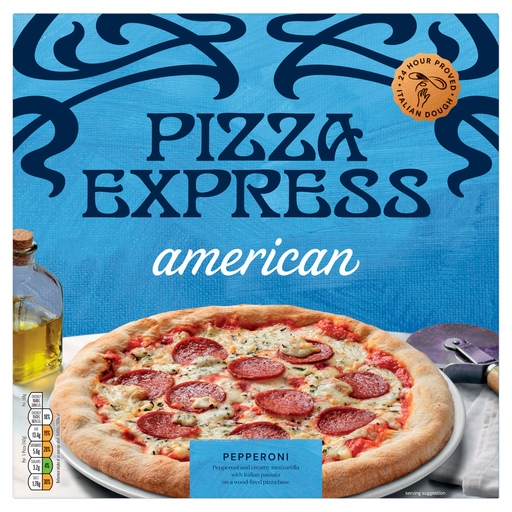 No image available
For lunch for one, decide whether a portion of this 320g pizza matches what you intend to eat. Compare the current pack’s kcal, saturated fat and salt figures for that portion, and check its ingredients if any affect your choice.
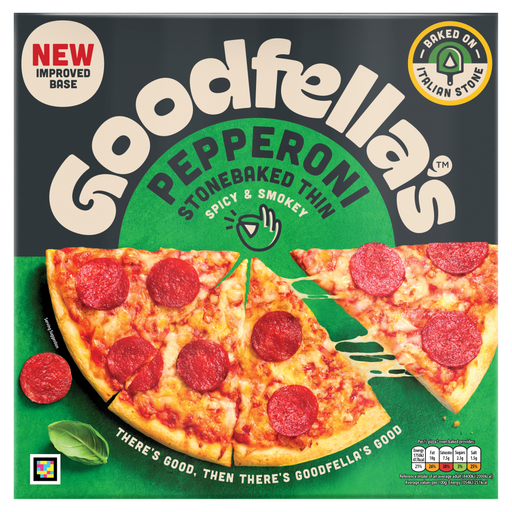 No image available
If you are considering a half-pizza lunch, check the stated serving on this 332g pack and compare its portion-level nutrition with the amount you will eat. The thin-crust description does not establish its kcal, saturated fat or salt figures.
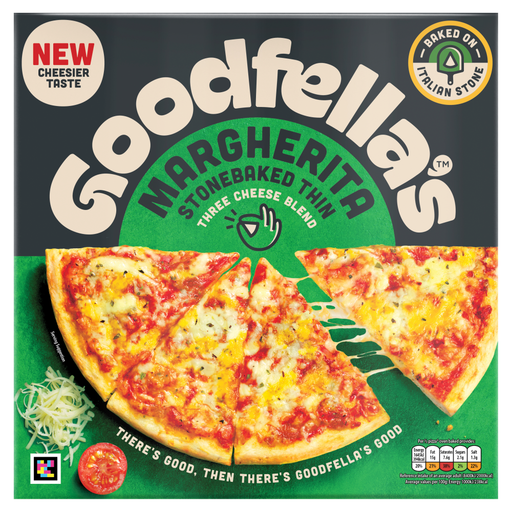 No image available
For a planned portion of this 334g pizza, read the current pack’s serving definition before comparing its nutrition with another variety. Check the ingredient and allergen information as well as the numbers on the label.
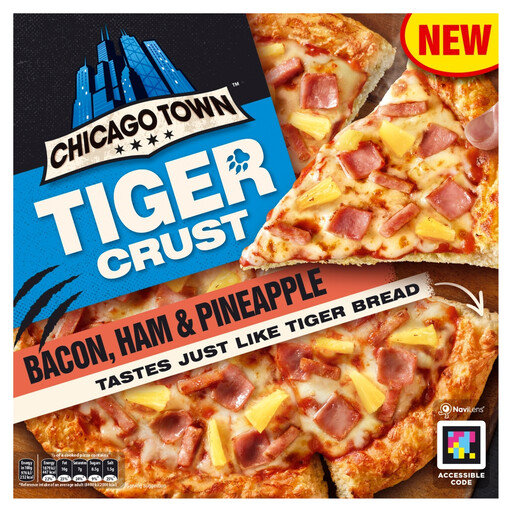 No image available
This is a 380g pizza to assess against your intended lunch portion. If you plan to eat half, check the current pack’s portion guidance and nutrition for that amount rather than assuming the whole pizza is one serving.
 No image available
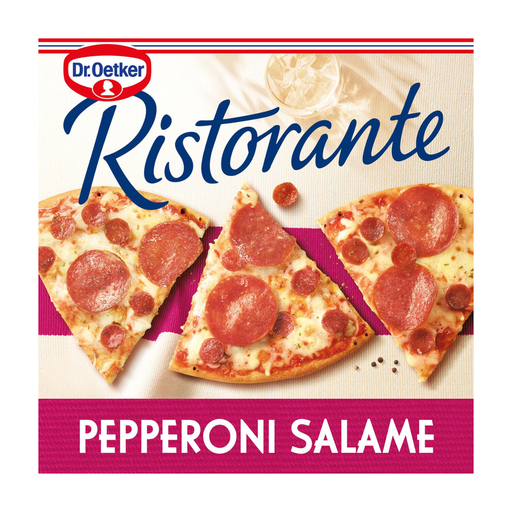
If half of this 320g pizza is your planned lunch, use the current pack’s nutrition information to assess that amount. Compare another pizza on the same per-100g basis first, then check the figures for the portions you would eat.
Not on its own. Check the nutrition for the portion you will eat, particularly kcal, saturated fat and salt. Dr. Oetker UK, for example, lists 1.8g salt for a half-pizza portion of Ristorante Pollo despite its chicken and vegetable toppings.
Use both figures for different purposes: per 100g puts products on the same measurement basis, while the figures for your intended serving describe your lunch. Check that the printed serving is the amount you actually plan to eat.
It can if one pizza is the portion you intend to eat and you can store and prepare the other according to the pack instructions. Tesco Groceries identifies each 155g pizza in the Chicago Town Deep Dish Pepperoni twin pack as one serving; Central Co-op Food lists 433 kcal, 6.3g saturated fat and 1.5g salt per pizza.
Read the current pack’s ingredient and allergen information for the exact pizza before choosing or preparing it. Goodfella's notes that packaging should be checked for possible changes to ingredients and nutrition values.
Follow the instructions on the specific pizza’s current pack, including its stated cooking method and storage directions. Check those details before purchase if the time or appliance available for lunch affects your choice.