People counting calories
If you are planning your energy intake, compare kcal for the amount of pizza you will eat. NHS Better Health notes that a manufacturer’s stated portion may differ from your own.


Judge a frozen pizza by the portion you expect to eat, rather than treating the whole pack as one meal: compare its kcal, saturated fat and salt per portion, then use the per-100g figures to compare different sizes. The number of portions you will realistically get from the pack matters to value, while a thin crust alone does not establish that a pizza will fit your planned intake.
If you are planning your energy intake, compare kcal for the amount of pizza you will eat. NHS Better Health notes that a manufacturer’s stated portion may differ from your own.
The labelled serving count is useful only if it reflects how you will divide the pizza. Check the pack size and plan the portions you expect to use.
Look at the exact flavour’s nutrition panel and allergen declaration. The reviewed pizzas have different salt and saturated-fat figures per labelled serving, even where their serving descriptions sound similar.
Start with the portion you expect to serve; then compare nutrition and the practical checks that apply to that exact pizza.
| Priority | What to check | Your needs |
|---|---|---|
| Portion and energy | Check kcal per labelled portion, the number of portions in the pack and kcal per 100g. Work from the amount you intend to eat, which may differ from the stated serving. | I want the pizza portion in my meal plan to match the amount I will actually serve. |
| Salt and saturated fat | Read both per-portion and per-100g figures. NHS food-label guidance uses more than 1.5g salt or 5g saturated fat per 100g as its respective high thresholds; a portion figure answers a different question about the amount eaten. | Calories are not my only consideration, so I want to see the salt and saturated fat in my portion too. |
| Usable servings | Compare pack weight and stated servings, then decide how you would divide the pizza. A larger pack does not tell you how many meals it will make for you. | If I am sharing a pizza or keeping some for another meal, I need portions that work in practice. |
| Preparation and allergens | Read the exact pack’s allergen declaration, frozen-storage directions and cooking instructions. Recheck when choosing a different flavour. | Everyone eating the pizza needs to be able to check the ingredients, and I need to prepare this particular product as directed. |
A pack can contain more than one labelled serving. Eating the whole pizza instead of one labelled half changes the kcal, salt and saturated-fat amounts you consume.
Decide how much you will serve before cooking, and follow the product’s handling and storage directions for any remainder.
Sainsbury’s labels its reviewed stuffed-crust pepperoni pizza as two servings, while its Chicago Town 640g stuffed-crust pepperoni listing declares four. Their per-serving figures therefore describe different-sized portions.
Compare the amount you intend to eat, using kcal, salt and saturated fat per portion alongside the per-100g panel.
Flavour and product differences matter when checking allergens, storage directions and cooking instructions.
Read the declaration and preparation directions on the exact pack each time, particularly when changing products or buying for someone with an allergy.
These examples describe particular pizzas and serving sizes, not every product made by each brand.
The reviewed Stonebaked Thin Three Cheese Margherita is a 334g pizza with a two-serving declaration on Tesco’s listing.
The reviewed thin-and-crispy listings include Pepperoni-Salame and Speciale; their figures should not be treated as interchangeable.
The reviewed 640g Takeaway Large Cheesy Stuffed Pepperoni pizza is declared as four servings on Sainsbury’s listing.
The reviewed own-label examples include Deep Pan Meat Feast and Takeaway Stuffed Crust Pepperoni, each labelled as two servings.
These pizzas offer different crusts, toppings and pack sizes to consider when planning a portion. Check the exact pack’s nutrition and serving information before deciding how much to prepare.
 No image available
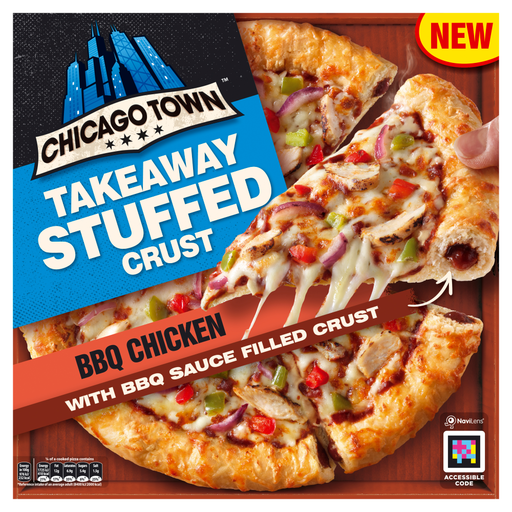
For a planned quarter-pizza portion, check the nutrition figures against the amount you will serve. This 668g variant has a BBQ sauce-filled crust; follow the pack’s cooking and frozen-storage directions.
 No image available
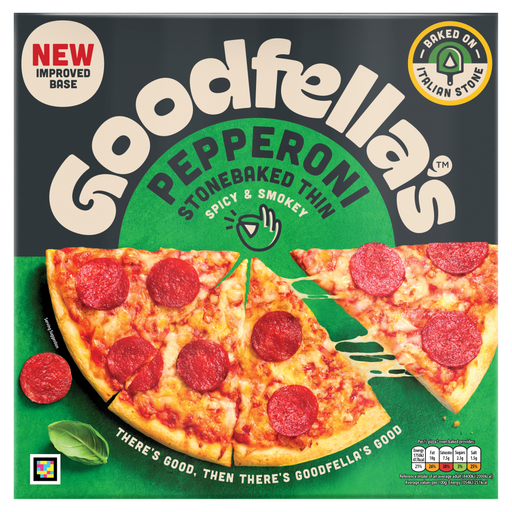
This is the 332g pepperoni variant, not the Margherita discussed above. If you plan to eat half, use this flavour’s own kcal, saturated-fat and salt figures rather than transferring values from another Goodfella’s pizza.
 No image available
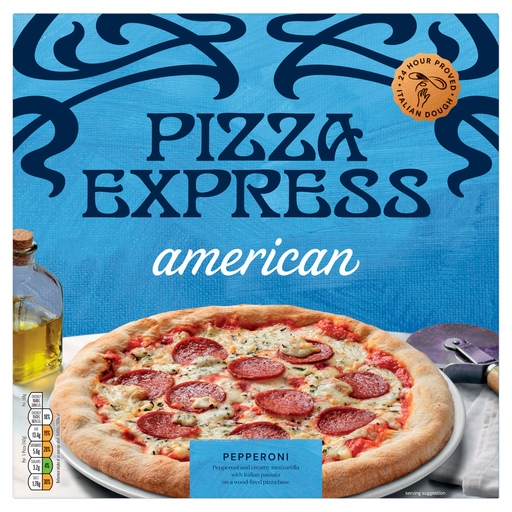
For a meal shared between two people, compare the nutrition for the portion each person will eat. Check this 320g pizza’s pack for its cooking directions and allergen declaration.
 No image available
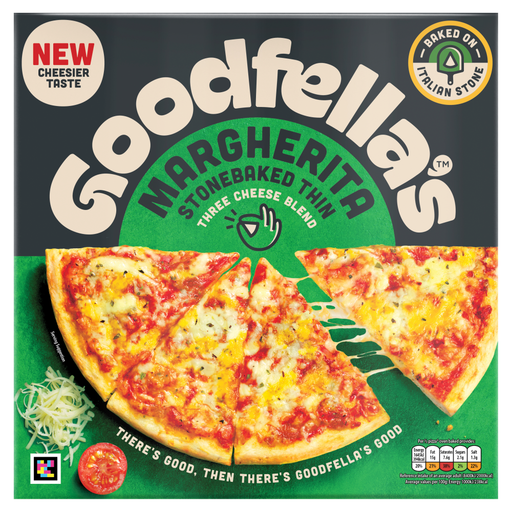
For a half-pizza portion, Joybuy’s listing states 394kcal, 7.6g saturated fat and 1.3g salt. Check the pack’s serving and cooking directions; the listing says to store it frozen at −18°C or cooler and not refreeze it after defrosting.
 No image available
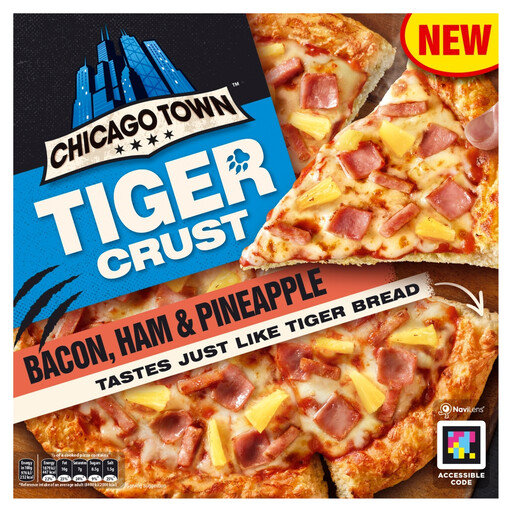
This 380g Tiger Crust pizza is a different product from the larger Chicago Town stuffed-crust example above. Use its own nutrition panel for your intended portion, and follow the exact pack’s cooking and storage instructions.
Base your meal decision on kcal for the portion you intend to eat. The per-100g figure helps compare pizzas with different pack and serving sizes, while the whole-pizza figure matters if you expect to eat it all. NHS Better Health cautions that a manufacturer’s portion may differ from yours.
No: check the exact flavour and portion rather than relying on the crust description. Tesco lists 394kcal per half of the reviewed Goodfella’s Margherita and 412kcal per half of the reviewed Dr. Oetker Pepperoni-Salame; these are figures for those particular pizzas, not a rule for thin crust.
Read both the per-100g figures and the amounts in the portion you plan to eat. NHS food-label guidance defines high levels as more than 1.5g salt or 5g saturated fat per 100g. Sainsbury’s lists 8.7g saturated fat and 2.02g salt in a labelled half of its reviewed Stuffed Crust Pepperoni pizza.
Follow the directions for the exact product. The reviewed Goodfella’s and Dr. Oetker product information says to keep the pizzas frozen at −18°C or colder and not to refreeze them after thawing.
Check the allergen declaration on the exact pack rather than relying on the brand or pizza style. The reviewed product information identifies allergens including wheat or gluten and milk; ingredients and warnings need checking for the particular flavour you buy.