Comfort-food shoppers comparing fat
If frozen pizza is the convenient option for a cold evening, compare the nutrition panel rather than treating a thin base or a lighter-looking topping as a nutrition claim.


For a frozen pizza that fits a lower-fat winter meal, compare total fat per 100g on the same nutrition basis, then check the portion you expect to eat. A thin base, vegetarian topping or smaller pizza does not establish lower fat; saturated fat and salt may also change which option suits your meal.
The useful comparison depends on whether your main concern is the recipe, the portion on your plate or both.
If frozen pizza is the convenient option for a cold evening, compare the nutrition panel rather than treating a thin base or a lighter-looking topping as a nutrition claim.
Total fat is only one label value. Check saturated fat and salt per 100g as well as the amounts in the portion you plan to serve.
A pack that defines a serving as half a pizza needs a different portion calculation from a pack containing individual pizzas. Decide how much you will cook and eat before comparing serving figures.
Start with comparable per-100g values to assess the recipe, then use the serving information to assess your meal. Check whether figures describe the pizza as sold or after cooking before comparing two products directly.
| Priority | What to check | Your needs |
|---|---|---|
| Total fat | Compare fat per 100g on the same nutrition basis. Check the full panel rather than relying on the base style or topping description. | I want a pizza with less fat than another option, not one that merely looks lighter. In the Food Standards Agency and Ipsos Northern Ireland’s 2024 survey of 611 interviewees in Northern Ireland, 49% actively used traffic-light labels when shopping for food; that figure does not measure frozen-pizza preferences. |
| Saturated fat | Read saturates per 100g and per serving. For context, NHS guidance describes more than 5g saturates per 100g as high and 1.5g or less as low. | When comparing pizzas for the same meal, I also want to know how much saturated fat my portion contains. |
| Portion size | Find the pack’s serving size and number of servings. Use the per-serving figures only for the amount they describe; check again if you expect to eat more. | A half-pizza serving might match my plans, but an individual pizza could make the amount simpler to work out. |
| Salt | Compare salt per 100g between similar pizzas, then check salt in the portion you intend to eat. Consider any sides or dips as part of the meal. | I would rather check salt alongside fat than choose on one label value alone. |
Neither description tells you the fat content. Tesco Groceries lists 8.9g fat per 100g for its Hearty Food Thin Pepperoni Pizza, while ASDA Groceries lists 9.0g per 100g after oven cooking for its Three Cheese Deep Pan Pizza.
Compare the exact packs’ fat values on a matching nutrition basis. Treat a lower value relative to another pizza as a comparison, not a claim that the product is low fat.
Cheese and meat-topped examples can have substantial saturated-fat figures per serving: Sainsbury’s lists 7.7g for half of its Goodfella’s Deep Pan Baked Pepperoni Pizza.
Check saturates per 100g and for the amount you expect to eat alongside total fat.
A choice made by fat content alone says nothing about its salt content. Tesco Groceries lists 1.78g salt for a half-pizza serving of its Hearty Food Thin Pepperoni Pizza.
Read salt per 100g and per planned serving, especially if the meal will include a dip or side.
A half of a large pizza and one pizza from a two-pack are different amounts of food. Sainsbury’s lists one Chicago Town Deep Dish Pepperoni pizza as a serving, so its serving figure should not be treated as directly equivalent to a half-pizza figure.
Use comparable per-100g figures for the recipe, then work from the pack’s serving definition to the amount you will eat.
These examples show why a familiar style or retailer name cannot stand in for the nutrition panel of the exact pizza.
Its frozen range includes deep-pan and stonebaked pizzas.
The Ristorante range includes thin-and-crispy frozen pizzas in several topping styles.
Its Deep Dish Pepperoni two-pack offers individual pizzas rather than a single large pizza to divide.
Tesco lists own-label frozen pizzas alongside branded options.
Its frozen-pizza range lists own-label products as well as Goodfella’s, Dr Oetker and Chicago Town pizzas.
Its Three Cheese Deep Pan Pizza is a vegetarian frozen-pizza example.
These frozen pizza options offer different styles to consider for a winter meal. Compare each current pack’s fat, saturates, salt and serving information before choosing for a lower-fat meal; the style or topping alone cannot settle that question.
 No image available
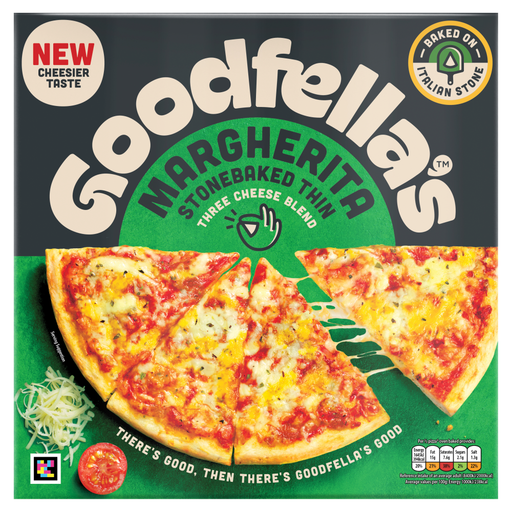
Consider this margherita-style pizza if you prefer that topping for your winter meal. Its thin base does not establish its fat content, so compare the current pack’s per-100g values and the portion you plan to eat.
 No image available
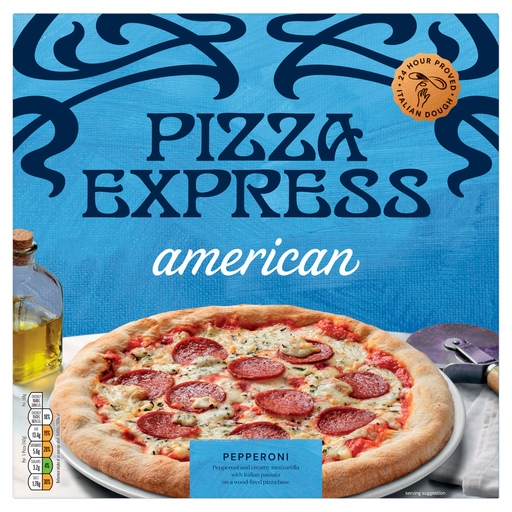
If the American-style pizza appeals for this meal, use its pack label to compare fat, saturates and salt with other frozen pizzas. Check the stated servings against the amount you expect to eat rather than relying on the pizza’s name.
 No image available
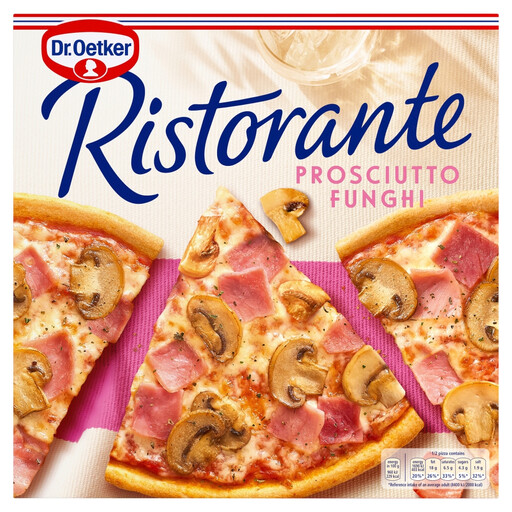
This Ristorante variant gives you another topping style to compare for a winter meal. Check the exact pack’s per-100g nutrition basis, serving size and allergens; neither the range name nor the topping establishes a lower-fat choice.
No. A thin base describes the style, not the nutrition value. Tesco Groceries lists 8.9g fat per 100g for its Hearty Food Thin Pepperoni Pizza, so compare the exact pizza’s label rather than assuming its base makes it lower in fat.
Compare total fat per 100g first, making sure both labels use a comparable as-sold or cooked basis. Then check saturates and salt, followed by the serving values for the amount you plan to eat. The NHS also uses per-100g values to explain saturated-fat label bands.
A pizza’s fat figure does not tell you its salt content. Tesco Groceries lists 1.78g salt per half-pizza serving of its Hearty Food Thin Pepperoni Pizza; check salt for your planned portion, particularly if you will add sides or dips.
No. ASDA Groceries lists 9.0g fat and 3.8g saturates per 100g after oven cooking for its vegetarian Three Cheese Deep Pan Pizza. Compare its nutrition panel with the exact alternative you are considering, using the same nutrition basis.
Yes. Online information can help you shortlist pizzas, but Tesco notes that reformulation may change ingredients, nutrition and allergens. Read the current pack label for those details and follow that product’s cooking instructions.