Whole-pizza calorie trackers
If the meal is one entire pizza, look for calories and protein stated for that entire pizza. A figure for half a larger pizza does not answer the same question.


If you want to eat an entire frozen pizza for under 500 kcal while prioritising protein, compare calories and protein for the whole pizza: MuscleFood lists 475 kcal and 36.5 g protein for its Mighty Meaty pizza, while the individual Chicago Town pizzas listed by Asda and Tesco have 14–15 g protein each. A standard full-size pizza can also fit the calorie limit, but only if you eat a portion whose stated calories are below 500 kcal—not the whole pizza. Check the current pack for its serving basis, allergens and cooking instructions.
If the meal is one entire pizza, look for calories and protein stated for that entire pizza. A figure for half a larger pizza does not answer the same question.
Compare grams of protein and calories on the portion you intend to eat, rather than judging protein from the pizza’s name alone. Protein requirements differ between individuals.
If you are content to eat part of a full-size pizza and save or share the rest, a labelled half-pizza serving gives you a basis for checking the meal’s calories and protein.
Decide whether your 500 kcal limit applies to a whole pizza or a planned portion before comparing protein figures.
Consider this when: You want to eat the entire pizza and protein is a deciding factor. MuscleFood lists 475 kcal and 36.5 g protein for its 220 g Mighty Meaty pizza.
Keep in mind: MuscleFood describes its nutrition information as a guideline, so check the current label before relying on those figures.
Consider this when: One small pizza is the portion you want. Asda lists 378 kcal and 14 g protein for a Chicago Town BBQ Chicken pizza; Tesco lists 417 kcal and 15 g for a Four Cheese pizza.
Keep in mind: These individual pizzas list less protein per pizza than MuscleFood’s Mighty Meaty, so the under-500-kcal figure alone does not settle a protein-focused choice.
Consider this when: You are willing to eat and account for only the stated portion. Tesco lists 446 kcal and 19.9 g protein for half a Deep Pan Cheese pizza.
Keep in mind: A half-pizza nutrition figure cannot be used for the entire pizza; plan what to do with the remaining portion.
| Priority | What to check | Your needs |
|---|---|---|
| Serving size | Check whether calories cover a whole pizza, one individual pizza or a fraction of a larger one. Check how many pizzas and servings are in the pack. | I want the calorie figure to cover everything I plan to eat, not just the portion used on the label. |
| Protein | Compare protein in grams alongside calories for the same portion. For a whole-pizza meal, use whole-pizza figures for both. | Protein matters to me, but I still need to keep the pizza portion within my chosen calorie limit. |
| Salt and saturates | Read both values for the portion you intend to eat. Tesco lists 1.99 g salt for half a Finest Margherita pizza; that figure describes the half, not the whole. | I want to consider the rest of the nutrition panel, even when a portion meets my calorie limit. |
| Ingredients and allergens | Read the current ingredients, allergen declaration and any may-contain statement for the exact pizza. Check dietary labels rather than assuming suitability from a topping name. | If I need to avoid an ingredient or allergen, I need information for the pack I am buying. |
| Preparation and storage | Check that the listed cooking method suits your appliance and follow the pack’s frozen-storage and thawing instructions. Tesco states that its Deep Pan Cheese pizza is not suitable for microwave cooking. | I need a pizza I can prepare with the appliance I have and store as instructed. |
Tesco lists 446 kcal for half its Deep Pan Cheese pizza, while Tesco’s listing for Dr. Oetker Ristorante Pepperoni-Salame gives 412 kcal for half. Neither figure describes eating the entire pizza.
If you intend to eat a whole pizza, check for whole-pizza nutrition. Otherwise, decide how much you will eat and how you will handle the remainder.
Asda and Tesco list 14 g and 15 g protein respectively for the individual Chicago Town pizzas, compared with MuscleFood’s listed 36.5 g for its Mighty Meaty pizza. All three have stated whole-pizza calories below 500 kcal.
Compare calories and protein on the same whole-pizza basis when protein is central to your choice.
Meeting a calorie limit does not tell you the pizza’s salt, saturates or allergen information. Tesco lists 1.99 g salt for half its Finest Margherita pizza.
Read the current nutrition and allergen panels for the exact product, especially if an ingredient or allergen affects your choice.
Protein requirements and dietary restrictions vary. Guidance published by Buckinghamshire, Oxfordshire and Berkshire West Integrated Care System specifically cautions people with renal disease or advice to limit protein against following a high-protein diet without professional advice.
If either applies to you, speak to your dietitian or doctor before making higher-protein products a routine choice.
These product-line examples show why the serving stated on a nutrition panel matters more than pizza size or branding alone.
Its Mighty Meaty pizza is an example of a product with nutrition stated for a complete pizza.
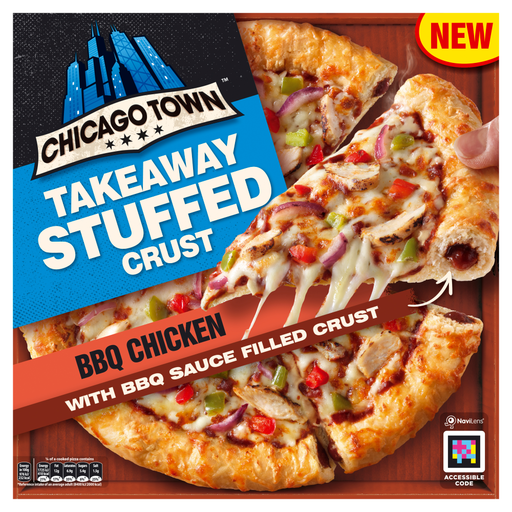
The individual Deep Dish BBQ Chicken and Four Cheese pizzas provide a clearly defined one-pizza serving.
The Pepperoni-Salame pizza illustrates the planned half-pizza route rather than an under-500-kcal whole pizza.
Its Deep Pan Cheese and Finest Margherita listings offer examples with nutrition stated per half pizza.
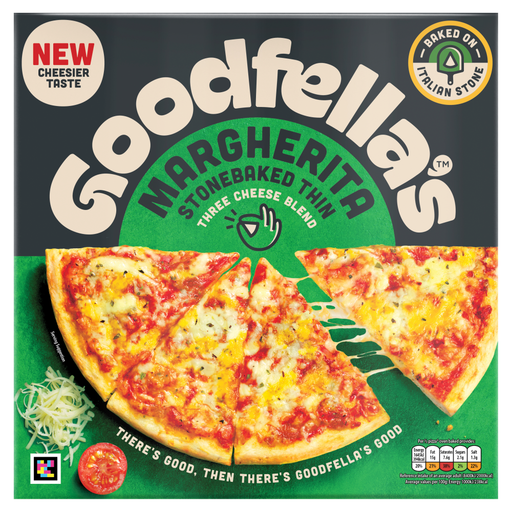
Its Stonebaked Thin Chicken pizza is another example of a product whose stated serving is half a pizza.
These Joybuy pizzas are options to consider when you are willing to portion a full-size pizza. Use the current pack’s serving size, calories and protein to decide whether the amount you plan to eat fits your meal; do not treat a portion figure as nutrition for the whole pizza.
 No image available
Consider this for a planned half-pizza meal, not a whole-pizza meal under 500 kcal. Check the current pack’s calories, protein and allergen information for the portion you will eat.
 No image available
This full-size stuffed-crust pizza calls for a planned portion if you are keeping the pizza meal under 500 kcal. Check the current pack’s nutrition for a quarter pizza and follow its cooking instructions.
 No image available
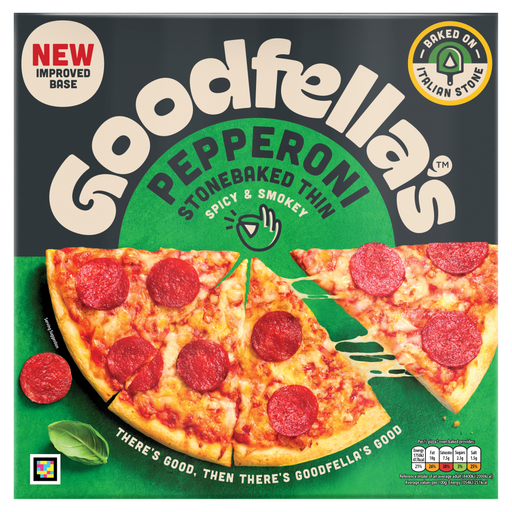
A half-pizza portion is the relevant comparison for an under-500-kcal meal, rather than the complete pizza. Read the current pack for that portion’s calories and protein, along with allergens and preparation instructions.
 No image available
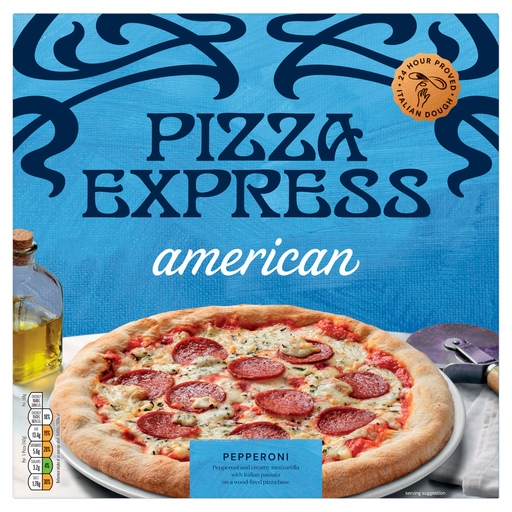
Plan around a half-pizza serving if you want a portioned meal below 500 kcal; the serving figure should not be applied to the whole pizza. Check the current pack’s protein, calories and allergen details.
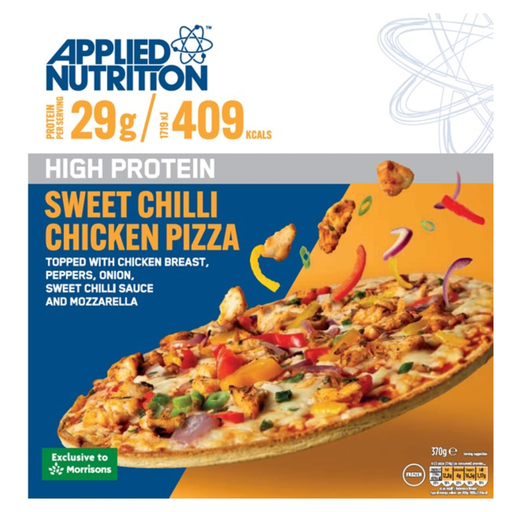 No image available
For a portioned meal, decide the weight you will eat and use the current pack’s per-100 g calories and protein to assess it. Check the serving basis of any separate protein figure rather than assuming it applies to the whole 370 g pizza.
Only if the figure applies to the whole pizza. Asda and Tesco give per-pizza figures for the individual Chicago Town BBQ Chicken and Four Cheese products, while Tesco’s Dr. Oetker Pepperoni-Salame and Deep Pan Cheese listings give their under-500-kcal figures for half a pizza.
MuscleFood lists 36.5 g protein and 475 kcal for its complete 220 g Mighty Meaty pizza, compared with 14 g and 15 g protein per pizza in the individual Chicago Town BBQ Chicken and Four Cheese listings from Asda and Tesco. These figures describe those specific products, and the current packs should be checked before buying.
Yes, when the stated half-pizza serving is what you eat. Tesco lists 412 kcal and 18 g protein for half a Dr. Oetker Ristorante Pepperoni-Salame pizza, and 446 kcal and 19.9 g protein for half a Tesco Deep Pan Cheese pizza. Account separately for anything else in the meal.
Yes. Ingredients and allergen information can change, so read the current pack for the exact pizza, including any may-contain statement. The reviewed product listings include milk and cereals containing gluten among their allergen information.
Do not use a higher-protein pizza as a routine way to increase your intake without advice if you have a prescribed protein restriction. Guidance published by Buckinghamshire, Oxfordshire and Berkshire West Integrated Care System advises people with renal disease or instructions to limit protein to consult a dietitian or doctor before following a high-protein diet.