People counting the pizza separately
A labelled pizza portion below 500 kcal gives you a starting figure. If pizza is an extra on fish-and-chips night, fish, chips, sauces and drinks still need to be counted separately.


Choose a mini pizza, pizza pocket or single slice if you want one individually listed item below 500 kcal. A standard frozen pizza can also fit that limit when the stated portion is half a pizza and you share or save the rest. These figures cover the pizza portion, not any fish, chips, sauces or drinks served with it.
A labelled pizza portion below 500 kcal gives you a starting figure. If pizza is an extra on fish-and-chips night, fish, chips, sauces and drinks still need to be counted separately.
A mini pizza, pocket or single slice has a per-item figure, so there is no need to divide a standard pizza to identify the stated portion. Check how many items you intend to eat.
Several standard pizzas list fewer than 500 kcal for half a pizza. That comparison works when each person eats the stated half, rather than treating the figure as one for the whole pizza.
Choose this when: You want the stated calorie figure to cover one mini pizza, pocket or slice without dividing a larger pizza.
Keep in mind: These formats are different sizes and shapes; one pocket or slice is not the same serving as a standard round pizza.
Choose this when: You want a conventional pizza and can share the other half or save it.
Keep in mind: A half-pizza figure does not put the whole pizza below 500 kcal.
| Priority | What to check | Your needs |
|---|---|---|
| Portion calories | Read the kcal figure and its serving basis together: per 100g, per item or per half pizza. Check the pack’s serving count against the amount you will eat. | I want the portion I actually serve to be below 500 kcal, not just the portion used on the label. The NHS notes that a manufacturer’s portion can differ from the amount eaten. |
| Pizza format | Check whether the figure covers one mini pizza, pocket, slice or half of a standard pizza. ASDA Groceries lists 243 kcal for one oven-baked Cheese & Tomato Mini Pizza; Tesco Groceries lists 412 kcal for half a Dr. Oetker Ristorante Pepperoni-Salame pizza. | For a meal on my own, I may prefer one individually portioned item. If we are sharing, half a standard pizza could work without assuming its whole-pizza figure is below 500 kcal. |
| Salt and saturates | Compare nutrients for the portion you intend to eat, not unlike serving sizes. ASDA Groceries lists 1.6g salt for one Chicago Town Rapid Slice and 6.6g saturates for one Four Cheese Deep Dish Mini Pizza. | Meeting my calorie limit does not answer every nutrition question, so I want to read the other figures on the label too. |
| Ingredients and allergens | Read the current ingredients, allergen declaration and any precautionary statements for the exact product. Check cooking directions for the format and appliance you will use. | If someone eating needs to avoid an ingredient, I need the information for that particular pack rather than an assumption based on its topping or size. |
| Whole meal | Decide whether pizza replaces part of the fish-and-chips meal or is an extra. Account separately for the portions of fish, chips, sauces and drinks actually served. | An under-500-kcal pizza portion is useful to me, but I will not count it as the total for the evening’s food. |
Tesco Groceries lists 412 kcal for half a Dr. Oetker Ristorante Pepperoni-Salame pizza, while Sainsbury’s lists 419 kcal for half its Vegetable Pizza. Neither figure describes eating the whole pizza.
Check both the kcal figure and the number of servings, then divide the pizza accordingly.
ASDA Groceries lists 1.6g salt for one 340-kcal Chicago Town Rapid Slice and 6.6g saturates for one 417-kcal Chicago Town Four Cheese Deep Dish Mini Pizza. The calorie figure alone does not show those differences.
Read salt and saturates for the same portion you used to compare kcal.
A pizza label covers its stated pizza portion, not the fish, chips, sauces or drinks added to the plate.
Decide whether pizza replaces something else or is an extra, and count the amounts actually served.
A pocket, a mini pizza and a slice may have different preparation directions; a timing for one product should not be transferred to another.
Follow the instructions on the exact pack for your chosen appliance and check the food is cooked as directed before serving.
These examples illustrate portion formats; a brand name alone does not establish the calories or ingredients of another pizza in its range.
A pizza-pocket option for someone seeking a stated calorie figure for one item.
A standard-pizza option when half a pizza is the intended portion.
The listed Rapid Slice and Four Cheese Deep Dish Mini Pizza provide two different individually portioned formats.
Its listed own-label examples include both an individual mini pizza and a standard pizza portioned in half.
Its listed Vegetable Pizza is another standard-pizza example for sharing or portioning.
These Joybuy options are standard frozen pizzas for someone planning to eat half a pizza and share or save the rest. Their half-pizza figures should not be read as figures for a whole pizza or a complete fish-and-chips meal.
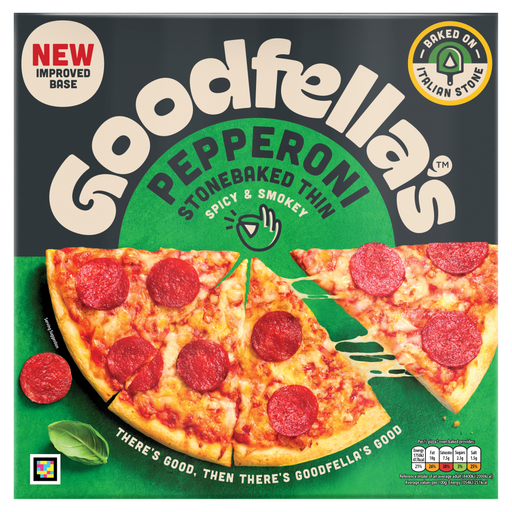 Image unavailable
If you are sharing or saving half, the listed oven-baked half-pizza portion is 417 kcal. The under-500-kcal comparison applies to that half, not the whole pizza; check the current pack for its serving and allergen information.
 Image unavailable
For a shared or saved pizza, the stated half-pizza portion is 447 kcal as consumed. That figure does not cover the whole pizza or other food served alongside it; check the current pack for serving and allergen information.
Only if the figure covers the whole item you eat. ASDA Groceries lists 243 kcal for one Cheese & Tomato Mini Pizza, whereas Tesco Groceries lists 412 kcal for half a Dr. Oetker Ristorante Pepperoni-Salame pizza. Check the serving description and pack count before comparing either with your portion.
No: the figure describes the stated pizza portion only. Account separately for any fish, chips, sauces, drinks or additional pizza you serve. The NHS also notes that the manufacturer’s portion may differ from the amount you eat.
Use an air fryer only when the exact product’s instructions give a suitable method for your appliance. Do not transfer a pocket’s or slice’s timing to a different pizza; follow the directions on its pack.
Check the allergen declaration and any precautionary statements on the exact pack before serving it. A calorie figure or a product’s small size does not establish whether its ingredients meet someone’s requirements.