
24/7 Customer Support

Free returns

Same-day & Next-day Delivery

Quality Guaranteed

Unlock Your Welcome Offers: FREE Delivery | Up to 80% OFF | Free 30-day JoyPlus trial
Download the APP
Frozen prawns are a practical freezer staple for UK households, whether you are preparing a quick midweek stir-fry, hosting a barbecue or assembling a seafood platter. However, pack sizes, count numbers, glaze and preparation formats can make products look better value than they really are.
Before you buy frozen prawns online, check three common traps:
Choose the format according to preparation time and presentation.
Raw frozen prawns offer more control over seasoning and cooking. They are suitable for grilling, pan-frying, curries, paella and stir-fries, but must be cooked before eating.
Cooked prawns are convenient for salads, sandwiches, prawn cocktails and cold platters. Add them to hot dishes towards the end and heat them gently rather than cooking them from the start.
Peeled and deveined prawns reduce preparation and are particularly useful for noodles, pasta, fried rice and family meals. Check whether the tail remains attached, as tail-on prawns provide a more decorative presentation.
Head-on shell-on prawns retain their shell and head for cooking. They can help create a more substantial presentation and contribute flavour to sauces, stocks and hot pots, but require peeling at the table or before serving.
All prawns are crustaceans, so read the allergen statement carefully. Some products also contain sulphites, such as sodium metabisulphite or E223. Ingredients and allergen information on the product packaging should take priority over online descriptions.
Prawn sizing is usually expressed as a count per kilogram or per pound. A lower number generally indicates larger prawns.
The notation can vary between suppliers, so check whether the count refers to pieces per kilogram or per pound. Products listed as 8–12/lb are substantially larger than those listed as 26–30/lb.
Net weight is the figure to use when comparing value. Ice glaze protects frozen seafood from drying out, but it is not edible prawn meat. For example, an IQF product may state 500g frozen weight, 30% glaze and 350g net weight.
IQF prawns, or individually quick frozen prawns, are frozen separately rather than in a solid block. This makes it easier to remove a portion for one meal and reduces waste. Block-frozen products can work well for larger gatherings, but they may require more planning because the whole pack can be difficult to separate.
Store frozen prawns at -18°C or below, follow the pack’s defrosting instructions and do not refreeze once defrosted. Raw products must be cooked thoroughly. Avoid relying on colour alone if the packaging gives a specific internal temperature or cooking instruction.
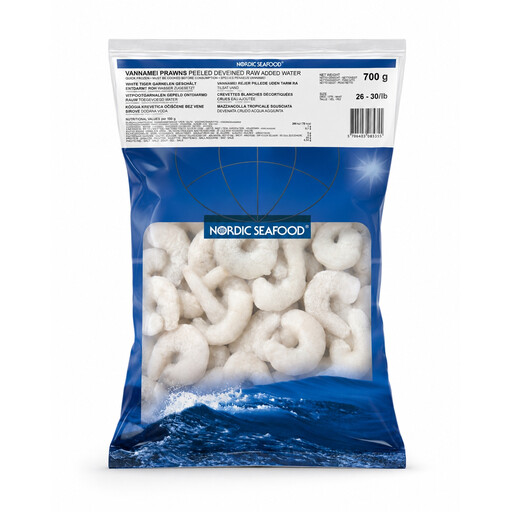
Why This Fits Their Persona: A useful everyday pack for families cooking stir-fries, pasta, curries or fried rice without paying for shells or heads.
The listing states a 700g pack and individually frozen prawns, making portion control easier. Raw and peeled/deveined status is clearly specified.
Medium 26–30/lb size; individually frozen; suitable for multiple everyday recipes.
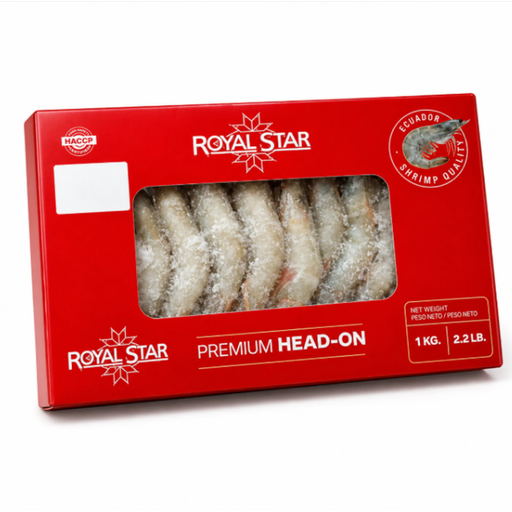
Why This Fits Their Persona: Suited to entertaining, plated seafood dishes and diners who value whole-prawn presentation.
The 20/30 count identifies the size clearly, while the 1kg net pack makes the quantity easier to compare with other whole prawns.
Head-on shell-on format; 20–30 prawns per kilogram; listed country of origin: Ecuador.
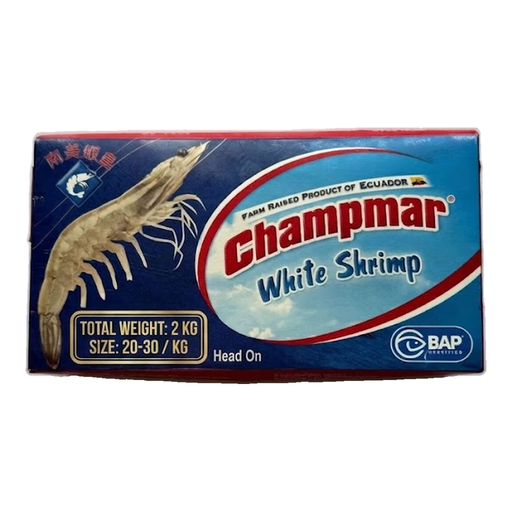
Why This Fits Their Persona: A larger format for barbecue gatherings, seafood platters, hot pots and frequent cooking for groups.
The product states a 2kg format and 20–30/kg size, helping shoppers distinguish a catering-style purchase from a small household pack.
Whole prawns for grilling and stocks; large 20–30/kg count; storage instructions include -18°C or below.
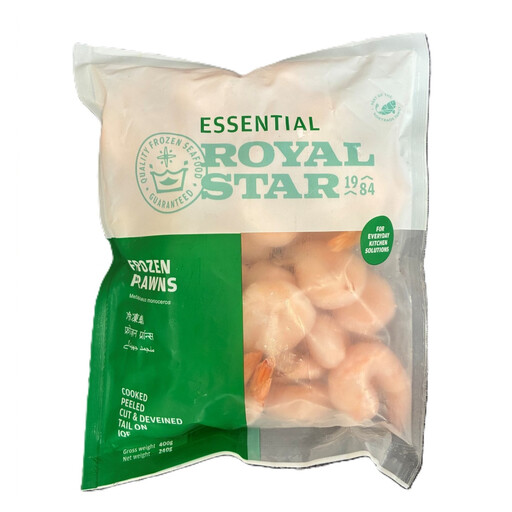
Why This Fits Their Persona: Useful when you need a quick ingredient for salads, pasta, curries or garnishes with minimal preparation.
The cooked, peeled and IQF format is stated clearly, while the 240g net weight prevents confusion with the 400g gross pack weight.
Cooked and peeled; individually frozen; tail-on presentation; 31/40 size.
For raw prawns, defrost in the refrigerator according to the package instructions, then pat dry before grilling or frying. Removing excess surface moisture helps them colour in the pan instead of releasing too much water.
For a barbecue, choose large prawns such as 20/30 or 30/40 and keep the shell on if you want a more substantial presentation. For stir-fries and curries, peeled and deveined 26–30 or 31/40 prawns are easier to add directly to the sauce. For paella, select a size that will remain visible among the rice, and add raw prawns early enough to cook through without leaving them simmering for too long.
Cooked prawns need only gentle reheating. Add them during the final stage of a curry, pasta sauce or fried rice. Follow the product label, as cooking times and temperature guidance vary.
We have compiled a complete, real-time list of products that fully satisfy these strict selection criteria and UK safety regulations.
The answer depends on net weight, size and preparation. Compare the price per kilogram of edible product rather than the pack’s gross weight. Peeled prawns may cost more per kilogram than whole prawns because preparation has already been completed.
Follow the best-before date and storage instructions on the packaging. Keep them at -18°C or below, avoid repeated temperature changes and do not refreeze prawns after they have thawed. Once defrosted, follow the label’s refrigeration and consumption guidance.
Some raw IQF prawns provide instructions for cooking from frozen, while others specify refrigerator thawing first. Check the individual product label. Do not assume cooked prawns and raw prawns have the same preparation method, and always cook raw prawns thoroughly before serving.