
24/7 Customer Support

Free returns

Same-day & Next-day Delivery

Quality Guaranteed

Unlock Your Welcome Offers: FREE Delivery | Up to 80% OFF | Free 30-day JoyPlus trial
Download the APP
Frozen raw peeled and deveined prawns are a practical freezer staple for quick dinners, entertaining and batch cooking. They can go straight into stir-fries, curries, pasta, rice dishes or onto skewers, without the preparation associated with whole prawns.
However, pack descriptions can make comparison difficult. A large-looking bag may contain a high proportion of protective ice glaze, while a “ready-to-cook” product may still require complete cooking. Before buying, check the useful weight, size grade, freezing format, ingredients and storage instructions.
Some frozen seafood products show both a total frozen weight and a net or drained weight. For example, the Aquahawk 350g packs list a 350g net weight, while the frozen weight is 500g and the glaze is approximately 30% ±3%.
Protective ice glaze helps prevent freezer dehydration, but it is not part of the portion you eat. Compare products using the net weight, not simply the largest number printed on the front.
“Peeled”, “deveined” and “ready-to-cook” describe preparation convenience, not cooking status. Raw prawns must be cooked thoroughly before serving. Cooked peeled prawns are a separate product category and may only need careful reheating or defrosting.
Check whether the description says raw or cooked, and follow the instructions on the packaging. Do not serve raw prawns after simply thawing them.
Large prawns can look impressive on a platter, but smaller prawns may distribute more evenly through fried rice, noodles, soups and sauces. Size grades such as 31/40, 26/30 and 41/50 generally indicate an approximate count per pound, although pack labelling can vary.
Always check whether the stated count is per pound or per kilogram. The lower the count, the larger the individual prawn tends to be.
For convenient everyday cooking, look for prawns that are explicitly described as:
“Pulled deveined” and “cut vein” describe different processing methods. A pulled vein is removed through the back, while a cut-vein product has a visible back cut. Neither changes the need to cook the prawns fully.
IQF prawns, or Individually Quick Frozen prawns, are frozen separately. This allows you to remove a portion for one meal while keeping the rest frozen. It is useful for households that cook for one or two people, or for storing several meal portions.
Block-frozen prawns are frozen together in a solid pack. They can work well for larger family meals, but separating the exact quantity may require thawing more than you need. Never refreeze prawns once they have defrosted.
Prawns are crustaceans and must be clearly considered by anyone with a crustacean allergy. Some products also contain salt, water, stabilisers such as E451 or E452 and, in certain packs, sulphites such as E223.
Read the full ingredient declaration rather than relying only on front-of-pack wording. Also compare salt values and net drained weight if you are choosing between similar frozen vannamei prawns. The species name Litopenaeus vannamei is commonly used for farmed Pacific white prawns.
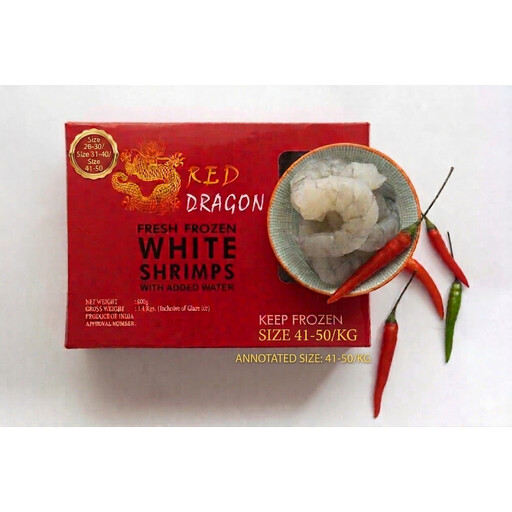
Why This Fits Their Persona: The 900g pack suits shoppers building a versatile freezer supply for fried rice, noodles, soups and family curries.
The product clearly states that it is raw, peeled and deveined, with ingredients and storage guidance provided for comparison.
41–50 size grade; 900g pack; suitable for dishes where prawns need to be spread throughout the recipe.
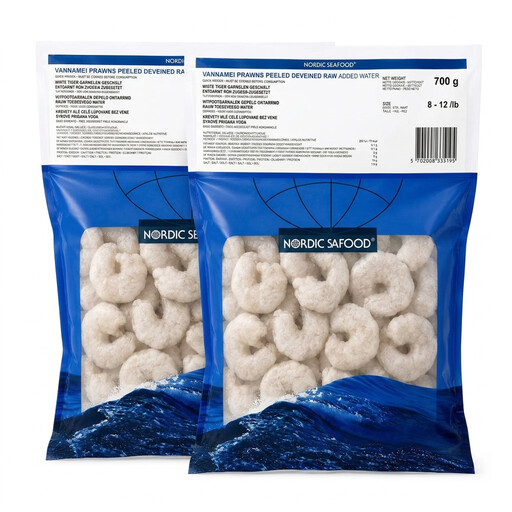
Why This Fits Their Persona: Large prawns suit hosts preparing individual portions for grilling, skewers, pasta or a seafood centrepiece.
The listed 8–12/lb grade gives a clearer indication of individual size than vague descriptions such as “jumbo”.
Peeled and deveined; individually frozen; 700g pack designed for family meals or entertaining.

Why This Fits Their Persona: The XL size is suited to cooks who want substantial prawns for grilling, pan-searing, skewers or plated seafood dishes.
The product specifies raw IQF preparation, size grade, ingredients, thawing guidance and the need for thorough cooking.
XL 21–25 grade; IQF format; cut-vein preparation; 700g net weight.
Keep frozen prawns at -18°C or below until the stated best-before date. Defrost in the refrigerator where possible, place them in a covered container and use within the period stated on the pack. Some products provide instructions for cooking from frozen, while others recommend thawing first.
For safe cooking, follow the product instructions and cook until the flesh is opaque, firm and hot throughout. Avoid overcooking, as prawns can become rubbery. Drain thawed prawns well before stir-frying or grilling to reduce excess water in the pan.
For a wider choice of sizes and formats, browse the deveined prawns range.
We have compiled a complete, real-time list of products that fully satisfy these strict selection criteria and UK safety regulations.
They are prepared for convenience but are not necessarily ready to eat. Raw prawns must be cooked thoroughly. Check the pack for cooking instructions, as some IQF products can be cooked from frozen while others produce better results after refrigerator thawing.
Use the best-before date printed on the packaging and keep the freezer at -18°C or below. Once defrosted, keep the prawns refrigerated and follow the pack’s consumption guidance. Do not refreeze defrosted prawns.
31/40 prawns and 41/50 prawns are practical for stir-fries, noodles, soups and curries because they distribute through the dish. 26/30 prawns offer a larger bite for pasta, rice dishes and appetisers, while 21/25 or 8–12/lb prawns are more suitable for grilling, skewers and plated servings.