
24/7 Customer Support

Free returns

Same-day & Next-day Delivery

Quality Guaranteed

Unlock Your Welcome Offers: FREE Delivery | Up to 80% OFF | Free 30-day JoyPlus trial
Download the APP
Buying frozen raw prawns online can be more complicated than it first appears. Product names may highlight size, origin or “premium” positioning, while important details such as net weight, glazing, preservatives and preparation instructions sit further down the page.
Whether you are planning prawns for grilling, a family stir-fry, a seafood paella or a weekend BBQ, the right choice depends on how you intend to cook and serve them. This guide explains the main buying traps and compares suitable options for different UK households.
Prawn sizing usually refers to the approximate number of prawns per kilogram. A 20/30 count contains larger prawns than a 40/50 count. However, the number may vary slightly, so it should not be treated as an exact quantity.
A further complication is the difference between gross and net weight. A product described as “1kg” may include ice glaze, packaging or seasoning. For example, some head-on black tiger prawn products list 1kg gross weight but 600g or 700g net weight. Always check the declared net quantity before comparing prices.
IQF prawns, or individually quick frozen prawns, are separated before freezing. This makes it easier to remove just the amount required for a curry, stir-fry or meal for one.
Block-frozen prawns are frozen together in a solid pack. They can be practical for larger gatherings, but may require more planning because the whole block generally needs to be thawed. Do not refreeze prawns after they have defrosted.
Head-on shell-on prawns retain the head and shell, which can help protect the flesh during cooking and contribute flavour to stocks, sauces and broths. They also create a more striking presentation for a seafood platter.
By contrast, headless shell-on or peeled prawns are more convenient for eating and preparation. Whole prawns can require more kitchen work, including removing the shell and digestive tract. Decide whether presentation and flavour development are more important than speed.
Common choices include Vannamei prawns, black tiger prawns, wild king prawns and freshwater prawns. Species can differ in size, texture and flavour, but product descriptions should not be treated as a guarantee of a particular eating experience.
Vannamei prawns are widely available in several sizes, including 20/30, 30/40, 40/50 and 50/60 counts. Black tiger prawns are often sold as larger head-on shell-on prawns, while freshwater prawns such as Macrobrachium rosenbergii may be selected for their substantial appearance.
Check the stated scientific name, country of origin and ingredient list rather than relying only on words such as “premium” or “restaurant-style”.
For a fair comparison, consider:
A 1kg pack of whole prawns will provide less ready-to-eat meat than 1kg of peeled prawns because the head and shell remain part of the product weight.
Prawns are crustaceans, so they must be avoided by anyone with a crustacean allergy. Some products also contain sulphites, commonly listed as E223 or sodium metabisulphite. Marinated varieties may contain additional allergens such as soya, wheat or gluten.
Keep frozen at -18°C or below, follow the packaging instructions and thaw in a refrigerator unless the label specifically gives another preparation method. Raw prawns must be cooked thoroughly before eating. Use the temperature and cooking guidance on the product label; some listings specify a core temperature above 70°C or 75°C.
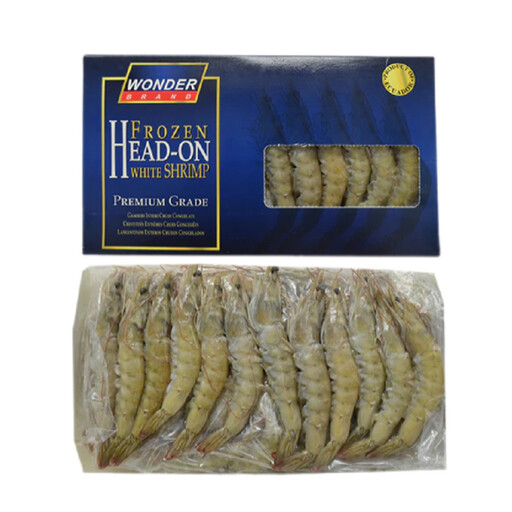
Why This Fits Their Persona: The 50/60 count offers a practical size for family meals, pasta, curries and stir-fries without moving into extra-large serving sizes.
The listing identifies the species, Ecuadorian origin, approximate count and ingredients, including sulphites.
1kg pack; whole Vannamei prawns suitable for sautéing, grilling, paella and pasta.

Why This Fits Their Persona: Large prawns make a clear visual impact when served whole at a dinner party, seafood platter or special family meal.
The 20/30 count clearly indicates a larger format, while the IQF format supports portion control.
Head-on shell-on presentation; listed as Ecuadorian Vannamei; suitable for BBQs, grilling and pan-searing.
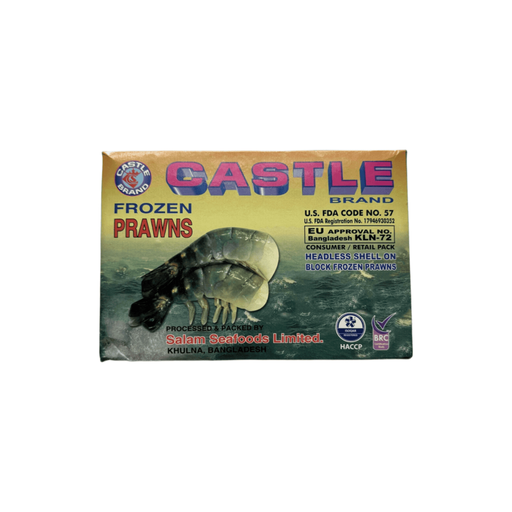
Why This Fits Their Persona: Substantial freshwater prawns suit cooks preparing centrepiece dishes, rich curries, banquet-style meals or grilled seafood.
The pack states 700g net weight, 8–12 per pound sizing and the species, preventing comparisons based only on a large product title.
Headless shell-on format; large freshwater prawns; suitable for grilling, Asian dishes and curries.
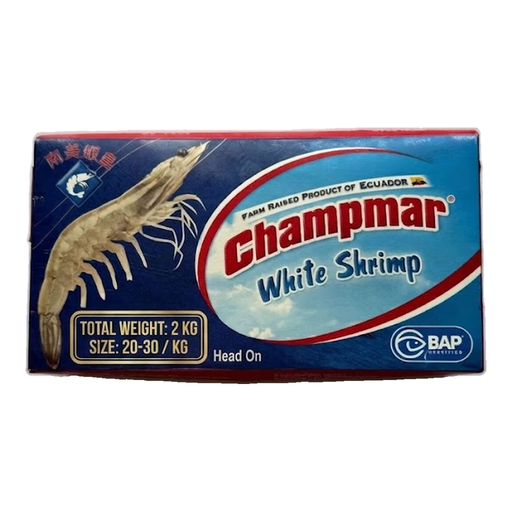
Why This Fits Their Persona: A 2kg format is suited to frequent seafood cooks, large households and hosts planning prawns for BBQs or sharing platters.
The product states that it is block frozen and gives the 20–30 per kilogram size, so buyers can plan thawing and portions realistically.
Large head-on shell-on Vannamei prawns; 2kg pack; designed for grilling, platters and curry dishes.
We have compiled a complete, real-time list of products that fully satisfy these strict selection criteria and UK safety regulations.
For a BBQ, dry the prawns thoroughly before brushing with oil or seasoning. Large whole prawns are easier to turn on a grill, while headless shell-on or IQF prawns are more convenient for stir-fries and paella.
Yes. Large prawns, particularly 20/30 or 30/40 sizes, are easier to handle on a grill. Head-on shell-on prawns can also provide an attractive presentation. Thaw and pat dry according to the packaging instructions, then cook thoroughly.
They are different prawn species. Vannamei, also known as whiteleg shrimp, is commonly sold in several count sizes. Black tiger prawns are often recognised by their larger appearance and firm texture. Compare the declared species, net weight and origin rather than relying on colour or promotional wording.
Keep them continuously frozen at -18°C or below and follow the best-before date on the packaging. Once thawed, store them in the refrigerator and use within the period specified by the product label. Never refreeze thawed raw prawns.