Who is each format for?
The planned dish and service method determine whether an unopened ambient tin or a frozen raw steak is the useful starting point.
Managers planning cold buffet dishes
Tinned chunks or drained tuna suit salads, sandwich fillings and other cold preparations that staff need to assemble without cooking fish. Plan how much to open for each service period, and follow the pack instructions for unused contents.
Chefs preparing a cooked tuna special
Frozen steaks suit a dish that calls for a whole piece of fish, provided the kitchen has appropriate frozen storage and a process for preparation and cooking. Product instructions differ: Morrisons describes refrigerator thawing for its frozen yellowfin steaks, while an Iceland listing also gives an oven-from-frozen method.
Teams planning portions and replenishment
Compare can size, drained or usable weight, the number of portions to prepare and expected covers. A small can may allow separate opening batches; a frozen portion still needs to fit the kitchen’s preparation schedule.
What should you check before choosing?
Tinned tuna for cold service
Choose when: The menu needs tuna for salads, sandwiches or plated cold portions without a raw-fish cooking step.
Trade-off: Chunks and canned steaks offer different presentations, and opened contents still need controlled storage and use.
Frozen steaks for a cooked dish
Choose when: The breakfast menu calls for a cooked whole steak and staff can prepare it as raw fish.
Trade-off: Frozen storage, product-specific preparation instructions and cooking must fit the service plan.
Decide on the dish first, then check the handling instructions and pack format against the number of guests you expect to serve.
| Priority |
What to check |
Your needs |
| Service method |
Check whether the dish needs loose chunks, drained tuna or a whole cooked steak. Princes describes its drained tuna as ready to use after opening; M&S identifies its yellowfin steaks as raw fish that must be cooked. |
I’m assembling a cold salad or sandwich filling, rather than running a cooked-fish station. |
| Storage and preparation |
Read the exact label for frozen storage, thawing and cooking. Morrisons specifies storage at −18°C or colder and approximately 12 hours of refrigerator thawing for its frozen yellowfin steaks. Check opened-tin instructions separately. |
A cooked steak dish has to fit the kitchen’s freezer space and preparation schedule; a cold tuna dish needs a plan for opened contents. |
| Fish-allergen information |
Confirm the fish declaration on the chosen product and the ingredients of the finished dish. Keep dish information current when the recipe or product changes, and plan utensils and handling around other buffet foods. |
Guests need to know what is in the tuna dish, including any ingredients mixed with the fish. |
| Portion format |
Compare the stated can or pack size, drained or usable weight and the quantity opened at one time. Chunks, no-drain formats and steaks serve different presentation needs; do not infer serving yield from total pack weight alone. |
For a small cold display, I may want to open portions in batches rather than prepare more tuna than the service needs. |
| Menu presentation |
Match chunks to mixed dishes and assess canned steak formats for defined cold portions. Use a frozen whole steak only where the menu includes a cooked preparation and its handling steps can be followed. |
The tuna needs to look right in the finished dish, without treating a raw steak as a ready-to-serve cold ingredient. |
Relevant brand and retailer examples
These examples show the range of tinned and steak formats; the name alone does not determine which pack suits a hotel’s menu or ordering pattern.
Princes
A tinned-tuna range for cold dishes, including chunks, drained tuna, sandwich tuna and canned steaks.
- Princes describes its drained tuna as ready to use after opening.
- Check the chosen pack’s size and instructions against the number of portions being prepared.
John West
Tinned-tuna formats include a no-drain tuna steak fridge pot for defined cold portions.
- John West labels that fridge pot as 93% tuna and lists 29 g protein per 100 g.
- A fridge pot’s portion format is different from a larger can for batch preparation; compare the actual packs needed for the dish.
Tesco
Its UK listings illustrate tinned chunks and steaks alongside branded drained and no-drain products.
- The listings provide examples of different can sizes and tuna styles to compare.
- Check the specific product label and pack format rather than assuming two listings prepare or portion the same way.
Sainsbury's
Its previously frozen yellowfin steaks illustrate the chilled, raw-steak route for a cooked dish.
- The steak format suits a menu planned around a whole piece of fish.
- The product’s defrosting and no-refreezing instructions need to fit the kitchen’s schedule.
M&S
Its tinned tuna steaks and raw yellowfin steaks illustrate two distinct preparation routes.
- The tinned spring-water product provides a cold-dish format, while the yellowfin steak is for cooking.
- M&S says its raw yellowfin steaks must be cooked; follow the instructions for the particular product selected.
Tinned tuna options on Joybuy
These tinned chunks are options for assembling cold buffet dishes such as tuna salad and sandwich fillings. They are not frozen-steak options for a cooked tuna dish.
 No image available
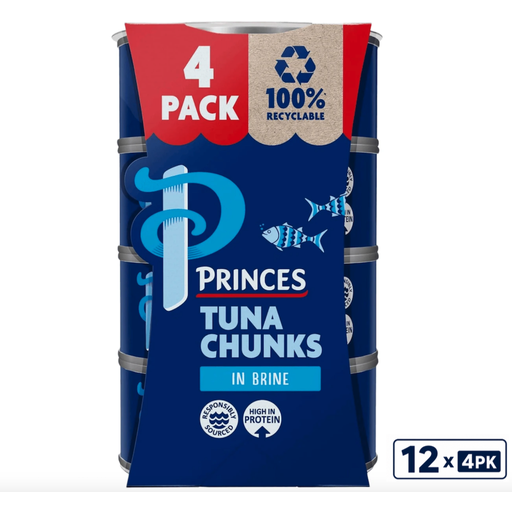
Princes Tuna Chunks in Brine, 4 x 145g x 12 packs
For batch preparation of cold salads or sandwich fillings. The listed configuration is 12 packs of four 145g cans; compare the quantity with expected covers and check the drained weight when planning portions. Keep fish-allergen information current for the finished dish.
View on Joybuy
 No image available
John West No Drain Tuna Chunks in Springwater, 3 x 100g
For cold dishes assembled in smaller batches, the listed pack contains three 100g cans. The No Drain format is worth considering when staff would otherwise drain tuna during preparation. Follow the chosen pack’s instructions after opening.
View on Joybuy
 No image available
John West Tuna Chunks in Sunflower Oil, 4 x 125g
An oil-packed chunks option for cold salad or sandwich preparation, supplied as four 125g cans. Account for the packing oil when deciding how to prepare and portion the dish. The product information notes that some bones may remain, so include that in handling checks.
View on Joybuy
 No image available
Princes Tuna Chunks in Sunflower Oil, 4 x 145g
Four 145g cans provide separate opening opportunities for cold buffet preparation. Choose the sunflower-oil format if it fits the planned recipe, and check usable weight and opened-product instructions before setting batch quantities.
View on Joybuy
 No image available
Morrisons Fad Free Tuna Chunks in Spring Water, 145g
A 145g spring-water can for a cold salad or sandwich filling. Check how many cans the expected covers require, and follow the product’s instructions for any contents left after opening.
View on Joybuy
Frequently asked questions
Can frozen tuna steaks replace tinned tuna on a cold breakfast buffet?
Not as a direct ready-to-use substitute. The frozen yellowfin steaks described by Morrisons and Iceland have product-specific preparation instructions, and M&S identifies its yellowfin steaks as raw fish that must be cooked. Use a frozen steak for a planned cooked dish, not as though it were opened canned tuna.
How should frozen tuna steaks be thawed for service?
Follow the instructions for the exact product. Morrisons specifies approximately 12 hours of refrigerator thawing and use the same day for its frozen yellowfin steaks; Iceland specifies refrigerator defrosting for its steaks and also lists an oven-from-frozen method. Do not transfer one product’s method to another.
What equipment does a frozen-steak dish need?
It needs storage and preparation facilities suited to the product instructions, along with temperature monitoring. The Morrisons and Iceland frozen-steak listings specify storage at −18°C or colder; Food Standards Agency MyHACCP guidance addresses adequate freezing, refrigeration and temperature-monitoring facilities for food businesses.
What should staff check before serving a tuna dish from the buffet?
Check the fish declaration, all ingredients in the finished recipe and the information staff will give guests. If the tuna is mixed with other ingredients or the product changes, update the dish information and review how utensils and preparation areas are used.
Can unused tinned tuna stay in the opened can at room temperature?
Follow the chosen product’s after-opening instructions rather than continuing its unopened storage routine. For the M&S tinned tuna example, the seller instructs users to transfer unused contents to a non-metallic container, refrigerate them and eat them within 24 hours.


