Cooking a TV dinner for one
If you want a convenient freezer meal, compare fat and saturated fat on the nutrition label rather than treating a calorie-controlled name as a fat measure. Check the whole-pack figures as well as the per-100g figures.


For a reduced-fat frozen TV dinner, compare total fat and saturated fat per 100g rather than relying on a calorie-controlled range name, then check the amounts in the whole pack. Salt, allergens and cooking directions can change which meal suits you: the three ASDA examples discussed below list 1.3g to 1.4g salt per pack despite their low front-of-pack fat labels.
If you want a convenient freezer meal, compare fat and saturated fat on the nutrition label rather than treating a calorie-controlled name as a fat measure. Check the whole-pack figures as well as the per-100g figures.
A lower-fat label does not tell you how much salt is in dinner. Action on Salt & Sugar classified 56% of the 1,511 chilled and frozen ready meals in its May 2025 review of 11 major retailers as high in salt, and 42% as high in saturated fat. Those figures describe the meals assessed, not every frozen meal.
Compare protein with pack size, fat, salt and allergens rather than judging a meal by its protein claim alone. For example, ASDA lists 23g protein in its 400g Protein Piri Piri Chicken with Spicy Rice, alongside 1.3g salt per pack and barley in the allergen information.
Start with per-100g figures to compare meals of different sizes, then read the whole-pack figures for the portion you intend to eat.
| Priority | What to check | Your needs |
|---|---|---|
| Fat and saturates | The NHS defines low total fat as 3g or less per 100g and low saturated fat as 1.5g or less per 100g. Check both figures, then look at the amounts per pack. | I want a reduced-fat dinner, but a calorie-controlled name alone does not tell me its fat or saturated-fat content. |
| Salt | Read salt per pack as well as per 100g. Where a traffic-light label appears, the Food Standards Agency explains that amber indicates a medium amount and red a high amount. | If I am comparing two lower-fat meals, I also want to know how much salt the full dinner contains. |
| Portion and protein | Compare pack weights and the stated protein per pack. ASDA lists 350g for its chicken pasta and chicken tikka meals, and 400g with 23g protein for its Protein Piri Piri Chicken with Spicy Rice. | I want to choose a portion that works as my dinner, rather than compare protein figures without considering pack size. |
| Ingredients and allergens | Read the current pack’s ingredients and allergen declaration. The cited ASDA pasta lists wheat, its chicken tikka lists milk, and its piri piri chicken lists barley. | Milk, wheat or barley may rule out a meal for me; a lighter-sounding range name cannot answer that question. |
| Preparation | Check whether the exact meal can be cooked with your appliance, and follow its stated heating, stirring and standing instructions. Check that it is piping hot before serving. | For a quick TV dinner, I need a method I can follow with the microwave or oven I have. |
Calories, total fat and saturated fat are separate label measures. Tesco’s frozen under-500-calorie category and M&S’s Count On Us range can help you find candidates, but their range names do not establish the fat content of each meal.
Compare total fat and saturates per 100g on the exact product, then check the whole-pack figures and salt.
Per-100g figures help compare different products, but a TV dinner usually contains more than 100g. The three cited ASDA packs contain 1.3g to 1.4g salt each.
Use per 100g for a like-for-like comparison and per pack to understand the portion you plan to eat.
The cited lower-fat ASDA meals list different allergens: wheat in the chicken pasta, milk in the chicken tikka and barley in the piri piri chicken.
Check the ingredient list and allergen declaration on the current pack, especially when avoiding a particular ingredient.
Heating steps depend on the product and appliance. ASDA’s chicken pasta directions say to cook it from frozen, check that it is piping hot and not reheat it.
Follow the directions on the meal you are preparing, including any stirring or standing steps.
These ranges can provide starting points, but check the exact meal’s frozen storage instructions and nutrition label before treating it as a reduced-fat option.
ASDA lists frozen chicken pasta and chicken tikka meals with per-pack nutrition information.
Tesco lists chicken tikka masala and lasagne in its frozen under-500-calorie ready-meal category.
M&S describes Count On Us dishes as calorie controlled and lists meals including cottage pie and chicken tikka masala with rice.
Iceland lists a Slimming World range that includes frozen ready meals, including a 550g beef lasagne.
Waitrose lists frozen ready meals including beef lasagne, cottage pie, vegetable lasagne and chilli con carne with rice.
This chicken tikka option is relevant if you are considering a frozen TV dinner and want to check fat, salt and allergens on the exact pack.
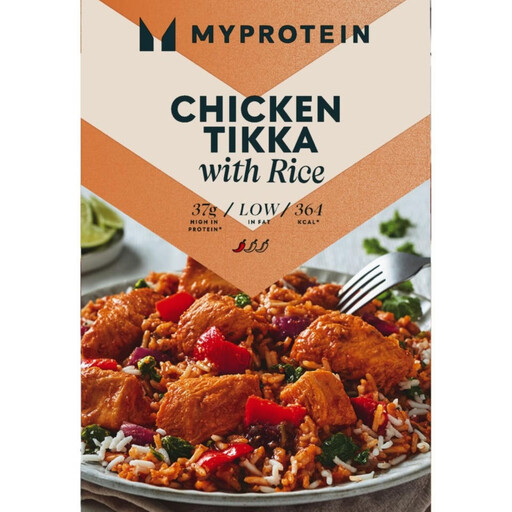 Image unavailable
For a chicken tikka TV dinner, compare the current pack’s fat and saturated fat per 100g with its salt per pack. The product information flags milk and barley, warns that some bones may remain, and states that it is not suitable for a low-potassium diet. Follow the pack’s microwave directions and cook until piping hot.
The NHS defines low total fat as 3g or less per 100g and low saturated fat as 1.5g or less per 100g. For a frozen TV dinner, also read the whole-pack figures so you know the amounts in the portion you intend to eat.
No. Calories and fat are different measures, so check total fat and saturated fat on the exact meal. Where traffic-light labelling is provided, the Food Standards Agency describes green as low, amber as medium and red as high for the nutrient shown.
A lower-fat label does not establish a lower salt content. Action on Salt & Sugar classified 56% of the 1,511 chilled and frozen ready meals in its May 2025 review of 11 major retailers as high in salt; the three cited ASDA meals list 1.3g to 1.4g per pack. Check the salt figure for the meal and portion you are considering.
Follow the directions on that meal’s pack for your appliance, including heating, stirring and standing steps. Check that the food is piping hot before serving, and follow any product-specific instruction not to reheat it.
Use the online listing to help choose, then check the pack you receive before eating. Iceland advises that ingredients, nutrition and allergy information can change, making the current physical label important when an ingredient affects your choice.