What should you check?
Start with the vegetables the eater already accepts, then compare ingredients, nutrition and pack format.
| Priority |
What to check |
Your needs |
| Familiarity |
Check whether the pack contains one vegetable or several. For a mix, read the ingredient list rather than relying on the product name alone. |
If unfamiliar colours or textures are difficult, I can offer a small amount of one familiar vegetable first. The NHS advises repeated offers rather than expecting acceptance straight away. |
| Mix or prepared dish |
Distinguish plain vegetables from products with a sauce, glaze or other additions. Tesco lists prepared dishes, including cauliflower cheese, in its frozen-vegetable category. |
When several vegetables are already accepted, a mix may suit our meal. If I am considering a prepared dish, I want to know what else is in it. |
| Fat and ingredients |
Compare the current nutrition panels on the same per-100g basis and read the ingredients. Waitrose lists Birds Eye Petits Pois at 0.7g fat per 100g; M&S lists Organic Garden Peas at 0.4g per 100g. |
I want to compare the actual products we might serve, not assume that a ‘reduced fat’ claim is necessary or that every frozen vegetable product has the same ingredients. |
| Portions and storage |
Check pack size, freezer space, cooking directions and any instruction about refreezing after thawing. The NHS gives three heaped tablespoons of frozen peas, carrots or sweetcorn as an example of one vegetable portion. |
We may serve only a small amount at a time, so I need a pack that fits our freezer and can be used according to its storage instructions. |
| Current label |
Read the pack you receive for its ingredients, nutrition, allergen information and preparation instructions, particularly when buying a different variety or buying it again later. |
If someone in the household has an allergy or another dietary requirement, I need to check this particular pack before serving it. |
Relevant brand references
These examples show differences between plain peas and vegetable mixes; a retailer listing is not a promise that a child will accept the product.
Birds Eye
A reference point for plain petits pois as well as mixed-vegetable products.
- Waitrose lists 0.7g fat and 6.0g fibre per 100g for Birds Eye Petits Pois 960g.
- The nutrition figures for that pack should not be applied to a different Birds Eye product or pack variant.
Tesco
An own-label example for shoppers considering a plain mixed-vegetable bag.
- Tesco Mixed Vegetables 1kg lists carrot, garden peas, green beans and sweetcorn in its ingredients.
- Four vegetables in one bag may not suit an eater who accepts only one or two of them.
Sainsbury's
An own-label example of a large plain-pea pack.
- Sainsbury's Garden Peas 1.81kg lists 0.9g fat per 100g and identifies an 80g serving as one 5 A Day portion.
- A 1.81kg bag needs freezer space and a household likely to use that quantity.
M&S
Examples of both plain garden peas and a four-vegetable medley.
- M&S lists 0.4g fat per 100g for Organic Garden Peas. Its British Vegetable Medley lists broccoli, cauliflower, peas and carrots.
- The medley introduces several vegetables at once, so check whether those are already accepted before choosing it for a fussy eater.
Waitrose
A retailer reference for the Birds Eye Petits Pois 960g nutrition listing.
- Its listing gives fat, fibre and protein values per 100g for that Birds Eye pack.
- Those figures describe the listed Birds Eye product, not other frozen vegetables sold by Waitrose.
Joybuy product options
These Birds Eye options cover plain petits pois and mixed vegetables for meals where the eater accepts the ingredients. Check each pack’s current label and preparation directions before serving.
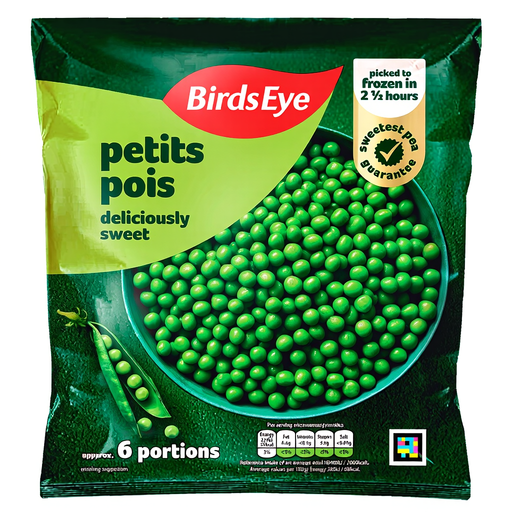 No image available
Birds Eye Petits Pois 545g
A single-vegetable option to consider when you want to offer peas separately from other vegetables. Follow the pack’s cooking and freezer-storage instructions; acceptance will depend on the individual eater.
View on Joybuy
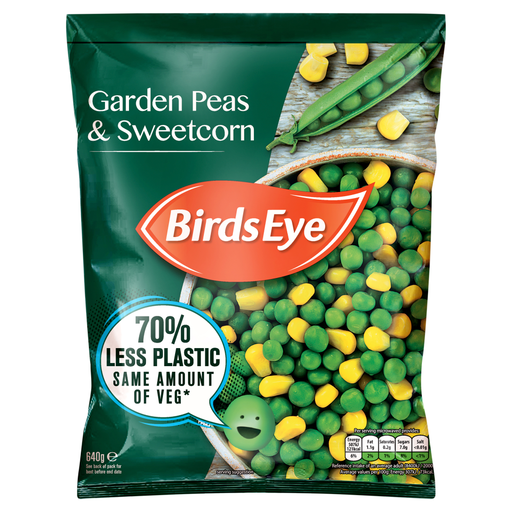 No image available
Birds Eye Peas and Sweetcorn Mixed Vegetables 640g
A two-vegetable choice for a meal where peas and sweetcorn are both acceptable. It is not the same selection as plain peas; check the pack’s ingredients, nutrition and cooking directions.
View on Joybuy
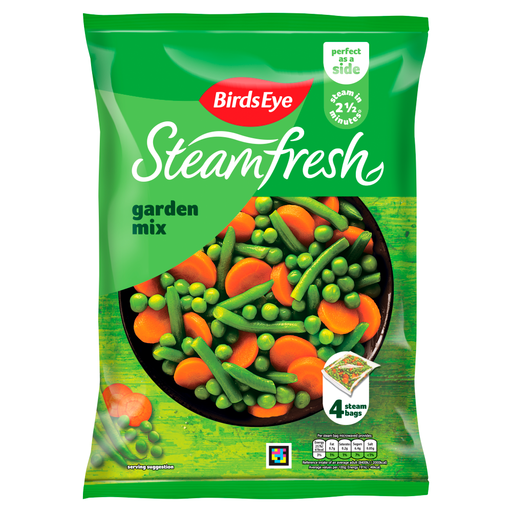 No image available
Birds Eye Fresh Garden Mix Steam Bags 4 Pack 540g
A mixed-vegetable steam-bag format to consider when a range of vegetables suits the meal. Check the current ingredients against what the eater accepts, and follow the pack’s steam-bag handling and cooking directions.
View on Joybuy
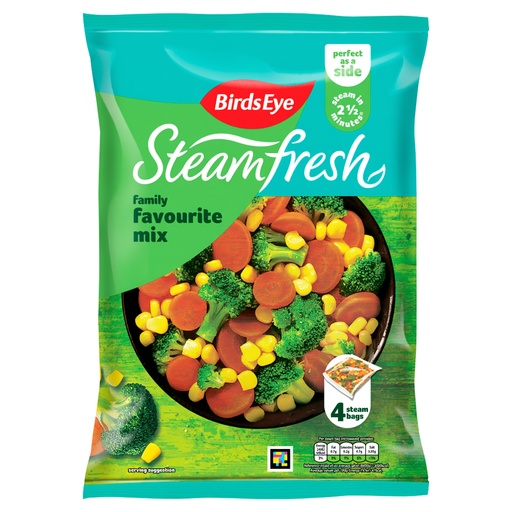 No image available
Birds Eye Steamfresh 4 Family Favourite Mix Steam Bags 540g
Another mixed-vegetable steam-bag option for a household comfortable serving several vegetables together. Compare its ingredient list with the other mix rather than assuming their contents are identical; follow the pack’s cooking and handling instructions.
View on Joybuy
Questions about choosing and serving
Do I need a ‘reduced fat’ label when buying frozen vegetables?
No special claim is needed to compare the products in this article. Waitrose lists 0.7g fat per 100g for Birds Eye Petits Pois 960g, and M&S lists 0.4g per 100g for Organic Garden Peas. Compare the current ingredients and per-100g panels of the packs you might buy, particularly if one is a prepared dish rather than plain vegetables.
Should I start with peas or a mixed bag for a fussy eater?
Plain peas offer one taste and texture to try at a time; a mix is more relevant when the eater already accepts its vegetables. The NHS advises continuing to offer a variety of foods because acceptance can take many attempts. Neither format guarantees that a child will eat it.
What counts as a portion of frozen vegetables?
The NHS gives three heaped tablespoons of frozen carrots, peas or sweetcorn as an example of one vegetable portion. When offering food to a fussy eater, you can begin with a smaller amount rather than treating that example as a required serving size for every child.
How should I cook and store a frozen vegetable pack?
Follow the instructions on the particular pack for cooking, freezer storage and whether it can be refrozen after thawing. Steam-bag directions also matter for handling the hot bag safely; do not assume that two products use the same cooking method.
What if someone eating the meal has a food allergy?
Check the ingredients and allergen information on the physical pack before serving, including when buying a familiar product again. Do not rely on an older online listing to describe the pack you have received.


