Family-meal planners
Plain mixed vegetables offer a flexible side or recipe ingredient. Compare the pack’s fat and saturates figures, then account for any butter, oil, cheese or sauce added during cooking.


Start with plain frozen vegetables or unseasoned mixes if you want to limit fat while keeping preparation straightforward. Check fat and saturates per 100g alongside the ingredients and stated preparation basis: cheese, oil or other additions can change the figures, and an online substitute may not match the product you chose.
Plain mixed vegetables offer a flexible side or recipe ingredient. Compare the pack’s fat and saturates figures, then account for any butter, oil, cheese or sauce added during cooking.
Chopped vegetables and steam bags can reduce preparation, but an unseasoned cooking ingredient is different from a prepared side dish. Review substitution preferences if the ingredients matter to your choice.
Choose the vegetable mix or organic specification you want, then check its nutrition separately. An organic label does not establish its fat content.
Choose the type of vegetable product first, then compare its label and cooking instructions before setting your delivery preferences.
| Priority | What to check | Your needs |
|---|---|---|
| Plain or prepared | Read the ingredients for cheese, oil, butter, sauces or glazes. Compare the product’s fat and saturates per 100g; a vegetable-based dish is not necessarily equivalent to an unseasoned mix. | I want vegetables I can season myself, rather than a prepared side with ingredients I would not otherwise add. |
| Nutrition label | Use traffic-light labelling as a prompt to inspect the stated fat and saturates figures. Check the per-100g values and whether they describe the food as sold or after cooking. | I want to check the figures before choosing a pack. In the Food Standards Agency and Ipsos Northern Ireland’s 2024 tracker, 49% of 611 Northern Ireland respondents interviewed between 16 September and 23 November said they actively used traffic-light labelling when food shopping. That figure concerns food shopping generally, not frozen vegetables specifically. |
| Comparison basis | Compare products on the same stated preparation basis where possible. Sainsbury’s lists its mixed vegetables per 100g cooked, while ASDA lists its Just Essentials mix per 100g boiled; added ingredients also affect the finished dish. | If I am choosing between packs, I do not want to treat an as-sold figure and an oven-cooked figure as directly interchangeable. |
| Preparation | Check whether the pack contains plain vegetables, a chopped cooking base or a prepared side. Read its cooking method and any required additions; Sainsbury’s vegetable base mix instructs cooks to use 1 teaspoon of oil. | Some days I need a quick side; for a recipe, I may prefer vegetables that are already chopped. |
| Substitutions | Review the retailer’s substitution controls before ordering. If a replacement arrives, check its ingredients, allergens, nutrition and cooking instructions against your original choice. | I would rather decline or check a replacement than assume another frozen vegetable product has the same ingredients. |
ASDA’s Mediterranean Style Vegetable & Feta Medley contains feta and rapeseed oil and lists 6.3g fat and 2.1g saturates per 100g oven-baked. Its figures describe a different product from plain frozen vegetables.
Read the ingredients and compare fat and saturates on the stated preparation basis before adding a prepared side to your order.
Retailer pages give values on different bases, including as sold, boiled and oven-baked. Those figures should not be treated as a like-for-like ranking.
Match the preparation basis where you can; otherwise, use each figure to assess its own product alongside the ingredients and cooking method.
A replacement can differ in ingredients, allergens, pack size and cooking method, even if both items are described as frozen vegetables.
Set substitution preferences where available and inspect any delivered replacement. Sainsbury’s says an unwanted delivered substitute can be handed back to the driver for a refund.
The delivered pack is the one you will cook and eat, so its ingredient list and instructions matter when a particular ingredient or fat figure is important to you.
Check the pack before cooking, especially if you accepted a substitute.
These examples illustrate differences between plain mixes, cooking ingredients and prepared sides; check the exact product rather than relying on a brand name.
Birds Eye Select Mixed Vegetables is a frozen mix with instructions to cook from frozen.
Tesco Groceries lists plain frozen ingredients and prepared vegetable dishes in its prepared-vegetables category.
Sainsbury’s lists both a plain mixed-vegetable pack and a vegetable base for cooking.
ASDA’s examples include a plain mixed-vegetable pack and a feta-and-oil vegetable medley.
M&S Soffritto Mix is a chopped carrot, celery and onion ingredient for cooking.
Waitrose & Partners lists Duchy Organic Frozen Vegetable Mix with carrots, peas, sweetcorn and broccoli.
These options include mixed-vegetable steam bags and plain vegetables for sides or cooking. Check each pack’s fat figures, ingredients and preparation basis for the choice you are making.
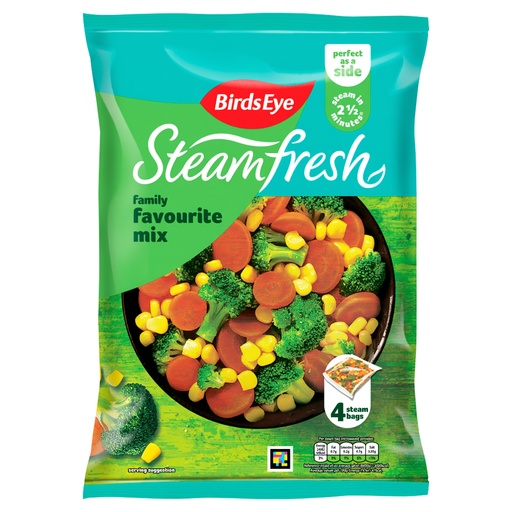 Image unavailable
A steam-bag mixed-vegetable option when portioned preparation matters. The title specifies four bags; check the pack’s nutrition basis and cooking instructions before comparing it with another mix.
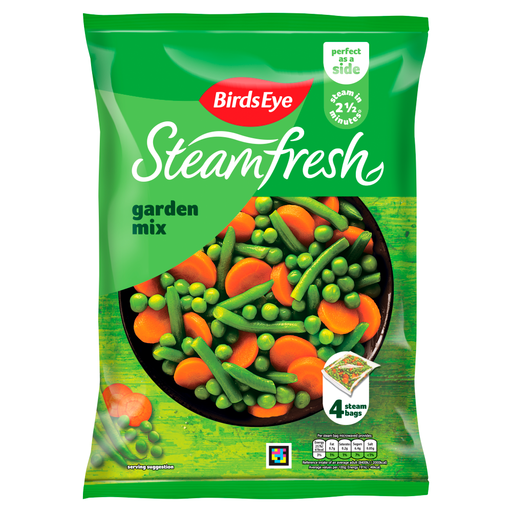 Image unavailable
Another portioned mixed-vegetable option for a side dish. Compare its ingredients, per-100g figures and stated preparation basis with the other steam-bag mix rather than assuming they are identical.
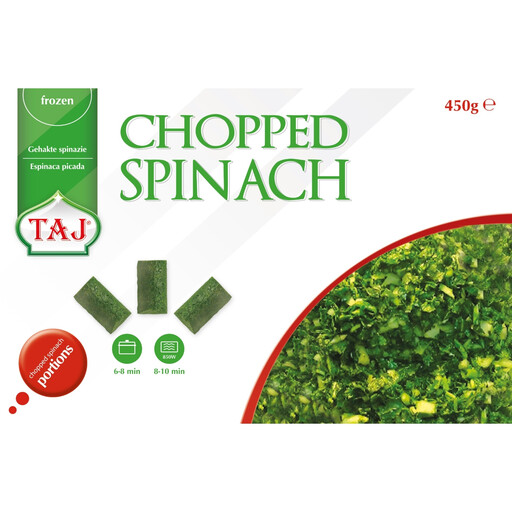 Image unavailable
Chopped spinach is an option when you want a vegetable ingredient without chopping it yourself. Check the pack’s cooking directions and nutrition basis, particularly if it will go into a dish with added oil or sauce.
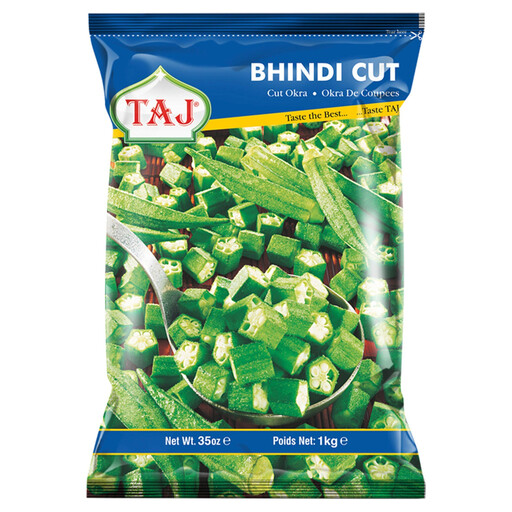 Image unavailable
Cut okra suits recipes that call for this vegetable without a cutting step. Follow the pack’s cooking instructions and assess the finished dish separately if you add other ingredients.
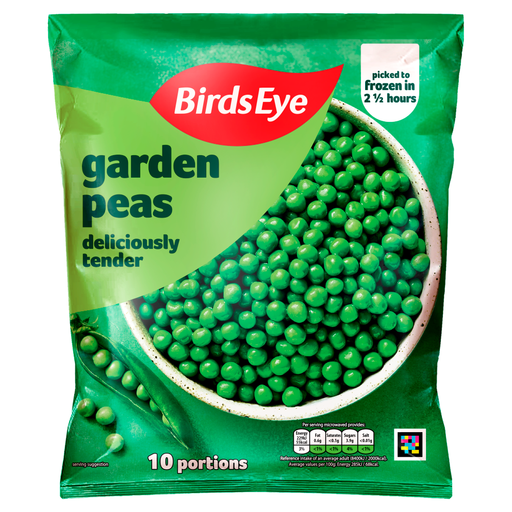 Image unavailable
Garden peas provide a single-vegetable alternative to a mixed pack for a side or recipe. Check the label’s per-100g preparation basis and follow the pack’s cooking instructions.
Plain vegetables and unseasoned mixes are a sensible place to start, but check the exact pack and anything you add during cooking. Sainsbury’s Mixed Vegetables lists 0.6g fat per 100g cooked, whereas ASDA’s feta-and-oil vegetable medley lists 6.3g per 100g oven-baked; those figures have different preparation bases.
Start with per 100g and check whether each figure is for the product as sold or after a stated cooking method. Then use the pack’s serving information to judge the amount you plan to prepare; servings can differ between products.
Yes. NHS guidance says almost every type of frozen fruit and vegetable counts towards 5 A Day. That does not make every prepared vegetable dish nutritionally equivalent, so check the ingredients and label of the product you choose.
Set your retailer’s substitution preferences and check any replacement against your ingredient and nutrition requirements. Tesco says customers can leave preferences for a personal shopper, although they may not always be met. Sainsbury’s says customers can turn substitutions off or hand an unwanted delivered substitute back to the driver for a refund.
Follow the instructions for the exact pack. ASDA’s Birds Eye Select Mixed Vegetables instructions say to cook from frozen, while Marks & Spencer describes its soffritto mix as raw and requiring cooking. Check the delivered product rather than applying another pack’s directions.