Who is each format for?
For a first freezer shop, the useful distinction is whether you want a bag to portion yourself, a microwave-ready portion or vegetables prepared as part of a particular dish.
First-shop cooks building a flexible freezer
A plain mixed bag lets you take vegetables for a side dish or add them to a recipe without committing the whole pack to one meal. Check the mix itself: carrot, broccoli and cauliflower serve a different recipe from peas, green beans and sweetcorn.
Microwave-first households
Portioned steam bags suit shoppers who have a microwave and would rather cook one pack at a time. Check the number and size of the bags, the stated microwave settings and whether the vegetables are the mix you will use.
Shoppers comparing fat content
Read the ingredients alongside fat per 100g instead of judging by the word “vegetables”. ASDA Groceries lists 0.6g fat per 100g boiled for its plain Mixed Vegetables; its feta-and-oil medley lists 6.3g per 100g oven baked. The preparation bases differ, so use each figure with its stated conditions.
What should you check before choosing?
Choose the format that fits how you will cook, then compare ingredients, fat figures and pack instructions on the specific products.
Plain mixed bag
Choose when: You want to portion vegetables across different meals and side dishes.
Bear in mind: You will need to measure out a portion and follow the bag’s cooking instructions.
Microwave steam bags
Choose when: You have a suitable microwave and want vegetables packed in individual cooking portions.
Bear in mind: Check that the bag size suits your meal and that its instructions match your microwave.
Prepared vegetable mix
Choose when: The added ingredients and specified cooking method suit the dish you plan to make.
Bear in mind: Oil, cheese or sauce can change the nutrition and allergens; read the full label rather than relying on the vegetable name.
| Priority |
What to check |
Your needs |
| Ingredients and fat |
Read the ingredient list for oil, cheese, butter or sauce. Compare fat per 100g using the stated preparation basis; an as-sold figure and a cooked figure are not automatically like for like. |
I want to know whether I am buying plain vegetables or a prepared side dish, and what the label says about its fat content. |
| Portion flexibility |
Check the total pack size and, for steam bags, the number and size of the portions. Consider whether a loose bag or fixed portions fit the meals you expect to make. |
A bag I can portion myself would work across several recipes; on other days, a ready-sized portion might be easier. |
| Cooking method |
Check whether the pack calls for a microwave, hob or oven, then follow its cooking and handling instructions. For microwave bags, check the stated wattage and time. |
I need vegetables I can cook with the appliances I have, without guessing how to prepare them safely. |
Brand and own-label examples
These examples describe particular frozen vegetable products, not every item made by each brand or retailer.
Birds Eye
A reference for shoppers considering familiar mixed vegetables and portioned formats.
- ASDA Groceries lists Birds Eye Select Mixed Vegetables as carrot, green beans, peas and sweetcorn, with 0.5g fat per 100g as sold.
- That figure applies to the named mix; check other Birds Eye products individually, especially those with added ingredients.
Tesco
An own-label example of vegetables packed for microwave cooking.
- Tesco Groceries lists its Carrot, Broccoli & Corn Steam Bags as four 160g bags, with 0.5g fat per 100g.
- Check the physical pack for the current ingredients, nutrition and cooking directions.
Sainsbury’s
An own-label example of a plain three-vegetable mix.
- Sainsbury’s Classic Vegetable Mix contains carrot, broccoli and cauliflower and lists less than 0.5g fat per 100g cooked as instructed.
- Its pack guidance says not to eat it raw and to ensure it is piping hot after cooking.
ASDA
A useful example of why a plain bag and a prepared vegetable dish need separate label checks.
- ASDA Groceries lists its plain Mixed Vegetables at 0.6g fat per 100g boiled.
- Its Vegetable & Feta Medley contains feta and rapeseed oil and lists 6.3g fat per 100g oven baked. The preparation bases are different, and the medley contains milk.
M&S
An own-label example for shoppers who want broccoli, cauliflower, peas and carrots in one bag.
- Marks & Spencer lists 0.7g fat per 100g for its 1kg Frozen British Vegetable Medley.
- Check the current pack when buying, as product information can change.
Waitrose
Own-label examples with different combinations of familiar vegetables.
- Waitrose & Partners lists Essential Mixed Vegetables at 1.0g fat per 100g and Essential Frozen British Chunky Vegetable Mix at 0.6g per 100g.
- The mixes contain different vegetables; check the current ingredients and nutrition for the one you choose.
Joybuy frozen vegetable options
These options cover portioned steam-bag mixes, a peas-and-sweetcorn mix, cut okra and chopped spinach. Choose by the vegetables and format your meals call for, then check the current pack’s fat figure and cooking directions.
 No image available
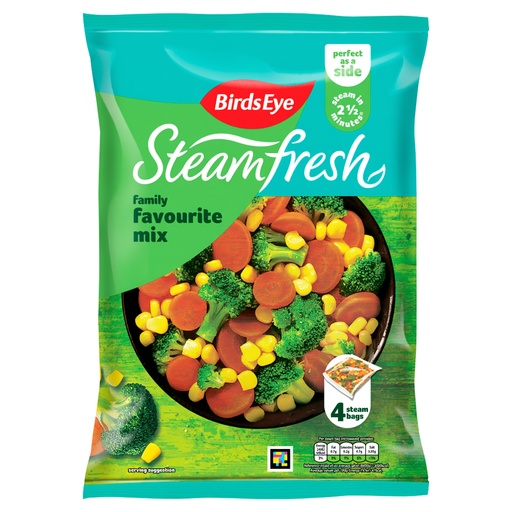
Birds Eye Steamfresh Family Favourite Mix Steam Bags 540g
A four-bag format for a shopper who wants microwave vegetable portions rather than measuring from a loose bag. Check the pack for its fat figure, portion size and cooking instructions.
View on Joybuy
 No image available
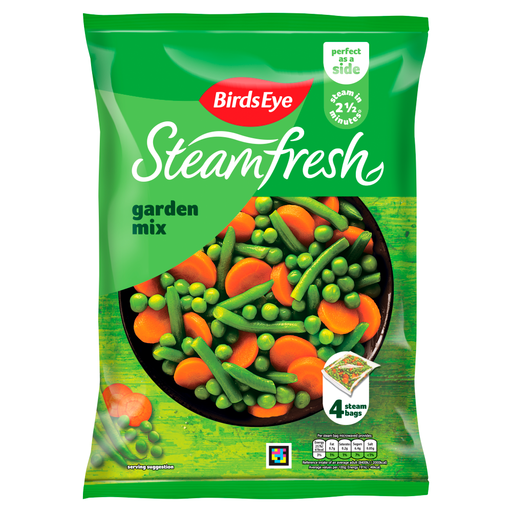
Birds Eye Fresh Garden Mix Steam Bags 4 Pack 540g
Another four-pack steam-bag option for microwave sides. Compare its vegetable mix, fat per 100g and pack directions with the other steam bags before choosing.
View on Joybuy
 No image available
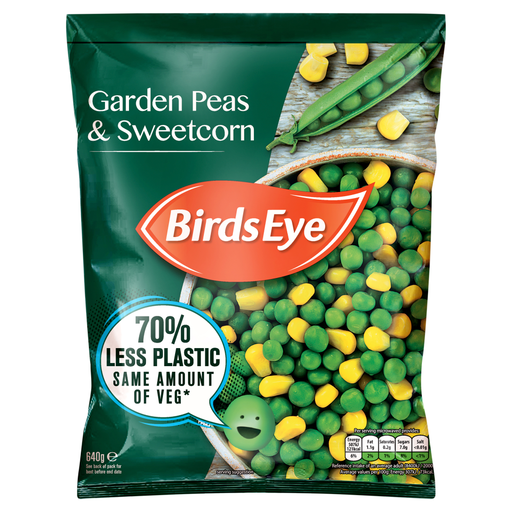
Birds Eye Peas and Sweetcorn Mixed Vegetables 640g
A peas-and-sweetcorn mix to consider when those vegetables suit several planned meals. The pack is 640g; check its nutrition panel and cooking directions before use.
View on Joybuy
 No image available
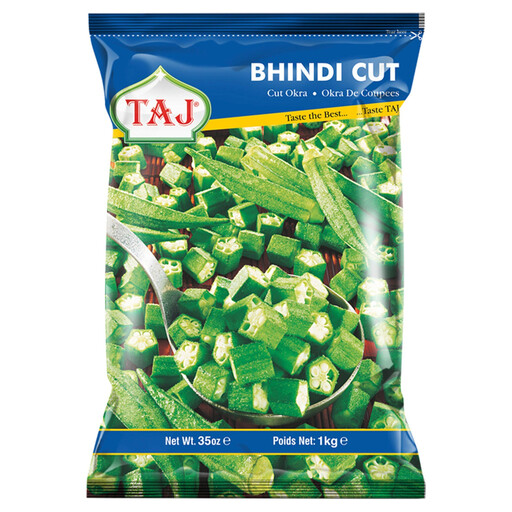
Taj Family Cut Okra 1kg
Cut okra is a more specific choice than a mixed-vegetable bag: pick it for meals in which you intend to use okra. This is a 1kg pack; follow its cooking instructions.
View on Joybuy
 No image available
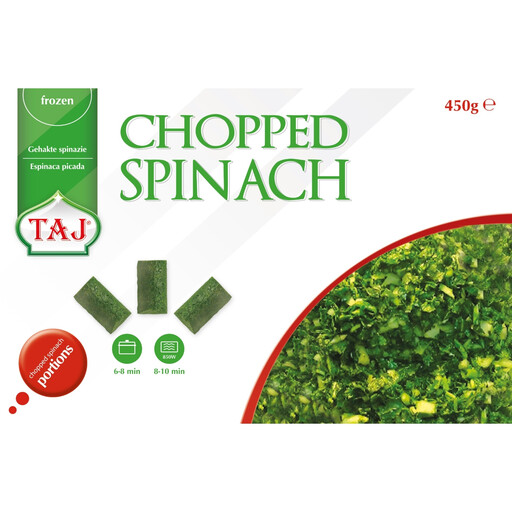
Taj Chopped Spinach 450g
Chopped spinach suits meals that call for spinach rather than a mixed vegetable side. The pack is 450g; check its fat figure and cooking instructions on the label.
View on Joybuy
Common questions
Does “reduced fat” tell me how much fat is in the vegetables?
No. Check the stated grams of fat per 100g as well as the claim. If a pack says “reduced fat”, look at what it is being compared with rather than treating the wording as the product’s fat figure.
Is a plain frozen mix the same as a prepared vegetable side?
Not necessarily. A plain mix may contain only vegetables, while a prepared side can include oil or cheese. ASDA Groceries lists feta and rapeseed oil in its Vegetable & Feta Medley, so check the ingredients and nutrition of the exact product.
Does the NHS Eatwell Guide include frozen vegetables?
Yes. The NHS Eatwell Guide includes frozen among the forms of fruit and vegetables you can choose. For a particular frozen product, use its pack information to identify the contents and serving size.
How should I cook frozen vegetables from a first shop?
Follow the instructions on each pack rather than using one method for every product. Check the required appliance and cooking time; Sainsbury’s says its Classic Vegetable Mix must not be eaten raw and should be piping hot after cooking.
Should I check allergens in a vegetable mix?
Yes, particularly when the mix has added ingredients. ASDA’s Vegetable & Feta Medley contains milk through its feta cheese. Read the current pack’s ingredient and allergen information before use.


