People taking lunch to work
A one-person pack is useful only if you can follow its cooking instructions with the equipment at your lunch location. Check the method and any standing time before taking it with you.


For a frozen lunch away from home, choose a portion intended for one and check that its cooking instructions suit the equipment available. Compare the nutrition information per 100g and per portion, and read the ingredients and allergens on the exact pack; a frozen ready-meal range can also contain sharing packs.
A one-person pack is useful only if you can follow its cooking instructions with the equipment at your lunch location. Check the method and any standing time before taking it with you.
Check the pack size and stated servings before buying several meals. A frozen ready-meal range may contain both individual dishes and larger packs.
Compare the nutrition panel on the exact meal and read its current ingredients and allergen information. A retailer’s dietary filter is a starting point, not a substitute for the product label.
Start with the serving statement and cooking method, then compare meals that could work for the same lunch setting.
| Priority | What to check | Your needs |
|---|---|---|
| Portion | Read the net weight and stated servings. Tesco lists frozen meals of 375g and 400g, while the M&S frozen range includes both 270g dishes and a 1kg product; weight alone does not establish serving count. | I want a portion intended for one lunch, rather than a sharing pack or an item that needs additional food to make up my meal. |
| Heating | Check the exact pack for its cooking method, time, packaging instructions and any standing time. Do not assume a frozen meal can be microwaved. | There is limited equipment or time where I eat lunch, so I need instructions I can actually follow. |
| Nutrition | Compare nutrition per 100g and per stated portion, including salt, saturated fat, sugars, energy and fibre where shown. The NHS describes more than 1.5g of salt per 100g as high and 0.3g or less as low. | I want to compare what the whole portion contains, not judge meals by their names or pack sizes alone. |
| Ingredients | Read the current ingredients and allergen information on the specific product. UK government food-labelling guidance identifies ingredients, including allergens, as information for prepacked foods. | If an ingredient matters to me, I need to check this recipe rather than rely on a category filter or a previous purchase. |
| Freezer space | Check pack dimensions, the number of portions and any storage instructions before buying several meals. | I have room for only a few lunches and want packs that fit how I plan to use them. |
Retailer ranges can include individual dishes alongside much larger packs. A meal name or search category does not establish the intended number of servings.
Check the stated servings and net weight, then decide whether the dish needs anything alongside it for your lunch.
Action on Salt & Sugar’s May 2025 audit of 1,511 chilled and frozen ready meals from 11 major retailers found that 56% were high in salt, 42% high in saturated fat and 71% low in fibre. Those figures describe the audited products, not every frozen lunch.
Compare the panels on the meals you are considering, using both per-100g and per-portion figures.
If a meal requires a different cooking method or equipment, you may be unable to prepare it at work. The Food Standards Agency says foods requiring preparation before consumption should carry clear information for consumers.
Read the exact cooking and packaging instructions before taking the meal to your lunch location.
A search filter does not tell you everything in a specific recipe. UK government guidance covers ingredient and allergen information for prepacked food.
For an allergy, intolerance or other ingredient requirement, check the current product label each time you buy.
Tesco’s frozen ready-meal listings include several 375g and 400g dishes across different meal types.
The M&S frozen ready-meal range lists selected fish and seafood dishes in 270g and 400g packs.
Iceland has a frozen ready-meals range to browse for lunch options.
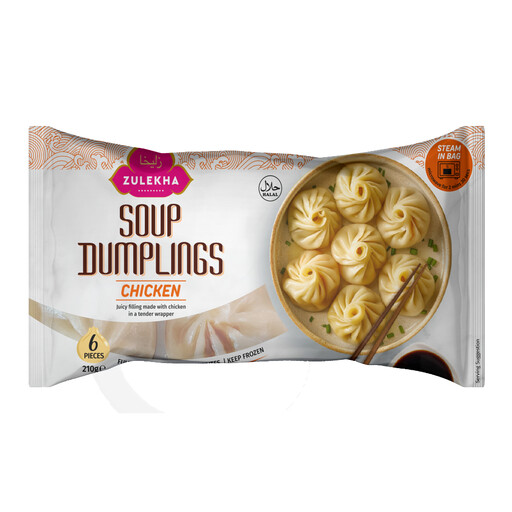
This frozen dumpling pack is a compact option to assess for lunch. Check its stated servings and cooking instructions before treating it as a complete meal to take to work.
 No image available
For lunch away from home, check that you can follow the pack’s cooking instructions with the equipment available. This is a 210g pack; check its stated servings, ingredients and allergen information before deciding whether it works as your lunch.
No. Tesco lists 375g and 400g frozen meal options, but weight alone does not establish the intended serving count or whether the meal suits your lunch. Check the serving statement, nutrition panel and cooking instructions on the pack.
No. Check the exact pack’s cooking method and packaging instructions against the equipment available where you will eat it. A retailer’s frozen-meal category does not establish microwave suitability.
Compare energy, fat, saturated fat, sugars and salt per 100g and per stated portion, along with fibre where shown. For interpreting salt labels, the NHS describes more than 1.5g per 100g as high and 0.3g or less per 100g as low.
Yes. Read the ingredients and allergen information for the exact product you are buying, even if you have bought a similar meal before. UK government food-labelling guidance identifies ingredients, including allergens, as information for prepacked foods.
Follow the exact pack’s storage, defrosting and cooking instructions where applicable. Check that you can keep and prepare the meal as directed throughout the time between leaving home and eating lunch.