Which brands and retailers are relevant?
These examples show different fruit-infusion and decaf-tea choices; a brand or retailer name does not establish the caffeine status of every product it carries.
Twinings
Offers both fruit infusions and decaffeinated conventional tea in its UK range.
- Twinings describes its Strawberry & Raspberry infusion as naturally caffeine-free and publishes its ingredients.
- Its decaffeinated teas can retain trace caffeine, and the brand flags mate and guarana as exceptions among fruit and herbal blends.
Pukka
Lists naturally caffeine-free herbal blends alongside other types of tea.
- Pukka states that many of its organic herbal teas naturally contain no caffeine.
- Its range also includes green-tea products, so check the claim on the individual blend.
teapigs
Offers a fruit-led speciality option in its super fruit tea.
- teapigs describes that blend as naturally caffeine-free and lists hibiscus, elderberries, currants, blackcurrants, cranberries and blueberries.
- The brand describes the blend as tart and notes that whole fruits take longer to brew.
Clipper
A conventional decaf-tea reference rather than a fruit-infusion example here.
- Clipper lists decaffeinated organically grown black tea as the ingredient in its Organic Everyday Decaf catering product.
- That black-tea product does not meet a fruit-flavoured infusion requirement.
Tesco
Its UK decaf-tea category includes a fruit-and-herbal segment alongside black and green teas.
- The category provides a way to browse different drink types together.
- A category label does not establish the ingredients or caffeine status of each product; check the individual listing and pack.
Sainsbury’s
Its own-label Strawberry, Raspberry & Cranberry is a 20-bag fruit infusion with a published ingredient list.
- The listing identifies the fruit and botanical ingredients, making blend comparison possible.
- Do not assume this exact product is caffeine-free without checking its current pack claim.
Joybuy fruit and herbal infusion options
These options include one mixed-fruit selection and three herbal alternatives. If a fruit-led flavour is your priority, check the ingredients before choosing a lemon-and-ginger or leaf-based infusion instead.
 No image available
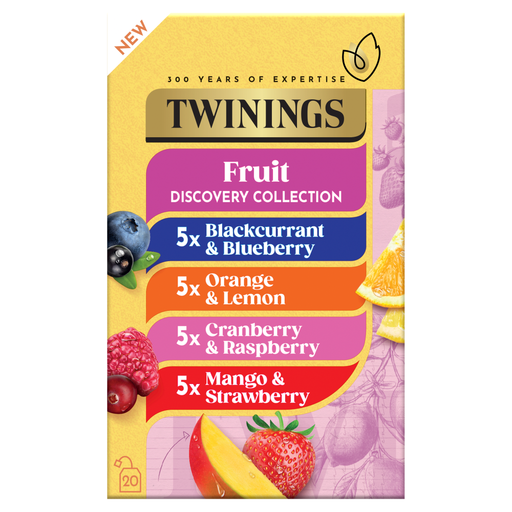
Twinings Fruit Selection, 20 tea bags, 40g
A mixed-fruit selection suits someone who wants to try several fruit profiles rather than commit to one blend.
The listing describes four blends and states that they are naturally caffeine-free. Check the current pack’s caffeine statement if avoiding caffeine is essential.
View on Joybuy
 No image available
Twinings Lemon & Ginger, 20 tea bags
Choose this for a lemon-and-ginger herbal drink rather than a berry-led fruit infusion.
The listing describes it as naturally caffeine-free and gives a 3–5 minute brewing direction. Check the current pack’s caffeine statement if that claim is essential to your choice.
View on Joybuy
 No image available
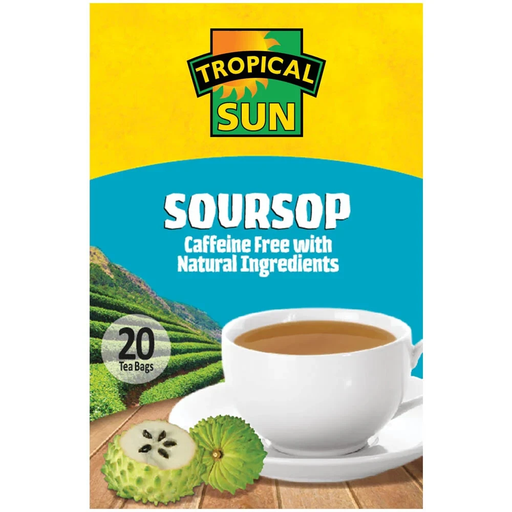
Tropical Sun Soursop Tea, 20 tea bags
This is a soursop-leaf herbal infusion, not a tea made from fruit ingredients.
The listing identifies soursop leaves as its ingredient, states that it is caffeine-free and gives hot- and cold-brew directions. Check the current pack claim if avoiding caffeine is essential.
View on Joybuy
 No image available
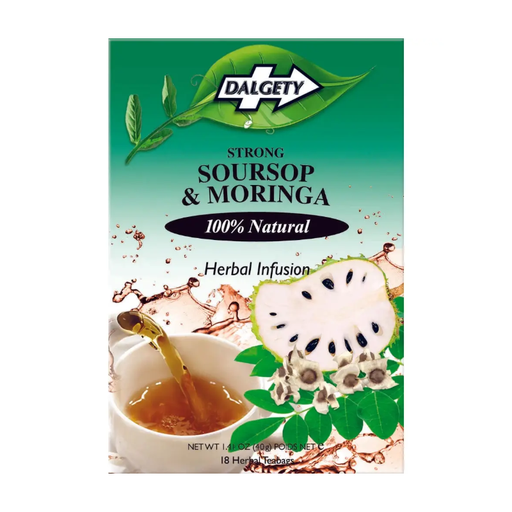
Dalgety Soursop & Moringa Tea, 40g
The soursop-and-moringa leaf blend is a herbal alternative, not a fruit-ingredient tea.
The listing describes 18 individually wrapped bags and states that the blend is caffeine-free. Check the current pack for its caffeine claim and brewing directions.
View on Joybuy
Frequently asked questions
Is fruit tea the same as decaf tea?
No. Fruit tea is generally an infusion without conventional tea leaves, while decaf black or green tea has undergone decaffeination and can retain trace caffeine. Twinings UK also cautions that fruit or herbal blends containing mate or guarana can be exceptions to the usual caffeine-free pattern.
What should I check if I want a caffeine-free fruit infusion?
Check the exact product’s caffeine statement and full ingredients list. An explicit naturally caffeine-free claim is more useful than a fruit-themed name alone; look for tea leaves, mate or guarana if avoiding caffeine is essential.
Does a fruit infusion work as an evening drink?
A fruit or herbal infusion explicitly labelled naturally caffeine-free is an option when you do not want regular tea caffeine in the evening. Check the exact ingredients and claim; decaffeinated black or green tea can still contain traces of caffeine.
How long should I brew a fruit infusion?
Follow the directions for the exact blend, as ingredients and formats differ. teapigs says the whole fruits in its super fruit tea take longer to infuse, so do not assume every fruit tea uses the same brewing time.
Can I swap a speciality fruit tea for a supermarket infusion?
You can compare them, but do not assume they are like-for-like. Check ingredients, bag format and the exact caffeine statement: teapigs describes its super fruit tea as naturally caffeine-free, while the Sainsbury’s Strawberry, Raspberry & Cranberry listing identifies it as a fruit infusion without establishing that claim for the exact pack.


