What should you check before choosing?
Decide whether fruit flavour or a traditional tea cup is the priority, then check caffeine positioning and the exact blend ingredients.
Fruit infusion
Choose it when: You want a fruit-led cup made without tea leaves and select a blend without caffeinated additions.
Trade-off: Its fruity, herbal or spiced flavour is different from conventional black tea, and botanical ingredients vary by blend.
Decaf black tea
Choose it when: You want a conventional black-tea cup and reducing caffeine meets your aim.
Trade-off: It is not a fruit infusion, and Twinings says decaffeinated tea may retain minor traces of caffeine.
| Priority | What to check | Your needs |
|---|
| Caffeine |
Check whether the pack describes a naturally caffeine-free infusion or decaffeinated tea. Read fruit-blend ingredients for caffeinated additions such as mate or guarana. |
I want to know whether my afternoon cup is intended to be caffeine-free or has had caffeine removed. Twinings says minor traces can remain in decaf tea. |
| Flavour |
Compare a mixed fruit selection with a particular apple, berry or citrus blend. Choose black tea if that familiar tea profile is the point of the drink. |
A selection box appeals if we want to try several fruit flavours; if I already know the flavour I want, a single blend is simpler to choose. |
| Ingredients |
Read the ingredient list for the exact flavour and check the current pack for allergens. Twinings lists liquorice root in three blends in its Fruit Discovery Collection. |
If I avoid a particular botanical, I need to check each blend rather than rely on the words ‘fruit tea’. During pregnancy, NHS guidance says to avoid liquorice-root teas. |
Joybuy options for afternoon tea
These options cover a mixed fruit-infusion selection and decaffeinated black teas. Choose between those drink types before comparing pack sizes or particular blends.
 No image available
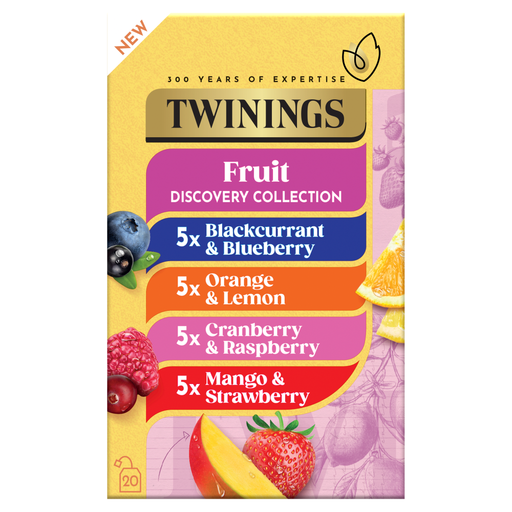
Twinings Fruit Selection
A fruit-led option for trying four naturally caffeine-free infusions at afternoon tea. The pack contains 20 tea bags and weighs 40g. Three of the four listed blends contain liquorice root, so check the ingredients of the flavour you choose.
View on Joybuy
 No image available
Clipper Organic Fairtrade Decaf Everyday
For a conventional black-tea cup rather than fruit flavour. This decaffeinated black tea comes in a pack of 80 tea bags weighing 277g; decaf should not be treated as the same as naturally caffeine-free.
View on Joybuy
 No image available
Tetley Decaffeinated Tea
A decaffeinated black-tea option for a familiar afternoon cup, rather than a fruit infusion. The pack contains 80 tea bags and weighs 250g; the listing suggests brewing for 2–3 minutes and serving with milk.
View on Joybuy
 No image available
Taylors of Harrogate Yorkshire Tea Decaf
Another decaffeinated black-tea option if fruit flavour is not the aim. The pack weighs 250g; as a decaf tea, it should not be assumed to have the same caffeine status as a naturally caffeine-free fruit infusion.
View on Joybuy
Frequently asked questions
Is fruit tea the same as decaf tea?
No. Twinings describes fruit tea as an infusion without tea leaves, whereas decaf black tea starts as tea and undergoes caffeine removal. A fruit blend is naturally caffeine-free when it has no caffeinated additions; decaf tea may retain minor traces.
Which should I serve for afternoon tea?
Choose a fruit infusion for a fruit-led cup, or decaf black tea if the familiar black-tea flavour matters more. A mixed fruit box offers several flavours, while a single blend makes sense when you already know which flavour you want.
Are all fruit teas suitable during pregnancy?
Do not assume that from the ‘fruit tea’ label. NHS guidance says pregnant people should avoid liquorice-root teas and have no more than four cups of herbal tea a day; Twinings lists liquorice root in several Fruit Discovery Collection blends. Check the exact flavour’s ingredients.
How do I check ingredients or allergens?
Read the current pack information for the exact blend and pack size, including its ingredient and allergen information. Fruit selections can contain different botanicals in different flavours, so check each one you plan to drink.


