Carers starting baby-led weaning
If your baby is beginning finger foods, readiness and the shape and texture of a serving matter more than the size of the loaf. NHS guidance says to cut bread into narrow strips.


If your baby is ready for solids, choose fruit loaf by its actual pack size, ingredients and texture rather than assuming a smaller pack is a baby-suitable half loaf. A 190g malt loaf may be easier for a small household to use up, while a sliced 400g loaf may make sense if others will eat it or you can follow its freezing directions. Check the current pack for allergens, compare nutrition figures per 100g and follow NHS advice on preparing bread safely for babies.
If your baby is beginning finger foods, readiness and the shape and texture of a serving matter more than the size of the loaf. NHS guidance says to cut bread into narrow strips.
If only a few slices are likely to be eaten, compare stated pack weights and check whether the loaf has freezing directions you can follow.
Check the exact pack for ingredients and allergy advice: the fruit breads discussed here do not all have the same recipe. For food packed for a school in England, check that school’s allergy arrangements too.
Decide whether and how to serve the bread first; then compare recipes and choose a quantity your household can use.
| Priority | What to check | Your needs |
|---|---|---|
| Readiness and texture | Consider your baby’s readiness for solids and whether the serving has a manageable texture. NHS guidance says to cut bread into narrow strips; inspect fruited portions for hard pieces. | I want to offer finger food my baby can handle while seated upright and supervised. |
| Ingredients and allergens | Read the current pack’s ingredients and allergy statement, including any manufacturing warnings. NHS advice is to introduce foods that can trigger allergic reactions one at a time. | Wheat, barley, soya or nuts may matter in my household, so a similar-looking loaf is not automatically interchangeable. |
| Sugars and salt | Compare the same per-100g figures across loaves, then read the ingredients. Do not compare per-slice figures as though every slice weighs the same. | I want to understand what is in a sweet fruit bread without treating the word ‘fruit’ as a judgement about its suitability for a baby. |
| Pack size and storage | Compare stated weights rather than looking for an assumed half-loaf format. Soreen lists its Original Malt Loaf as 190g; the checked Sainsbury’s fruit loaf is 400g and has freezing directions. | We use bread slowly, so I need a pack we can use up or store according to its label. |
Pack size does not tell you whether your baby is ready for the food or can manage its texture. Recipes also differ.
Check the current ingredients and per-100g label, then make a separate decision about whether and how to serve the bread.
Waitrose’s Fruit and Nut Bloomer lists hazelnuts, while the checked malt and raisin loaves have different ingredients. NHS advice says whole nuts must not be given to children under five.
Check the exact loaf’s allergy statement and inspect the portion rather than substituting by name or pack weight.
Slice and portion weights can differ, so per-slice figures may not describe the same amount of bread.
Use per-100g figures for a like-for-like label comparison, without treating adult reference-intake percentages as a baby’s target.
Warburtons lists a 400g Fruit Loaf with Raisin and Cinnamon. It is a conventional fruit loaf, not a product described as a literal half loaf.
Soreen lists a 190g Original Malt Loaf and a distinct 290g Sliced Malt Loaf.
Tesco Groceries lists a 400g Sliced Fruit Loaf in its fruit-loaf category.
Sainsbury’s lists a 400g sliced fruit loaf with product-specific freezing directions.
Waitrose & Partners lists a 350g Fruit and Nut Bloomer. Its nut-containing recipe makes it a different choice from a plain raisin loaf.
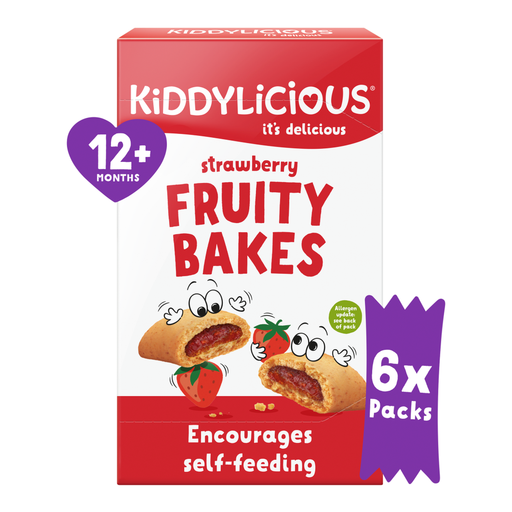
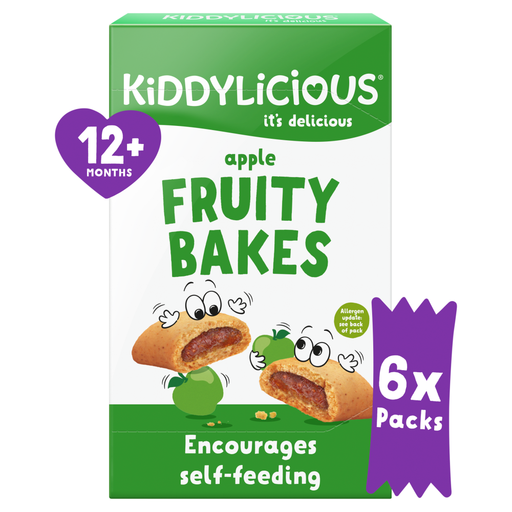
These smaller-pack or portioned soft bakes are alternatives to consider for household use, not the fruit loaves compared above. The two Kiddylicious products are labelled 12+ months, which matters if you are choosing food for a baby just starting solids.
 No image available
The 6 x 22g format offers separate portions instead of a loaf. This product is labelled 12+ months; check the current ingredients and allergy advice before serving it.
 No image available
The 6 x 22g format may suit a household looking for separate portions rather than a whole loaf. It is labelled 12+ months; read the current pack’s ingredient and allergy statements.
 No image available
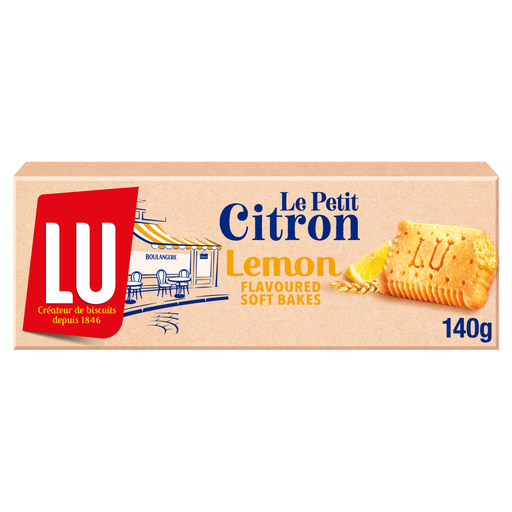
This 140g pack is a lemon-flavoured soft bake, not a fruit loaf or a product labelled for babies. If considering it for a child, check the ingredients and assess the serving’s texture.
NHS advice is to introduce solids from around six months, when your baby shows signs of readiness: sitting with a steady head, coordinating eyes, hands and mouth, and swallowing food. If your baby was born prematurely, ask a health visitor or GP about timing.
NHS guidance says to cut bread into narrow strips and keep your baby seated upright and supervised while eating. Check that the texture is manageable and inspect a fruited portion for hard remnants.
Read the ingredients and allergy advice on the exact pack each time, because fruit-bread recipes differ. NHS guidance advises introducing foods that can trigger allergic reactions one at a time; ask a GP or health visitor before introducing them if your baby has the allergy risk factors described in its guidance.
Follow the directions for the loaf you buy. Sainsbury’s directions for its 400g fruit loaf say to freeze it within the best-before date, use the frozen product within three months, defrost it fully and use it within 24 hours without refreezing.
Check the particular school’s allergy policy and the child’s dietary needs before packing it. England’s Department for Education allergy guidance addresses food brought from home in school allergy arrangements; it does not establish a blanket rule for every school across the UK.