Carers looking for wholemeal bread
If wholemeal flour is the deciding feature, check the pack’s description and ingredients. Fruit, malt and seeds in a loaf do not establish that its flour is wholemeal.


Choose clearly labelled wholemeal bread if wholemeal is the point of breakfast: raisins, malt and seeds do not establish that a fruit loaf uses wholemeal flour. Fruit loaf can instead be served as part of a meal, but compare its ingredients and sugars on the pack; NHS guidance also advises variety rather than giving young children only wholegrain or high-fibre foods.
If wholemeal flour is the deciding feature, check the pack’s description and ingredients. Fruit, malt and seeds in a loaf do not establish that its flour is wholemeal.
Wholemeal bread can be one starchy option. NHS guidance advises against giving only wholegrain foods before age 2 or only high-fibre foods before age 5, because fibre-rich foods can fill small tummies.
Check the current pack for allergens and ask the setting about its food policy. England’s Department for Education guidance says schools should consider food brought from home in their allergy-safety arrangements.
Consider it when: You want a sliced loaf containing dried fruit as part of breakfast, rather than a loaf chosen specifically for wholemeal flour.
Bear in mind: The Warburtons fruit loaf and Soreen sliced malt loaf described by their manufacturers are not identified as wholemeal; both declare cereals containing gluten.
Consider it when: You want a clearly identified wholemeal bread and prefer to choose the fruit served alongside it.
Bear in mind: NHS guidance recommends variety in young children’s starchy foods, rather than relying only on wholegrain or high-fibre options.
| Priority | What to check | Your needs |
|---|---|---|
| Wholemeal flour | Look for a wholemeal description and read the flour ingredients. UK government guidance defines wholemeal flour by use of the whole grain; fruit or seeds alone do not establish this. | I’m choosing bread for its wholemeal content, not just for a fruit-flavoured loaf. |
| Sugars and serving size | Compare sugars per 100g and per slice, noting slice weight. Warburtons declares 7.2g sugars per 33.7g slice of its raisin-and-cinnamon loaf; Soreen declares 4.2g per 26.3g slice of its sliced malt loaf. Those different portions are not a like-for-like comparison. | I want to know what is in the portion I serve, including sweetness from dried fruit and other ingredients. |
| Breakfast variety | Consider the bread alongside the rest of the meal. NHS guidance advises against giving only wholegrain foods before age 2 or only high-fibre foods before age 5. | Wholemeal toast could be one breakfast choice, but I want to vary the starchy foods my toddler eats. |
| Allergens and packed food | Read the current pack’s allergen declaration. If packing food for nursery or school, check that setting’s policy; England’s Department for Education guidance addresses allergy-safety arrangements for food brought into schools. | I need to know what is in this particular loaf and whether it meets the setting’s requirements. |
Warburtons lists wheat flour in its raisin-and-cinnamon fruit loaf, while it sells a separately identified wholemeal loaf. The fruit-loaf name does not settle which flour was used.
If wholemeal is your priority, use the current pack’s description and ingredient list to make the choice.
The Warburtons and Soreen loaves declare sugars for slices of different weights, so their per-slice figures alone do not compare equal amounts of food.
Check both per-100g and per-slice values. NHS guidance says toddlers should have dried fruit such as raisins with meals rather than between meals because its sugar can cause tooth decay.
According to the NHS, fibre-rich foods can fill small tummies, leaving less room for other foods.
Vary starchy foods: NHS guidance advises against giving only wholegrain foods before age 2 or only high-fibre foods before age 5.
Recipes and allergen information can change. The Warburtons fruit loaf and Soreen malt loaf described by their manufacturers contain cereals containing gluten.
Check the physical pack before serving or packing the food, and confirm the nursery or school’s current allergy policy.
Warburtons sells a raisin-and-cinnamon fruit loaf and a separate Wholemeal Medium bread, making the distinction between the two types of loaf clear.
Soreen’s sliced malt loaf is an alternative containing raisins, rather than a clearly identified wholemeal bread.
Tesco lists fruit loaves and small wholemeal or wholegrain loaves in separate grocery categories.
The option here is a strawberry baked snack labelled 12+ months, not a sliced fruit loaf or a clearly identified wholemeal bread. Check its pack before treating it as either bread choice discussed above.
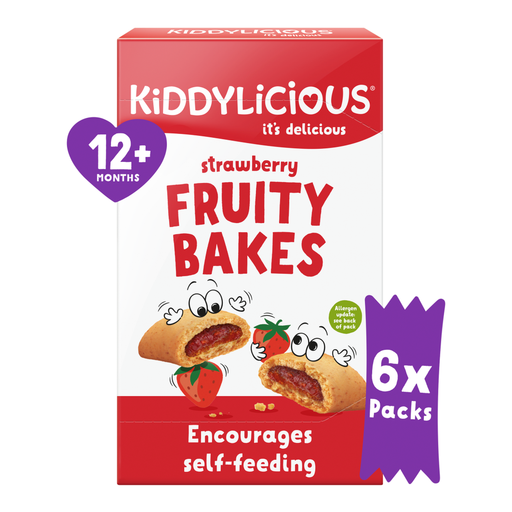 Image unavailable
For a toddler breakfast, consider these as a baked snack rather than a substitute for wholemeal toast or sliced fruit loaf. The pack is labelled 12+ months and contains six 22g portions; check the current ingredients, sugars and allergens before serving.
No. UK government guidance defines wholemeal flour by use of the whole grain, while Warburtons lists wheat flour in its raisin-and-cinnamon fruit loaf without identifying that loaf as wholemeal. Check the current pack rather than relying on fruit, malt, seeds or colour.
Wholemeal bread can be part of a varied diet, but the NHS advises against giving only wholegrain foods before age 2 or only high-fibre foods before age 5. Vary suitable starchy foods rather than making wholemeal bread the sole option.
Serve a raisin-containing loaf as part of a meal rather than as a between-meal snack. NHS guidance gives this advice for dried fruit such as raisins because the sugar it contains can cause tooth decay.
Check each product: gluten content cannot be settled by the category name. Warburtons’ listed fruit loaf contains wheat, and Soreen’s listed sliced malt loaf contains wheat and barley; read the current pack’s allergen declaration for the loaf you intend to serve.
Check the individual setting’s current policy and the child’s dietary requirements before packing it. The Department for Education’s statutory guidance for schools in England says food brought from home should be considered in allergy-safety arrangements and that expectations should be clear to parents; it does not establish one rule for every UK nursery or school.