Desk-lunch convenience buyers
Individual pots suit people who want to carry a sealed portion and finish it at lunch rather than decant fruit from a tin. Tesco lists Peach Pieces as four 120g pots, each with 75g drained weight.


Choose sealed individual fruit pots if you want one portion for each office lunch without handling leftovers. Larger tins suit lunches portioned at home, provided you can follow the product’s storage instructions after opening; compare drained weights to understand how much fruit each format contains, and check whether it is packed in juice, syrup or jelly.
Individual pots suit people who want to carry a sealed portion and finish it at lunch rather than decant fruit from a tin. Tesco lists Peach Pieces as four 120g pots, each with 75g drained weight.
A larger tin suits people preparing several lunches at home who have containers for separate portions. Its labelled drained weight helps show how much fruit is available once the liquid is excluded.
For people choosing fruit rather than a dessert-style product, the packing medium is a useful starting point. NHS guidance advises choosing canned fruit in natural juice or water with no added sugar or salt.
Decide whether the fruit must travel as a sealed portion or can be packed at home; then check the packing medium and drained weight on the specific product.
| Concern | Buying check | Who this matters to |
|---|---|---|
| Sealed single portions | Check the number of pots and the drained weight per pot. | If I pack lunch at a desk, I want one container I can open and finish without carrying leftovers. Around 33% of consumers might put that single-portion need first. |
| Fruit for several lunches | Check drained weight and the product’s instructions for storage after opening. | When I portion lunches at home, I need to know how much fruit a tin yields and how to handle what remains. About 27% of consumers might prioritise that preparation need. |
| Packing medium | Read the ingredients for natural juice or water and check for added sugar or salt. | If I am choosing fruit for a regular packed lunch, I want to distinguish juice- or water-packed fruit from syrup and jelly. Roughly 27% of consumers might make that distinction their primary concern. |
| Fruit and serving style | Check the fruit type, packing medium and whether the format suits a lunch portion. | Some days I want mixed fruit; on others, I may prefer a sweeter dessert-style serving. Around 13% of consumers might place that choice of fruit and format first. |
The total includes packing liquid, so tins of similar size need not contain the same amount of fruit. Tesco and Sainsbury’s listings identify drained weight separately for some products.
Check the labelled drained weight when planning how many lunch portions a tin will provide.
These are different recipes. NHS guidance advises natural juice or water with no added sugar or salt when choosing canned fruit as a fruit portion.
Read the packing-medium description and ingredients; choose a syrup or jelly product deliberately if you want a dessert-style option.
A large tin is less convenient for one desk lunch if the remaining fruit needs to be stored. Tesco’s Peach Pieces pots, for example, instruct shoppers to refrigerate after opening and consume within two days; other products may give different instructions.
Portion a large tin at home into suitable containers and follow that tin’s own label, or take an individual sealed pot instead.
Its tinned-fruit range includes fruit cocktail, peaches, pears, mandarins and pineapple.
Its canned-fruit range includes fruit cocktail, pineapple, peaches, pears and mandarins.
Its own-label range includes standard tins and multipacks of fruit pots.
Its own-label tinned-fruit listings include peaches, mandarins, apricots, pears and apple slices.
Its tinned-fruit category includes store-cupboard products such as rhubarb chunks and grapefruit segments.
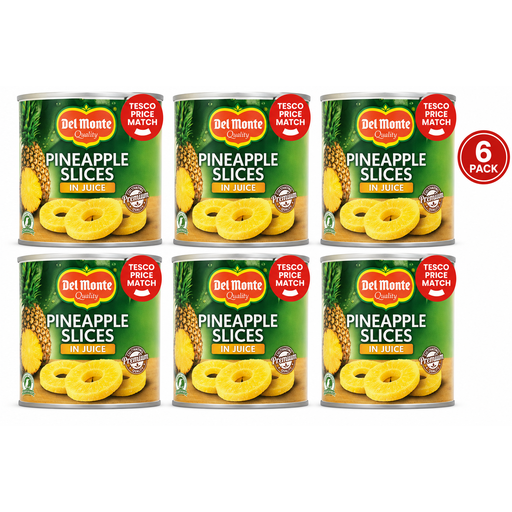
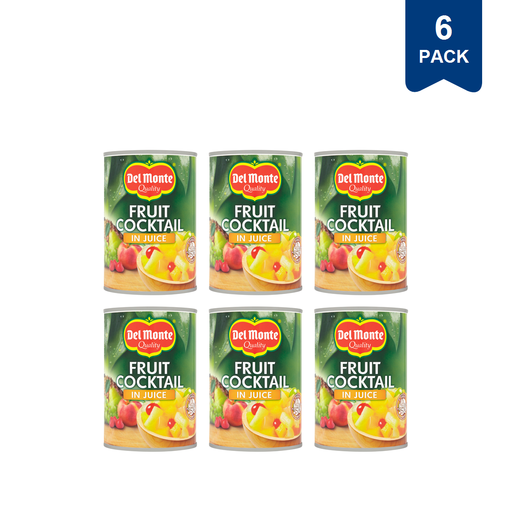
These juice-packed tins include single cans and six-can packs for people who can portion fruit at home before taking it to the office. They are not individual fruit pots.
 No image available
For preparing lunches from several cans at home. The pack contains six 435g tins of pineapple slices in juice; portion fruit into a suitable lunch container and follow the tin’s directions for any leftovers.
 No image available
For a peach portion prepared at home rather than an individually sealed desk-lunch serving. This is one 415g tin of peach halves in juice; check its label when storing unused fruit.
 No image available
For mixed-fruit lunches portioned at home. The pack contains six 415g tins of fruit cocktail in juice; check drained weight when planning portions and follow the label after opening a tin.
 No image available
For pineapple chunks portioned into a lunch container at home. This is one 432g tin with juice, not a sealed individual pot; check drained weight for portion planning and follow its storage label.
 No image available
For a pear portion packed into a separate container before work. This is one 415g tin of pear halves in juice; check drained weight when planning portions and read the label for leftover storage.
Yes. The NHS says 80g of fresh, canned or frozen fruit and vegetables counts as one portion. It advises choosing canned fruit in natural juice or water with no added sugar or salt; check the drained fruit weight rather than treating the packing liquid as fruit.
Take an individual sealed pot if you want one portion without dealing with leftovers. A larger tin suits preparation at home when you have a suitable lunch container and can follow that product’s storage instructions after opening.
Follow the instructions on the exact product. Tesco says its Peach Pieces 4 x 120g pots should be refrigerated after opening and consumed within two days; do not apply that period automatically to other pots or tins.