Sugar-conscious brunch hosts
If you are serving smoothies alongside food, bottle size and the sugars declared per 100ml help you plan what to pour. NHS guidance limits fruit juice and smoothies to a combined 150ml a day.


For Sunday brunch, pour a fruit smoothie with the meal rather than treating a large bottle as one serving: NHS guidance limits fruit juice and smoothies to a combined 150ml a day. If sugar matters, compare the chosen pack’s sugars per 100ml and your planned serving; “no added sugar” does not mean sugar-free, and a fibre-labelled blend is not necessarily lower in sugar.
If you are serving smoothies alongside food, bottle size and the sugars declared per 100ml help you plan what to pour. NHS guidance limits fruit juice and smoothies to a combined 150ml a day.
Some recipes list ingredients such as chicory root fibre. Check the exact recipe if that feature matters to your brunch, without assuming it tells you the drink’s sugar content.
A fruit smoothie labelled “no added sugar” can still contain sugars from fruit. If sugar-free is a firm requirement, check the exact drink’s nutrition panel rather than relying on its name or front-of-pack wording.
Start with the amount you intend to serve, then compare the sugar declaration and any recipe features that matter to your guests.
| Priority | What to check | Your needs |
|---|---|---|
| Serving size | Check the bottle volume and serving information. NHS guidance limits fruit juice and smoothies to a combined 150ml a day and advises having them at mealtimes. | I’m pouring drinks with brunch and want to know how much each glass contains, especially if I’m sharing a large bottle. |
| Sugar wording | Compare total sugars per 100ml and the amount you plan to pour. “No added sugar” does not mean that a fruit smoothie contains no sugar; assess a lower-sugar claim using the exact nutrition panel. | If I need a sugar-free drink, a no-added-sugar fruit blend is not enough information to make that choice. |
| Fibre and ingredients | Read the ingredient list for additions such as chicory root fibre, and check the serving information. A fibre-labelled or fruit-and-vegetable recipe still needs its own sugar check. | I’d like a recipe with a stated fibre feature, but I don’t want to mistake that label for a sugar comparison. |
| Recipe suitability | Check any vegan statement on the exact product and read its ingredient list for additions such as coconut milk, oat drink or seeds. | One guest may avoid particular ingredients, so I need to check the chosen recipe rather than assume all smoothies are alike. |
A smoothie can contain sugars from fruit even when no sugar has been added. Waitrose & Partners describes an Innocent smoothie as containing naturally occurring sugars despite its no-added-sugar wording.
If sugar-free is essential, check the total sugars on the exact pack instead of relying on fruit imagery or a no-added-sugar claim.
Sainsbury’s describes one 750ml smoothie as serving five. NHS guidance limits fruit juice and smoothies to a combined 150ml a day, so bottle size and a brunch serving are different things.
Pour the amount you intend to serve and follow the pack’s instructions for storing what remains.
Those words describe aspects of a recipe, not its sugar content. ASDA’s listing for Naked Green Machine, for example, declares 8.8g sugars per 100ml.
Compare the exact product’s sugars per 100ml and serving size alongside any fibre or ingredient features you want.
These examples show why the exact recipe matters; a brand or retailer name alone does not establish its ingredients or sugar content.
Waitrose & Partners lists Innocent fruit, fruit-and-vegetable and Tropical Light smoothies.
Tesco lists own-brand 750ml fruit smoothies alongside branded products.
Sainsbury’s lists several 750ml own-brand smoothies labelled “Full on fibre”.
M&S Food lists ready-made smoothies in 350ml and 750ml bottles, including recipes with added ingredients.
Waitrose & Partners lists smoothies from several brands, including Innocent.
UK supermarket listings include Naked Green Machine and Fibre Machine smoothies.
This Joybuy option is a small-format fruit smoothie to consider when planning a measured brunch serving.
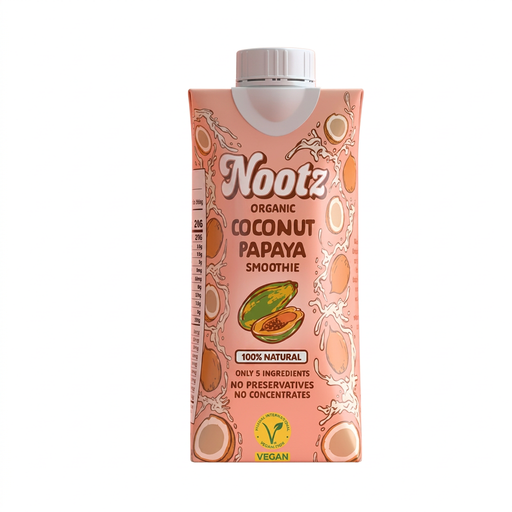 No image available
For Sunday brunch, this 180ml smoothie can be poured into a smaller glass to follow NHS guidance limiting fruit juice and smoothies to a combined 150ml a day.
Check the current pack’s ingredients and sugars per 100ml if sugar content affects your choice.
No. A fruit smoothie can still contain naturally occurring sugars; Waitrose & Partners explicitly makes that distinction in its listing for an Innocent smoothie. Check total sugars on the exact nutrition panel if sugar-free is a firm requirement.
NHS guidance limits fruit juice and smoothies to a combined 150ml a day and advises having them with meals. Check the bottle volume and measure the amount you plan to pour, particularly when sharing a larger bottle.
No. Colour and product names do not tell you the total sugars. ASDA’s listing for Naked Green Machine includes fruit juice and purées and declares 8.8g sugars per 100ml, so compare the exact pack rather than judging by its name.
Follow the instructions on the exact pack. An Amazon.co.uk listing for Naked Green Machine says to refrigerate it and consume it within five days of opening, but that instruction should not be assumed to apply to other recipes.