TV-night snackers watching portion size
If you want something fruity in the evening, decide when you will drink it and measure the serving. NHS advice covers fruit juice and smoothies together, not each drink separately.


A fruit smoothie can be a measured choice with a meal, but it is not a zero-sugar drink to sip throughout a TV programme. The NHS advises limiting fruit juice and smoothies combined to 150ml a day and having them with a meal. If you want a drink for the whole evening, choose water; if you want a smoothie, compare its total sugars, ingredients and serving size rather than relying on a “no added sugar” claim.
The useful distinction is between wanting a small smoothie serving with food and wanting a drink to keep beside you throughout a programme.
If you want something fruity in the evening, decide when you will drink it and measure the serving. NHS advice covers fruit juice and smoothies together, not each drink separately.
“No added sugar” and “zero sugar” mean different things. Compare the total sugars figure on the exact drink’s nutrition panel before choosing.
Some smoothies contain ingredients such as oats, linseed or chicory fibre. Check the ingredients, declared fibre and allergen information for the particular product rather than assuming every smoothie in a range has the same formulation.
Start with how much you plan to drink and whether it will accompany a meal. Then use the exact pack to compare sugars, ingredients and practical storage instructions.
| Priority | What to check | Your needs |
|---|---|---|
| Portion and timing | Measure the amount you will drink; the NHS advises a combined maximum of 150ml of fruit juice and smoothies a day, with a meal. Check the pack size rather than treating it as one serving. | I want a small fruity serving with food, not a bottle to sip throughout a film. |
| Total sugars | Read total sugars per 100ml and per serving on the exact product. The NHS says sugars in smoothies count as free sugars even when no sugar has been added. | A “no added sugar” label alone would not tell me how much sugar is in the drink. |
| Ingredients and fibre | Look at the ingredients and the declared fibre figure together. Keep the printed measurement basis in view: a value per 100g is not a direct numerical comparison with one per 100ml. | For a smoothie with ingredients beyond fruit, I would check what is actually in that flavour rather than assume it will feel more substantial. |
| Suitability and storage | Check allergen and dietary-suitability statements for the exact flavour. Follow its refrigeration and after-opening instructions, which can differ between products. | I need a drink whose ingredients suit me and a pack size I can use within its stated opened-life period. |
A smoothie can have no added sugar and still contain sugars from blended fruit. Tesco Groceries lists 15g sugars per 150ml for Innocent Mangoes, Passion Fruits & Apples despite its no-added-sugar statement.
Check the total sugars line and the serving size on the product you are considering.
A 750ml pack holds five 150ml portions. Drinking the whole pack would exceed the NHS’s combined daily guidance for fruit juice and smoothies.
Pour a measured amount to have with a meal. If you want a drink to keep beside you afterwards, choose water.
Waitrose & Partners lists 10g sugars per 100ml for Innocent Cherry, Beetroot, Apple & Spinach, while Tesco Groceries lists 9.6g per 100ml for Naked Fire Machine. Their other ingredients do not replace the sugars figure.
Compare the nutrition panel and serving size for the exact flavour, whatever its front-of-pack description.
Marks & Spencer states that Revitalise Super Smoothie is unsuitable for people with coeliac disease or a wheat allergy. Storage instructions also need checking on the particular pack.
Read the allergen statement and opened-life instructions before buying, especially if choosing a larger pack.
A pack you cannot use within its stated opened-life period may leave drink to discard.
These examples show why brand or range names are less useful than the label on the exact smoothie: formulations and nutrition figures vary.
Its listed smoothies include fruit blends and a vegetable-containing variant.
The range includes fruit smoothies and formulations with ingredients such as oats, linseed and chicory fibre.
The Fire Machine smoothie is listed with added vitamins and a no-added-sugar statement.
Waitrose & Partners lists own-label 750ml smoothies in flavours including Mango & Passionfruit and Strawberry & Banana.
Tesco Groceries lists branded smoothies as well as own-label no-added-sugar juice drinks.
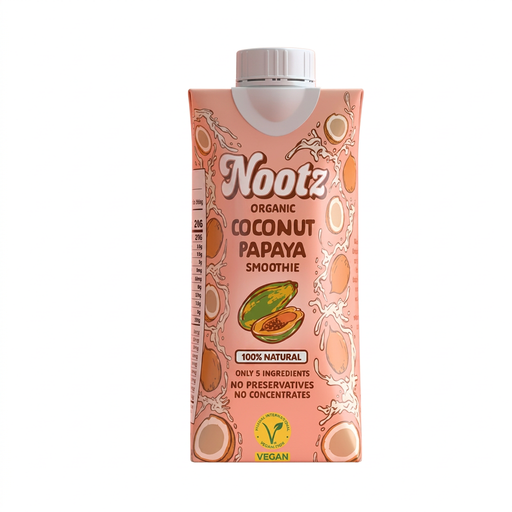
This coconut milk and papaya smoothie is an option to consider if you want a measured smoothie serving with a meal; its 180ml pack is larger than the NHS’s combined daily 150ml guidance for juice and smoothies.
 No image available
For a TV night when you plan to have a smoothie with a meal, this coconut milk and papaya option comes in a 180ml pack. Measure your serving rather than treating the whole pack as the NHS’s 150ml combined daily allowance for juice and smoothies. Check the current pack’s sugars, ingredients and allergen statement for your needs.
Yes, if it is a measured serving with a meal rather than a drink you keep sipping through the evening. The NHS advises no more than 150ml of fruit juice and smoothies combined in a day and recommends having them at mealtimes.
No. The NHS says sugars in smoothies count as free sugars. For example, Tesco Groceries lists 15g sugars per 150ml for the no-added-sugar Innocent Mangoes, Passion Fruits & Apples smoothie; read total sugars on the exact pack.
No: a 750ml bottle holds five 150ml portions. The NHS’s 150ml daily guidance applies to fruit juice and smoothies combined, so measure what you pour rather than using the bottle size as your portion.
Read the ingredients and declared fibre figure on the exact pack. Marks & Spencer lists 3.6g fibre per 100g for Revitalise Super Smoothie, while Waitrose & Partners lists 1.4g per 100ml for Innocent Berry Defence. Those differently based figures are not a precise like-for-like ranking, and neither changes the NHS’s 150ml daily guidance.
Follow the refrigeration and after-opening instructions on its pack. Requirements vary by product, so check them before choosing a larger size that you may not finish at once.