
24/7 Customer Support

Free returns

Same-day & Next-day Delivery

Quality Guaranteed

Unlock Your Welcome Offers: FREE Delivery | Up to 80% OFF | Free 30-day JoyPlus trial
Download the APP
Buying fruit sweets and snacks can seem straightforward until the packaging makes broad claims about “real fruit”, “natural ingredients” or “better-for-you” recipes. In practice, the important differences are often found in the ingredient list, storage instructions, pack format and allergen information.
Whether you need fruit gummies for a party, jelly sweets for sharing, fruit bars for a lunchbox or a small treat for yourself, a few checks can help prevent disappointing purchases.
Many fruit pastilles, chewy fruit sweets and gummy candy products use fruit flavourings, acids or concentrated juice in small amounts. A fruity taste does not automatically mean a product contains a large quantity of fruit.
Check the ingredients in order. If sugar or glucose syrup appears first, the product is primarily a confectionery treat. For example, Rowntree’s Fruit Pastilles list concentrated fruit juices at 1%, while the main ingredients include sugar, glucose syrup and starch. That does not make them unsuitable, but it gives a more realistic picture of what you are buying.
Fruit bars and snacks made with dates, raisins or fruit purée may contain no added sugar, yet still provide naturally occurring sugars. Nakd Blueberry Muffin bars list 49g of sugars per 100g, while Bear Apple Fruit Yoyos list 42g per 100g. Their recipes and formats differ from traditional sweets, but portion size still matters.
Likewise, products described as light or low-calorie should be checked per serving rather than judged by front-of-pack wording. Orihiro konjac jelly lists 65 kcal per 100g, but it contains sweeteners and still requires careful consumption because of its jelly texture.
Some treats are ready to eat from the cupboard, while others need refrigeration or freezing. Strong Assorted Fruit Jelly should be refrigerated after opening and consumed within 24 hours. Jin Jin Fruit Flavour Bars must be kept frozen at -18°C or below.
Small, chewy sweets and jelly products can also present choking risks. Always follow the age guidance on the packaging. Several products in this selection advise that young children should be seated and supervised while eating, and some are not suitable for children under four.
For vegan sweets, do not rely solely on flavour or appearance. Gelatine, milk ingredients, beeswax and yoghurt coatings can affect suitability. Rowntree’s Fruit Pastilles Vegan are labelled suitable for vegans and list no allergens, although formulations can change, so check the pack before serving.
Amos Peelerz Gummy Mango and Pineapple contain pork gelatine. Fruit Bowl Raspberry Yoghurt Flakes contain milk and may contain nuts or peanuts. Eat Natural Almond Apricot & Yoghurt bars contain milk and almonds. This information is particularly important when buying children’s lunchbox treats or assorted sweets for guests.
The texture should match the occasion:
A 65g peg bag is suitable for an individual treat or party favour, while a 400g two-cup jelly pack or six 143g sharing bags is more practical for households, parties and regular stock-ups.
Compare the price per 100g, not just the shelf price. Individually wrapped portions can also be useful for lunchboxes and controlled serving sizes, while resealable sharing bags help reduce exposure to air and humidity after opening.
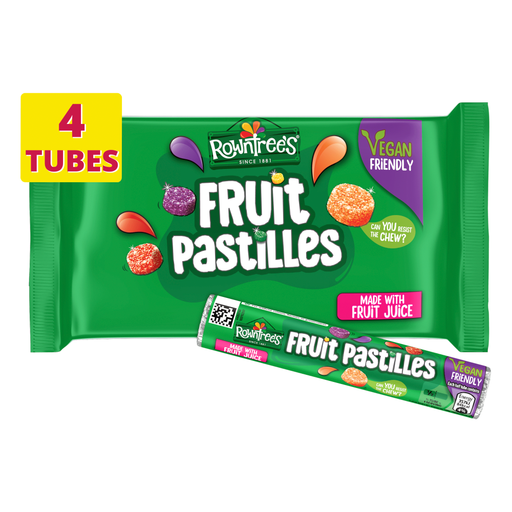
Why This Fits Their Persona: Four 41g packs provide a straightforward format for trying classic fruit pastilles without committing to a large sharing bag.
The pack size and per-serving nutrition information make portion comparisons clearer than relying on broad fruit-flavour claims.
Five fruit flavours; 4 x 41g format; 72 kcal per six sweets according to the listed nutrition information.
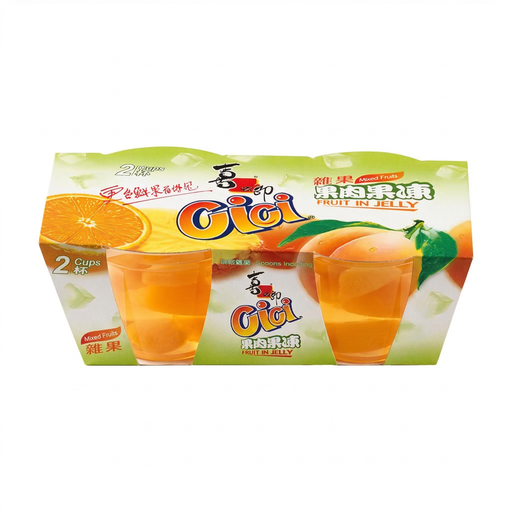
Why This Fits Their Persona: A two-cup dessert format suits shoppers looking for a chilled, fruit-led treat with visible peach, orange and pineapple pieces.
The product description specifies the fruit pieces, 400g quantity and refrigeration requirement after opening.
Two cups; fruit pieces; 64 kcal per 100g according to the listed nutritional information.
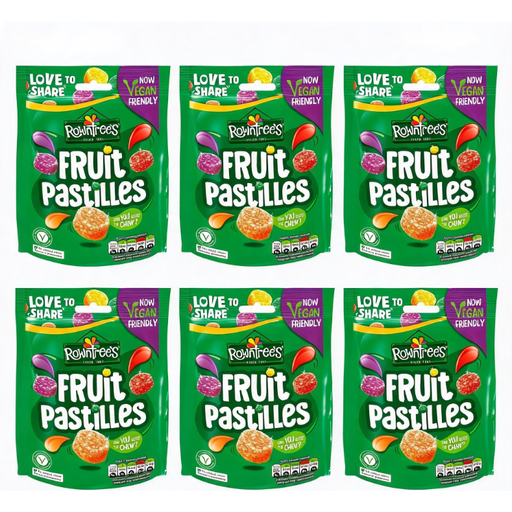
Why This Fits Their Persona: Six sharing bags work well for parties, film nights, family cupboards and shoppers seeking vegan sweets in larger quantities.
The pack is clearly specified as suitable for vegans and contains six separate 143g bags, making quantity and dietary positioning easy to verify.
Five fruit flavours; no artificial colours, flavours or preservatives listed; suitable for vegans.
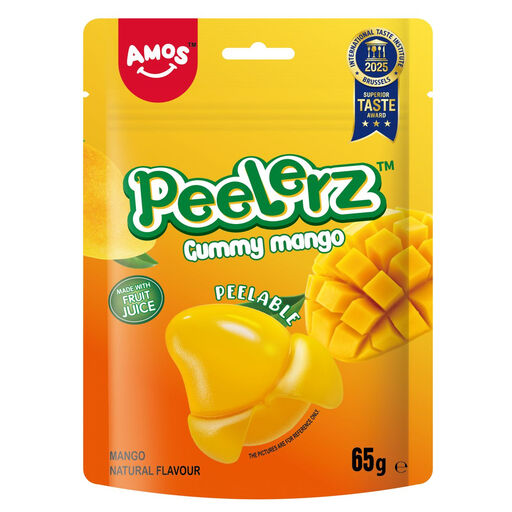
Why This Fits Their Persona: The compact peg bag is convenient for lunchboxes, party favours or a novelty snack at home.
The two-layer design is clearly described, while the label identifies pork gelatine and gives guidance for children aged four and over.
65g resealable peg bag; peelable outer layer; mango flavour; ready to eat.
We have compiled a complete, real-time list of products that fully satisfy these strict selection criteria and UK safety regulations.
Some are, but check the age guidance, choking warnings, allergens and packaging format first. Individually wrapped fruit bars or fruit snacks can be convenient, but sweets containing small pieces may not be suitable for younger children. Supervision is recommended where stated on the label.
“Vegan” describes the absence of animal-derived ingredients; it does not necessarily mean lower in sugar or calories. Compare the nutrition panel and portion size. Rowntree’s Fruit Pastilles Vegan, for example, list 59.4g of sugars per 100g, so they remain an occasional confectionery treat.
Follow the individual product instructions. Cup-style fruit jelly may need refrigeration after opening, while konjac jelly should generally be stored in a cool, dry place and not frozen. Reseal open gummy candy and sharing bags, keep them away from heat and sunlight, and check the best-before information before serving.