Late-night hot-drink shoppers avoiding caffeine
If you want something fruity after supper, look for an explicit caffeine-free statement. A fruit flavour alone does not establish whether a drink contains black or oolong tea.


For a fruity hot drink after supper, choose a fruit or herbal infusion explicitly labelled caffeine-free, then check its ingredients and prepared-drink nutrition. Bottled fruit teas are convenient, but some contain black or oolong tea and have different sugar or sweetener contents. If you are looking for a jar, check what it contains and how it is prepared rather than assuming it is equivalent to tea bags.
If you want something fruity after supper, look for an explicit caffeine-free statement. A fruit flavour alone does not establish whether a drink contains black or oolong tea.
Tea bags and bottled drinks can differ in tea base, sugars, sweeteners and botanical ingredients. Compare the exact products and their stated nutrition basis, rather than treating all fruit teas alike.
Check each blend’s ingredients even when it is labelled caffeine-free. The NHS advises avoiding herbal teas containing liquorice root during pregnancy.
Decide whether you want to brew a hot cup or open a ready-made drink, then compare caffeine information, ingredients and nutrition on the exact product. A jar needs the same product-level checks; its container does not identify the tea format.
Choose when: You want a hot drink and a blend explicitly labelled caffeine-free.
Bear in mind: Brewing takes water and time, and caffeine-free blends can still contain ingredients such as liquorice root.
Choose when: A drink that needs no brewing matters more than having a freshly made hot cup.
Bear in mind: Check the tea base and label carefully before treating a bottled drink as caffeine-free.
| Priority | What to check | Your needs |
|---|---|---|
| Caffeine | Look for an explicit caffeine-free statement on the exact blend. Inspect bottled drinks for black or oolong tea in the ingredients; a fruit name is not a caffeine declaration. | I want a fruity drink after supper without assuming that every product called fruit tea is caffeine-free. |
| Sugars and sweeteners | Compare sugars on the same prepared-drink basis, such as per 100 ml, and read any sweetener declaration. Twinings UK lists 0 g sugars per 100 ml of its prepared Cranberry & Raspberry infusion; Joybuy lists 10.2 g per 100 ml for its Ripe Fruit Plum Oolong drink and 4.8 g per 100 ml for its NAYUKI Lychee Black Tea drink. | I want to know what is in the cup or bottle, rather than judge its sugar content from a fruit flavour. |
| Botanical ingredients | Read the ingredient list for the particular blend. Twinings Cranberry & Raspberry and Clipper Berry Burst list liquorice root; the NHS advises avoiding herbal teas containing it during pregnancy. | If I am pregnant, I need to check the individual blend, not rely on its caffeine-free description. |
| Preparation | Check whether the product is brewed or ready to drink, and follow its own water and infusion instructions. If it is sold in a jar, check what the contents are and how they are used. | Sometimes I want a hot cup made after supper; at other times, having a drink ready to open matters more. |
A fruit-flavoured drink may contain black or oolong tea. Joybuy’s Ripe Fruit Plum Oolong listing also labels the drink type ‘Zero Caffeine’ while listing oolong tea, so that description alone does not settle its caffeine content.
For an evening choice where avoiding caffeine matters, check the exact ingredients and seek clear, consistent caffeine information.
Brewed infusions and bottled drinks have different stated nutrition profiles; a fruit flavour does not establish the sugar figure.
Read the sugars figure and its per-100 ml or other preparation basis. Check separately for sweeteners, which are declared on the NAYUKI Lychee Black Tea listing.
A caffeine-free label does not establish suitability during pregnancy. Twinings Cranberry & Raspberry and Clipper Berry Burst both list liquorice root.
If pregnant, follow NHS guidance to avoid herbal teas containing liquorice root and check the ingredients of every blend.
Ingredients can change; Sainsbury’s advises checking the product label rather than relying solely on its online listing.
Read the pack you receive for its ingredients, preparation directions and current nutrition information.
These examples show different fruit-infusion formats and product details to compare; a brand name alone does not establish the ingredients of every blend.
Tea-bag fruit infusions include Cranberry & Raspberry, which Twinings UK describes as naturally caffeine-free and sugar-free.
Clipper describes Berry Burst as an organic, naturally caffeine-free fruit infusion.
Pukka describes Elderberry & Echinacea as an organic fruit tea that is naturally caffeine-free.
Teapigs describes Super Fruit as a naturally caffeine-free, hibiscus-based infusion with a slightly tart flavour.
Tesco’s fruit and herbal tea category has listed its own-label Red Berries tea bags alongside other blends.
Sainsbury’s listing for Twinings Raspberry & Lemon provides product-level ingredients and preparation information for that branded tea.
These tea bags and herbal infusions are options for making a hot drink after supper. The soursop products use leaves rather than fruit pieces, and the lemon-and-ginger tea is a citrus herbal blend rather than a fruit-tea assortment.
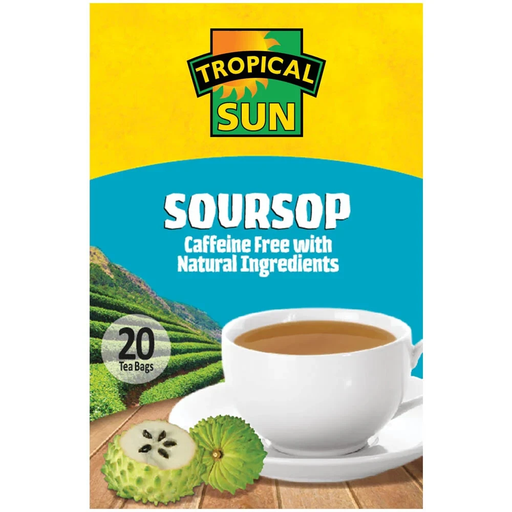 No image available
For a hot herbal cup, this listing describes a caffeine-free soursop-leaf infusion and gives brewing directions using 200 ml water for 3–5 minutes. Its stated 0 g sugars figure is per 100 g, not per 100 ml of the prepared drink; it is not a fruit-piece blend.
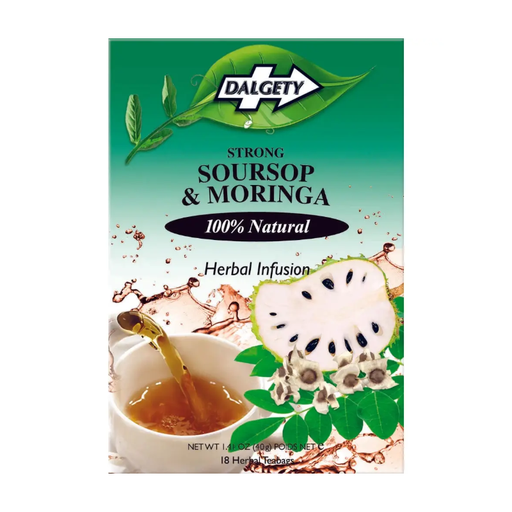 No image available
For a made-to-order hot drink, the listing describes this soursop-and-moringa leaf infusion as caffeine-free and states less than 0.5 g sugars per 100 ml of prepared infusion. It is a leaf blend rather than a fruit-piece tea; check the pack for brewing time and water quantity.
 No image available
This citrus-and-ginger herbal infusion is an option when you want a hot cup rather than a fruit-blend flavour. The listing describes it as naturally caffeine-free, gives a 3–5 minute brew time and states 0 g sugars per 100 ml of brewed infusion.
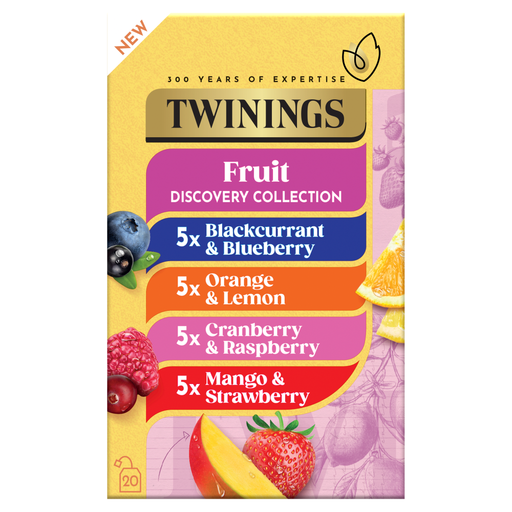 No image available
For a choice of fruit-blend flavours brewed in hot water, the product description calls these infusions naturally caffeine-free. Three named blends—Cranberry & Raspberry, Mango & Strawberry, and Blackcurrant & Blueberry—list liquorice root, which the NHS advises avoiding in herbal teas during pregnancy. Check the pack for each blend’s ingredients and prepared-drink nutrition.
No. Fruit-flavoured ready-to-drink teas can contain black or oolong tea. If avoiding caffeine matters after supper, check the exact product for an explicit caffeine-free statement and read its ingredients.
No; check the particular product and how its nutrition is measured. Twinings UK states 0 g sugars per 100 ml of its brewed Cranberry & Raspberry infusion under its preparation basis, but that figure does not describe every fruit tea or any sugar added to the cup.
The NHS advises avoiding herbal teas containing liquorice root during pregnancy. Check the ingredient list of each blend, including caffeine-free ones: Twinings Cranberry & Raspberry and Clipper Berry Burst both list liquorice root.
Follow the instructions for the blend you have. Twinings specifies one Cranberry & Raspberry tea bag in 200 ml of freshly boiled water for three minutes, or longer for a stronger drink; another blend may give different directions.
Not without checking the bottle. Ready-to-drink examples listed by Joybuy contain black or oolong tea and have their own sugars or sweetener declarations. Compare the exact drink’s tea base, caffeine information and nutrition before using it as an evening alternative.