Fruit-tea drinkers avoiding caffeine at night
If you want a hot berry or apple drink instead of ordinary tea or coffee, look for caffeine-free wording on the exact product. The NHS notes that caffeine in tea and coffee can make you feel more awake.


For a fruit-led bedtime hot drink, choose an infusion explicitly labelled caffeine-free: a berry infusion if fruit flavour is your main priority, or a fruit-and-herbal blend if you prefer its botanical recipe. A bedtime name does not establish a sleep benefit. Check the full ingredients before choosing a herbal blend, particularly if you take medicines or are pregnant or breastfeeding.
If you want a hot berry or apple drink instead of ordinary tea or coffee, look for caffeine-free wording on the exact product. The NHS notes that caffeine in tea and coffee can make you feel more awake.
A fruit-and-herbal blend may appeal if you like berry flavour alongside ingredients such as camomile or valerian. Treat its bedtime positioning as a description of the blend, not a promise that it will resolve sleep problems.
If you take medicines, are pregnant or breastfeeding, or have kidney or liver problems, read the whole ingredient list before choosing a herbal blend. The NHS advises particular caution with herbal products in these circumstances.
Start with the caffeine wording on the exact pack, then decide whether you want fruit flavour alone or a recipe that also contains herbs.
| Priority | What to check | Your needs |
|---|---|---|
| Caffeine | Look for “caffeine-free” or “naturally caffeine-free” on the exact product. Do not rely on the word “tea” or a bedtime-themed name. | I want a hot drink in the evening without choosing a conventional tea simply because its name sounds suitable for bedtime. |
| Fruit flavour | Compare the named fruit profile and ingredient list. A straightforward berry infusion and an apple-led herbal blend offer different recipes. | Berry flavour matters more to me than herbs associated with evening blends. |
| Herbal recipe | Check whether the exact blend contains ingredients such as camomile, passionflower or valerian. Treat calming or sleep-related descriptions as brand positioning. | I prefer fruit flavour alongside botanical ingredients, without expecting the drink to treat a sleep problem. |
| Ingredient suitability | Read the full pack label, including any botanical ingredients. If medicines or relevant health circumstances affect your choice, ask a pharmacist or another appropriate professional about suitability. | Before choosing an evening blend, I need to check ingredients against my medicines or circumstances. |
A decaffeinated black or green tea and a fruit infusion are different recipes. The product name alone does not tell you which one you are buying.
Check the exact pack’s caffeine wording and ingredients before choosing a bedtime drink.
Names and descriptions such as “Night Time” or “Sleep” describe how brands position their blends; they do not establish that a tea treats insomnia.
Choose a suitable caffeine-free drink for its flavour and recipe, rather than expecting a particular sleep outcome.
Fruit-and-herbal blends can include several botanicals beyond the fruit named on the front of the pack. The NHS cautions that herbal products are not suitable for everybody and may interact with medicines.
Read the full label and check suitability with a pharmacist or another appropriate professional if you take medicines, are pregnant or breastfeeding, or have kidney or liver problems.
These examples show how fruit-first infusions and herbal evening blends can differ; a brand name alone does not establish the ingredients of every product in its range.
Twinings lists both fruit infusions and bedtime-positioned blends.
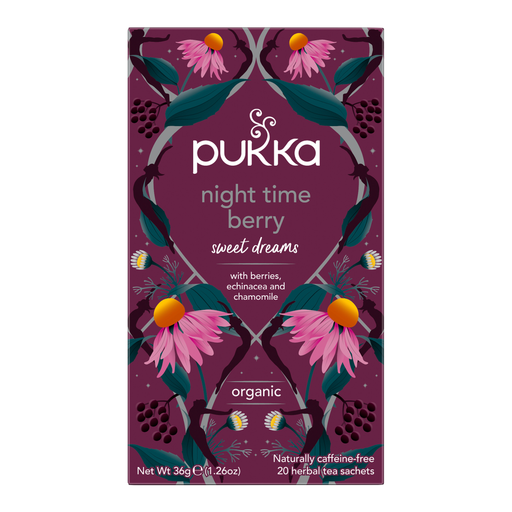
Pukka offers herbal blends, including the berry-led Night Time Berry.
Clipper describes its herbal-infusion range as caffeine-free.
Tesco Red Berries is a fruit-first grocery infusion.
Sainsbury's lists own-label fruit infusions alongside other fruit-and-herbal brands.
These two products illustrate different choices for a fruity evening drink: a berry-and-herbal blend and a fruit-led infusion. Check the exact pack before relying on its caffeine wording or botanical ingredients.
 No image available
Consider this berry-and-herbal option if you want fruit flavour alongside a bedtime-style botanical recipe. Pukka describes Night Time Berry as containing berries, chamomile and valerian; check the exact pack’s caffeine wording, full ingredients and brewing instructions before use.
 No image available
Consider this fruit-led infusion if you want a fruity hot drink rather than a blend named for bedtime. Its product listing describes it as naturally caffeine-free; check the current pack for the full ingredients, including echinacea and liquorice root. “Immune” is part of the product name, not a reason to expect a health or sleep effect.
Do not assume so from the word “tea”. Check whether the exact product says “caffeine-free” or “naturally caffeine-free”; Twinings and Tesco use that wording for the fruit infusions discussed here. A naturally caffeine-free infusion is not the same description as a decaffeinated black or green tea.
Choose a caffeine-free berry infusion if fruit flavour is the main reason for the drink. Choose a fruit-and-herbal blend if you also want its botanical recipe, and check the exact ingredients. A bedtime label does not establish that the blend treats a sleep problem.
Follow the brewing instructions on the exact pack, including its stated infusion time. Recipes differ, so use that product’s directions rather than assuming one method applies to every fruit or herbal blend.
Check the whole ingredient list before choosing a herbal blend and ask a pharmacist or another appropriate professional about suitability. The NHS advises caution with herbal products during pregnancy or breastfeeding, with kidney or liver problems, and alongside certain medicines.
Do not rely on a tea to treat persistent sleep difficulties. The NHS notes that caffeine in tea and coffee can make you feel more awake, but choosing a caffeine-free alternative does not establish that a particular fruit or herbal blend will resolve a sleep problem.