Build a small range with distinct choices: a berry-led infusion, a citrus-and-ginger blend and, if customers want to explore or give tea as a gift, a mixed collection. Check each pack’s blend list, caffeine statement and ingredients: a fruit-and-herbal collection may contain mint or camomile, and a fruity name does not establish that a tea is caffeine-free.
Who is this range for?
Shop buyers shaping an everyday shelf
A concise selection can give customers recognisably different berry, citrus-and-ginger and mixed herbal choices without filling the shelf with near-duplicate blends. Check what is inside each collection before labelling it fruit tea.
Shoppers seeking a caffeine-free drink
Fruit and herbal infusions offer alternatives to conventional tea, but the caffeine claim needs to apply to the exact product. A fruit-flavoured name alone is not enough.
Shoppers checking ingredients and pack format
Organic claims, individually wrapped bags, loose-leaf options and packaging descriptions vary between products. The current pack helps customers compare the ingredients and claims that matter to them.
What should shape the selection?
Start with clearly different flavours, then decide whether a mixed box or repeatable single-blend packs suit the shelf. Check caffeine, ingredients and format on the exact products you choose.
| Priority |
What to check |
Your needs |
| Flavour variety |
Compare the named botanicals and flavour descriptions. A hibiscus-led berry blend can be tart, while lemon-and-ginger blends have a different citrus and botanical profile. |
I want customers to recognise a meaningful choice between berry and citrus-and-ginger, rather than several similar-sounding fruit boxes. |
| Mixed or single blend |
Read every variety in a mixed box and check its pack count. Twinings lists peppermint, lemon and ginger, camomile, and strawberry and raspberry in its Fruit & Herbal Classic Collection. |
A mixed box would help customers explore flavours or choose a gift; a single-blend pack makes more sense when they return for a particular flavour. |
| Caffeine and ingredients |
Look for an explicit caffeine statement on the exact pack, then read its ingredients. Do not assume a fruit-flavoured tea or a mixed herbal collection has the same composition as another product. |
If I am offering a caffeine-free choice, I need to identify which particular blends carry that claim. Ingredients also matter when customers are checking botanicals or allergens. |
| Format and claims |
Compare the pack count and serving format. Check organic and packaging claims product by product, including what a compostability claim covers. |
Individually wrapped bags may suit a gift selection, while loose leaf or another bag format may suit a different way of serving tea. I want the shelf description to match the pack. |
What is easy to overlook?
-
Expecting every fruit tea to taste sweet or contain only fruit
Teapigs describes its hibiscus-based Super Fruit as slightly tart, while Twinings lists ginger root, lemongrass and lemon flavouring in its Lemon & Ginger blend. Those are different flavour profiles despite both sitting among fruit and herbal infusions.
Use specific blend names and ingredient lists on the shelf, so customers can distinguish berry, citrus-and-ginger and other herbal options.
-
Treating a fruity name as a caffeine-free claim
Twinings, Clipper and Teapigs describe specified infusions or ranges as caffeine-free; that does not establish the status of every flavoured tea.
Check the caffeine statement and ingredients for each exact pack before placing it in a caffeine-free selection.
-
Relying on an online description for ingredient decisions
A collection can contain several different botanical blends, so a general category description cannot tell a customer what is in each variety.
Keep the current physical labels available and check the ingredients of every blend, particularly when a customer asks about an allergen.
-
Applying one packaging claim to a whole brand
Individually sealed bags, compostable bags and loose-leaf pouches describe different products and formats. One pack’s claim does not establish how another should be disposed of.
Describe the claim on the exact pack and check the relevant disposal instructions before making a broader statement.
Brand references for the range
These named products and ranges illustrate different ways to build a fruit-and-herbal shelf; a brand name alone does not establish the ingredients or claims of every blend it sells.
Twinings
A reference for both mixed discovery boxes and named berry or lemon-and-ginger infusions.
- Twinings lists four varieties in its Fruit & Herbal Classic Collection and says each tea bag is individually sealed.
- The collection includes peppermint and camomile, so it should not be presented as four fruit-only blends.
Clipper
A reference for shoppers looking at organic herbal infusions, including a Lemon & Ginger option.
- Clipper describes its herbal-infusion range as organic and caffeine-free.
- Check each product’s ingredients and pack claims rather than assuming every herbal infusion is fruit-led.
Pukka
A reference for organic fruit teas and mixed herbal collections.
- Pukka describes its Herbal Collection as four organic blends and says the bags in its fruit-tea range are compostable.
- Check the varieties in a collection before presenting the whole box as fruit-focused.
Teapigs
A reference for a hibiscus-based berry infusion offered in tea temples and loose-leaf pouches.
- Teapigs describes Super Fruit as naturally caffeine-free with a slightly tart taste.
- That tart profile may not match an expectation of a sweet, juice-like berry drink.
Tesco
An own-label reference for a larger berry-style infusion pack.
- Tesco describes Red Berries as 40 hibiscus infusion bags with fruit and flavourings, and makes plant-based and compostability claims for its tea bags.
- Use the current Red Berries pack to check its formulation and packaging claims; this description does not apply to every Tesco infusion.
Sainsbury's
An own-label reference for a named strawberry, raspberry and cranberry infusion.
- Sainsbury's describes its Strawberry, Raspberry & Cranberry pack as a 20-serving fruit infusion.
- Its product description does not establish equivalence to another berry blend or state a caffeine claim.
Fruit and herbal options on Joybuy
These options cover a berry-named blend and a lemon-and-ginger blend for an everyday fruit-and-herbal shelf. Check the current pack before describing either as caffeine-free.
 No image available
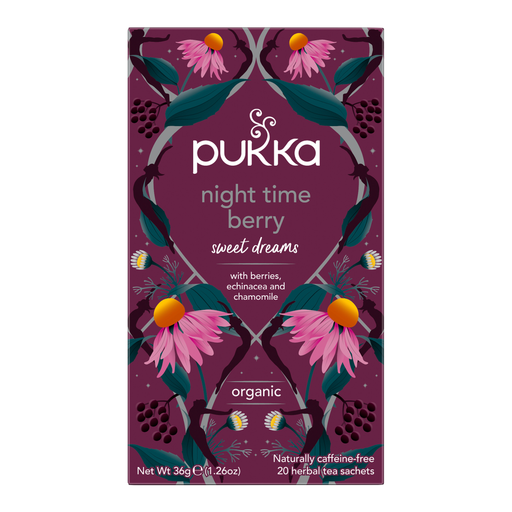
Pukka Night Time Berry Organic 20 Tea Sachets 36g
A berry-named option for the fruit-and-herbal shelf. Its listed ingredients include liquorice root; NHS pregnancy guidance advises avoiding teas containing it. Check the current pack’s caffeine statement and organic certification details if those claims are important to the selection.
View on Joybuy
 No image available
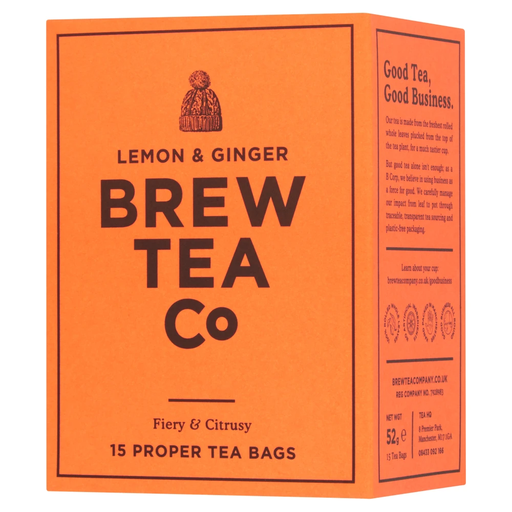
Brew Tea Co Lemon & Ginger 15 Tea Bags 52g
A citrus-and-ginger choice alongside a berry blend. Check the exact pack’s caffeine statement before placing it in a caffeine-free selection.
View on Joybuy
Frequently asked questions
Are fruit teas always caffeine-free?
No. Check the exact product’s caffeine statement and ingredients rather than relying on a fruity name. Twinings, Clipper and Teapigs describe specified fruit or herbal infusions as caffeine-free, but those claims do not cover every flavoured tea.
Should a shop choose a mixed box or single-flavour packs?
A mixed box suits customers exploring several flavours or choosing a gift; a single-flavour pack suits customers returning for a particular blend. List every variety clearly: Twinings’ Fruit & Herbal Classic Collection, for example, contains peppermint and camomile as well as fruit-led options.
Can fruit tea be served cold?
Some fruit infusions can. Twinings says its fruit tea can be enjoyed hot or cold; follow the chosen product’s preparation instructions rather than assuming every blend is prepared at the same strength for a chilled drink.


